THE GOAN | PANAJI
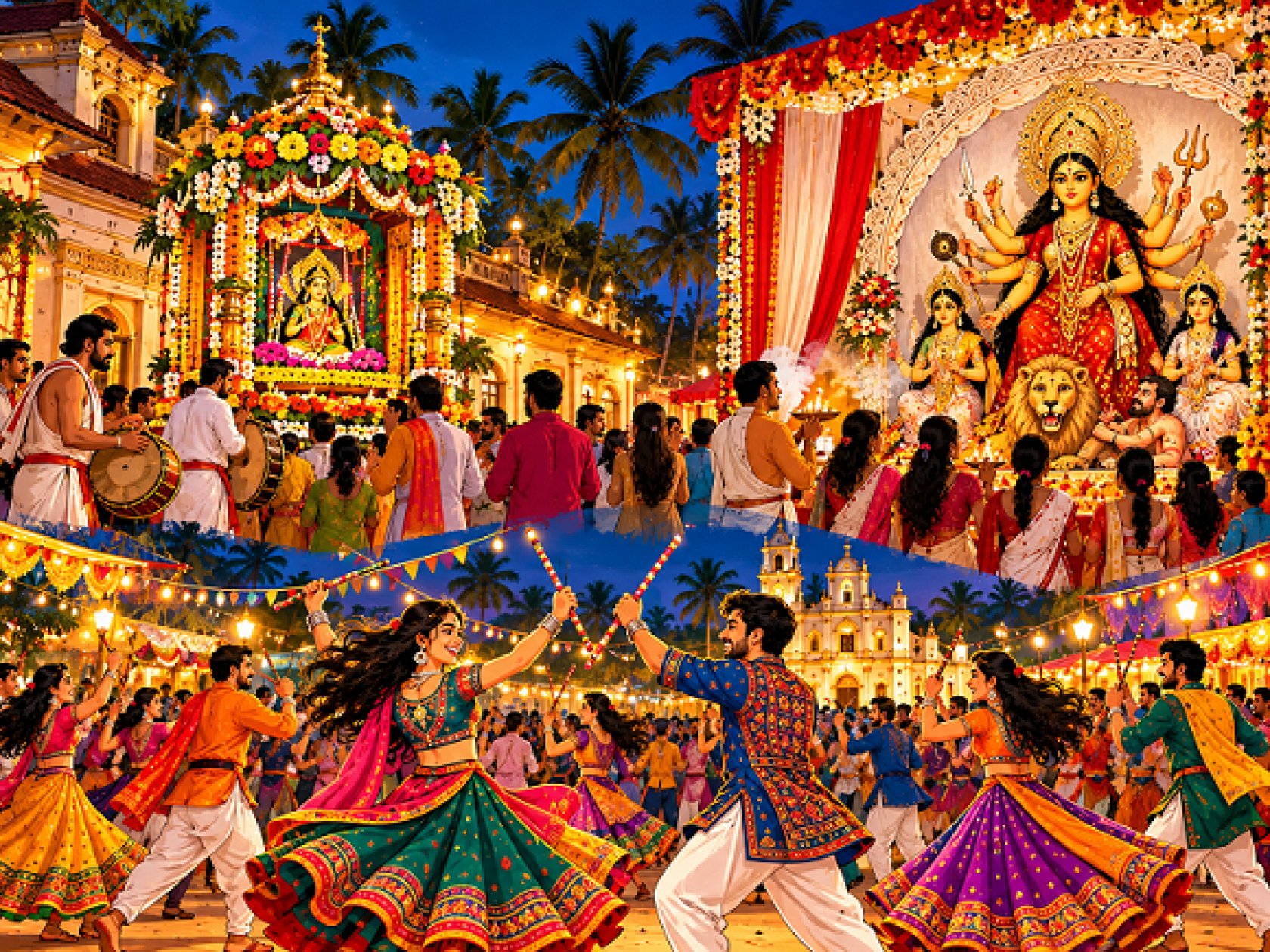
Navratri in Goa is a vibrant mix of colours, sounds and festivities. From the traditional Makharutsav observed in temples to Garba nights that draw crowds from different walks of life, and Durga Puja that brings a little bit of Bengal to the lanes of Goa, the festival is celebrated in many different ways across the state.
Temple traditions
Various temples across Ponda, Marcel, Quepem and other parts of Goa come alive during the Makharutsav celebrations. The tradition draws devotees to witness their presiding deities seated on decorated swings, known as makhars. Adorned with flowers, lights and other decorative elements, the swings become the centre of the celebrations as devotees gather around the temple. The makhar is then swung as part of the ritual, creating a colourful sight that remains closely connected to Goa’s temple traditions. The celebrations are accompanied by traditional instruments such as the shamel and ghumot, with musicians playing rhythmic beats that add to the atmosphere. The rhythms and manner of celebration vary from one temple to another, giving each place its own distinct character.
Living customs
While the Makhars are largely associated with temples dedicated to goddesses, the tradition is not limited to them. Several temples dedicated to male deities also observe the celebration, bringing devotees together through rituals, music and shared participation. For many, it is an opportunity to visit their village temple, seek blessings and be part of a tradition that continues across generations. Beyond the decorated swings and musical accompaniment, the Makhars reflect the diversity of Goa’s temple customs, with each temple following practices shaped by its own history and local traditions.
Bengali traditions
Alongside these temple celebrations, Durga Puja brings another cultural tradition to Goa. Celebrated by the Bengali community in India and abroad, the festival centres on the worship of Goddess Durga and is marked by rituals and gatherings that bring communities together. While Navratri is observed over nine nights and culminates on Dashami, Durga Puja follows its own sequence of rituals, with the main celebrations taking place over the final days of the festival. According to Bishwajit Chakraborty, president of the Bengali Cultural Association, Panaji, both festivals are celebrated with devotion, though their customs and duration differ. He notes that celebrations of both festivals have grown over the years, with Navratri seeing a particularly significant rise. “During the 1960s and 1970s, Navratri celebrations were limited, but they have grown significantly since then,” he says.
Open celebrations
In Panaji, the Bengali Cultural Association organises Durga Puja. The celebration, which began in 1981, is among the earliest Durga Puja festivities in Goa. This year, the inauguration is scheduled for October 16 at 7 pm. Chakraborty says the festival is open to everyone, including members of the Goan community, and encourages people to join the celebrations and experience the traditions associated with Durga Puja.
Ritual significance
The rituals during Durga Puja also hold significance on different days of the festival. “We begin the celebrations on Sashti, the sixth day, when the rituals for Durga Puja commence. Ashtami, the eighth day, is considered the most important day of worship, with devotees offering prayers to Goddess Durga. The celebrations conclude on Dashami, the tenth day, which marks the day Lord Ram is believed to have defeated Ravan, symbolising the victory of good over evil,” says the priest from Kali Mandir.
Growing crowds
Beyond temple rituals and puja gatherings, Garba nights have also become a popular part of Navratri celebrations across Goa. Events organised in schools, colleges and other venues draw people who come together to dance and celebrate with friends and family. Divya, who regularly attends these events, says she enjoys being part of the gatherings with her loved ones. She has also noticed a change in the crowds over the years. “The crowd has kept growing. Earlier, the non-commercial ones we go to did not have much of a crowd, but even those see so many people now,” she says.
From the rhythmic swinging of makhars in village temples to the prayers at Durga Puja pandals and the growing crowds at Garba nights, Navratri in Goa brings together traditions that are distinct yet share a place in the state’s festive calendar. The celebrations offer a glimpse of how different communities observe the season, keeping their customs alive while giving more people an opportunity to take part.