Dr Alvarinho J Luis
Beyond its beaches, cuisine and architecture, Goa’s rural villages preserve a fascinating legacy of history, faith and tradition. I continue with the village names starting with the letter M and bring to you the beauty and uniqueness of Morpirla, Mhaisal, Molcornem,and Molcopona.
Morpila
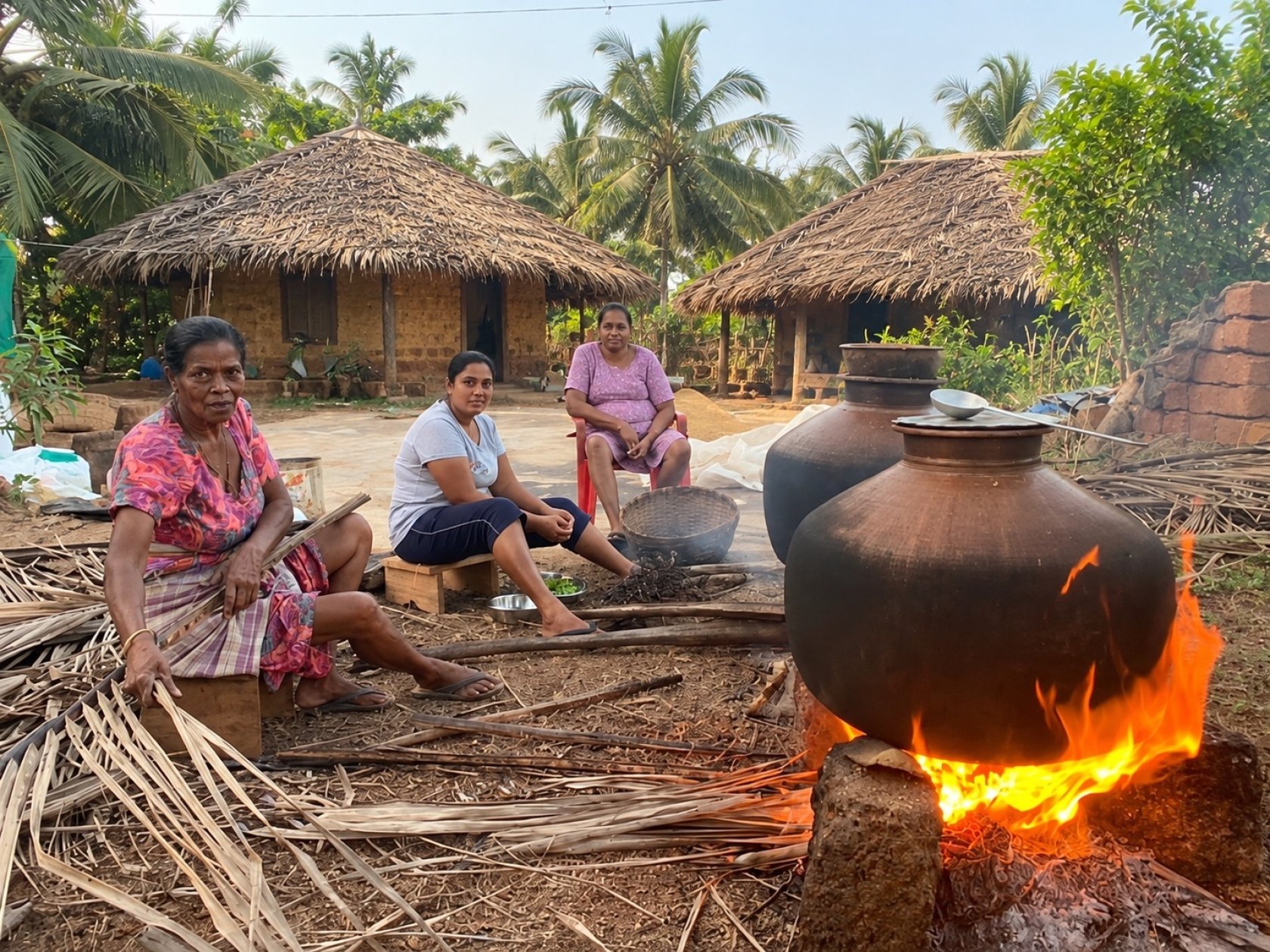
Located about 25 km from Quepem in South Goa, Morpirla is home to nearly 4000 people, most of whom depend on agriculture for their livelihood. Many work as farmhands in cashew and coconut plantations. Interestingly, although cashew feni is traditionally distilled in the village, Morpirla has no liquor bar.
For the predominantly Scheduled Tribe community, this reflects a long-standing custom. “Our tradition does not permit people from our community to consume meat or alcohol. While many villagers may drink at bars in neighbouring villages and eat non-vegetarian food, no household in Morpirla cooks meat. We distill cashew feni as a livelihood, but never serve it here. All the feni produced in the village is supplied to bars elsewhere,” explains the sarpanch.
Morpirla also retains a distinctive traditional system of community governance. The tribal headman, known as the Budvont, presides over the Ganvponn, an assembly where, in consultation with the council of Velips, important matters concerning rituals, dispute resolution and other community affairs are discussed and decided. The village thus offers a fascinating example of how age-old customs, traditional livelihoods and indigenous systems of governance continue to coexist in modern Goa.
Mhaisal Dam: A hidden forest retreat
Nestled deep within a forested landscape, away from Goa’s usual tourist circuit, Mhaisal Dam at Panchawadi in Ponda taluka remains a relatively little-known destination. Yet, when the reservoir overflows, the cascading waters create a spectacular sight that attracts picnickers and nature lovers.
The 230-meter-long dam, built amid lush greenery, plays an important role in supplying water to Panchawadi and parts of Shiroda, while also supporting irrigation. Its reservoir has a live storage capacity of 436.8 hectare-meters. During the monsoon, the overflowing reservoir transforms the otherwise quiet surroundings into a scenic attraction, with visitors gathering near the water-release point to witness the cascading waters. Its combination of forest, water and tranquillity makes Mhaisal a hidden gem of Goa’s hinterland.
Molcornem: Where Holi meets fire
Tucked away in the serene hinterland of South Goa, Molcornem, straddling the Quepem and Sanguem talukas, is home to one of Goa’s most unusual Holi traditions. While much of the country celebrates Holi with colourful gulal, Molcornem marks the festival with a dramatic shower of fire, locally known as Sheni Uzo.
On the night before Holi, villagers carry freshly cut tree trunks from the surrounding plantations and run around the Mallikarjun Temple. Participants then lift individual logs and run to the powerful beats of the dhol. The rhythm is distinctive, unlike the familiar beats heard at urban celebrations, and is deeply rooted in the village’s own tradition.
As the temple drums gradually fade, another, more dramatic sound emerges. From the opposite direction, around 150 gade—devotees who observe strict dietary practices from Mahashivratri until the end of Shigmo—come running with glowing embers.
They use burning cow-dung cakes to create the fire, and brush bundles of leaves against the embers to shower sparks over participants. Villagers, including women, eagerly move towards the fiery spectacle, seeking blessings. Some participants even climb the maadi (areca-nut tree) as glowing embers rain down around them.
The symbolism is striking: the fire represents gulal, while the areca-nut tree represents Holika. As the final sparks disappear into the night and the drums fall silent, Sheni Uzo leaves behind more than a spectacular display. It stands as a powerful reminder of how Goa’s villages continue to keep ancient traditions, faith, and community spirit glowing across generations.
Molcopona: The terraced valley village
Every village has a story waiting to be remembered. Nestled in the forested hinterland near the Quepem–Sanguem border, close to Netravali, lies Molcopona, a picturesque valley village where terraced paddy fields climb gently towards the Western Ghats.
Molcopona reflects the region’s deep tribal and agrarian heritage. Oral traditions trace its origins to ancient forest settlements and the early communities that depended on the land and forests for their sustenance. The village’s Gawda heritage and traditional community-based use of agricultural lands have helped preserve its distinctive cultural identity over generations.
Local legends attribute the protection of the hills, fields, and forests to Vetal Mahadev, regarded as a guardian deity. Elders say forest deities blessed the terraced fields, while forest produce such as honey and medicinal plants continues to hold cultural and spiritual significance.
The village’s heritage comes alive during traditional zatra celebrations, when the sounds of drums, folk music and tribal dances fill the valley. These festivities serve not merely as religious observances but as a living expression of community identity.
(The author is a scientist (Deputy Director), freelancer from Taleigão, has explored some of the world’s remotest frontiers, spending 30 days each in Antarctica and Svalbard in the Arctic, besides sailing across the fiery Southern Ocean during India’s polar scientific expeditions)