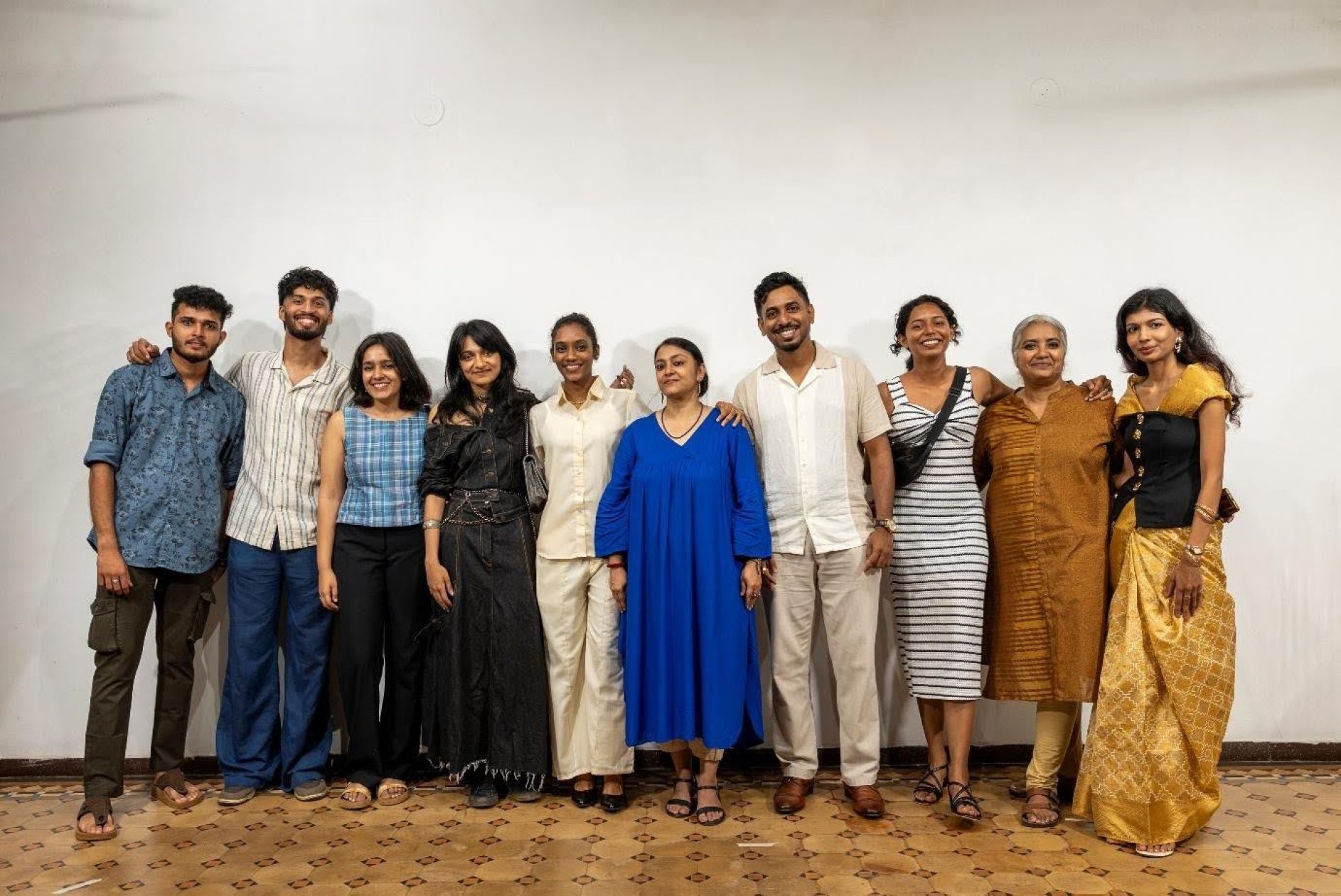
 Totally Transient, Truly Indelible-The artists from L-R: Vishwajeet Naik Desai, Greagan Ricardo Dias, Tammanna Aurora, Noella Fernandes, Ruth Beatriz Costa, Lina Vincent, Rohit Asha Bhosle, Ashita Matondkar, Sonia Rodrigues Sabharwal, Khusboo Biswal
-Atika Modassir (Oxon)
With four PG degrees and a career spanning education and global HR leadership, Atika has followed one enduring question through Oxford lecture halls, global boardrooms, and her Goan homestead- what helps people and societies grow, flourish, and find meaning?
Experiencing art is like watching a sunset. It makes you reach far out to that ball of sienna gold on the horizon, and then it takes you deep within yourself. It makes you reflect on the many nuances of life and lets you sit with the questions that rebound in your mind. That’s what the Totally Transient, Truly Indelible exhibition felt like. It reminds us why home feels so near yet so far, and asks us to inhabit the space between change and remembrance. Conducted by Sunaparanta Art Initiator Lab (SAIL) and developed by art historian Lina Vincent, it is the culmination of a 10-month collaborative mentorship programme for creative practitioners to engage with Goa’s evolving cultural landscape.
As our landscape changes rapidly with urbanisation, it takes with it our childhood escapades, our riverside walks and our cherished nooks and grassy knolls. Familiar sights vanish overnight- a lighthouse succumbs to time and tide; an old house is redeveloped for opulent enjoyment or a sacred grove is sacrificed for ‘progress’. Even so, our memories linger, fragments remain, and art becomes the chronicler not only of what we are becoming in this process but also of what we risk forgetting. Ashita Matondkar’s evocative work, The Bleeding Grove, makes us look straight into the heart of this environmental vulnerability we are experiencing.

The Bleeding Grove- Ashita Matondkar
Faith, folklore, and landscapes are all facets that shape our culture. What may indicate progress for some may be a harbinger of extermination for others. In The Shifting Landscape, Matondkar asks us to pause and consider how ruptures in this intricate web can jolt the rhythm of our land and those who dwell in it.

The Shifting Landscape- Ashita Matondkar
As we confront our wounded landscape, Vishwajeet Naik Desai paints The Void of the Landscape, depicting the face of collective loss through a barren panel, reminding us of what lies ahead if we do not change course. A lone remaining patch of greenery calls out from a corner, as an old man from the forest sits by a tree stump, helplessness writ over his face. His eyes beg the question- how will he survive the choices that have been made for him? Is it just greenery lost, or also his life force?

The Void of the Landscape- Vishwajeet Naik Desai
Noella Fernandes’ In Memory of a Cityscape makes you pause as you see a panorama of love notes to the city amidst broken tiles from a home and shattered pottery lying alongside the river, dotted with floating casinos. It inquires how we perceive the Panjim we grew up in, versus the one we inhabit now. In a world where cities look increasingly similar, her work asks us about our relationship with Panjim, a city we all love.


Noella Fernandes In Memory of a Cityscape
Memories of a Body by Sonia Rodrigues Sabharwal recalls that nature, traditions, and indigenous craftsmanship are inseparable threads of heritage. She depicts the local landscape, architecture, customs, flora, fauna, and crafts through five beautiful costumes. Expressed through the Zagor folk dance, it brings forth to us that when our landscape shifts, our regional customs, architecture, and indigenous crafts will inevitably be impinged upon. Nothing exists in isolation.

Memories of a Body - Sonia Rodrigues Sabharwal
Ruth Beatriz Costa takes us from the tangible to the ethereal in one fell swoop through her work, Purument. Linked to the Portuguese provisão, our local tradition of pre-monsoon culinary provisioning is rendered as a subtle hint- preserve the past, so we can provide for the future. She shifts our attention to delicate impressions of home and belonging -subtle fragrances waft up, transporting us to worlds intimate and transcendent. Memories mingle with scents, and with each breath those memories shift, relapse, and rejoin us with days bygone. Her fragrances whisper to old photographs, while her poetry, carrying love and longing, invites others to enter her memories and share in their emotions.

Purument- Ruth Beatriz Costa
Khusboo Biswal’s The Sages, Stages and Stolen Sayings presents a clever metaphor of a parrot. I sensed a challenge gently thrown open to us all. If our ecology is changing before our eyes, are we really questioning it? Or are we simply parroting conventional narratives of promoting a paradise waiting to be explored and that development brings modern amenities that make life better? She asks us if we are imitating those parrots on her gossamer panels or are we truly human, with innate perception and critical thinking?

The Sages, Stages and Stolen Sayings- Khusboo Biswal
Several works of art communicate in different ways, but all impress upon us one recognition- that preservation is not an opposition to change. Instead, it is the awareness of how change impacts us and what it leaves in its wake. At a time when this precious sense of perception is challenged on all fronts, these artists remind us that every endangered aspect of our fragile ecosystem is clasping together our life stories, beliefs, and identity, just like a string of pearls. It deserves to be prized; not because we shun progress, but because progress without such perception is meaningless.