Sneha Umarye
Goa’s homes have been humming with the buzz of Ganesh Chaturthi for days now. It is a festival built as much on ritual as on memory — practices that never made it into any calendar or puja manual. Some are followed by an entire village, some by a handful of families, and others survive only because a grandmother, an uncle, or a child keeps doing what the generation before them did.
Here is a look at a few of these lesser-known practices from across Goa, and the stories, landscapes and family memories that keep them alive.
Worshipping Lord Ganesh in a village temple
In Adpai, Ponda, Chaturthi means one thing: cousins who have long since built homes in Borim, Sanguem or Margao return to the same ancestral devli, or mini temple, to worship one shared Ganpati. As Vaishnavi Naik puts it, “one family = one Ganpati.” Around 17 such families, some with as many as 200 members, come together this way every year, though a few Bhatkar families still keep their idols at home.
The real spectacle unfolds on the final day. Each kutumb picks a theme and a colour, dressing to match the dekhava built around their idol — a Radha beside a Krishna, a bhakt beside a Pandhari deity. Dindis with dhol and singing carry the idols towards the sea, pausing first at the Datta Temple for a shared maha aarti before visarjan.
Sending the mouse ahead
One of the more intimate rituals happens hours before dawn. On the last day of Chaturthi, between 2 am and 5 am, a figure of Ganpati’s vahan — the Undir — is shaped from wheat flour the previous evening and kept hidden from household pets. Carrying it along with a modak wrapped in banana leaf, a panchaarat, bell, and incense, the family walks to the visarjan spot, calling out: “कळउंदरा!! धर शेपडी, मार बोकडी.”
“We first send off Ganpati’s vahan, so he can tell his mother Parvati that her son is on his way home,” Vaishnavi Naik says, recalling the belief passed down from her mother. The same person who performs Ganpati’s visarjan sends off the little flour mouse too — an aarti, then a quiet release into the water.
For Vaishnavi, it is also a childhood memory: her uncle shaping the figurine after the previous night’s aarti, then waking the household before dawn to make the walk, half-asleep, chanting the same words year after year.
Gabyanchi Puja or Ranga Puja
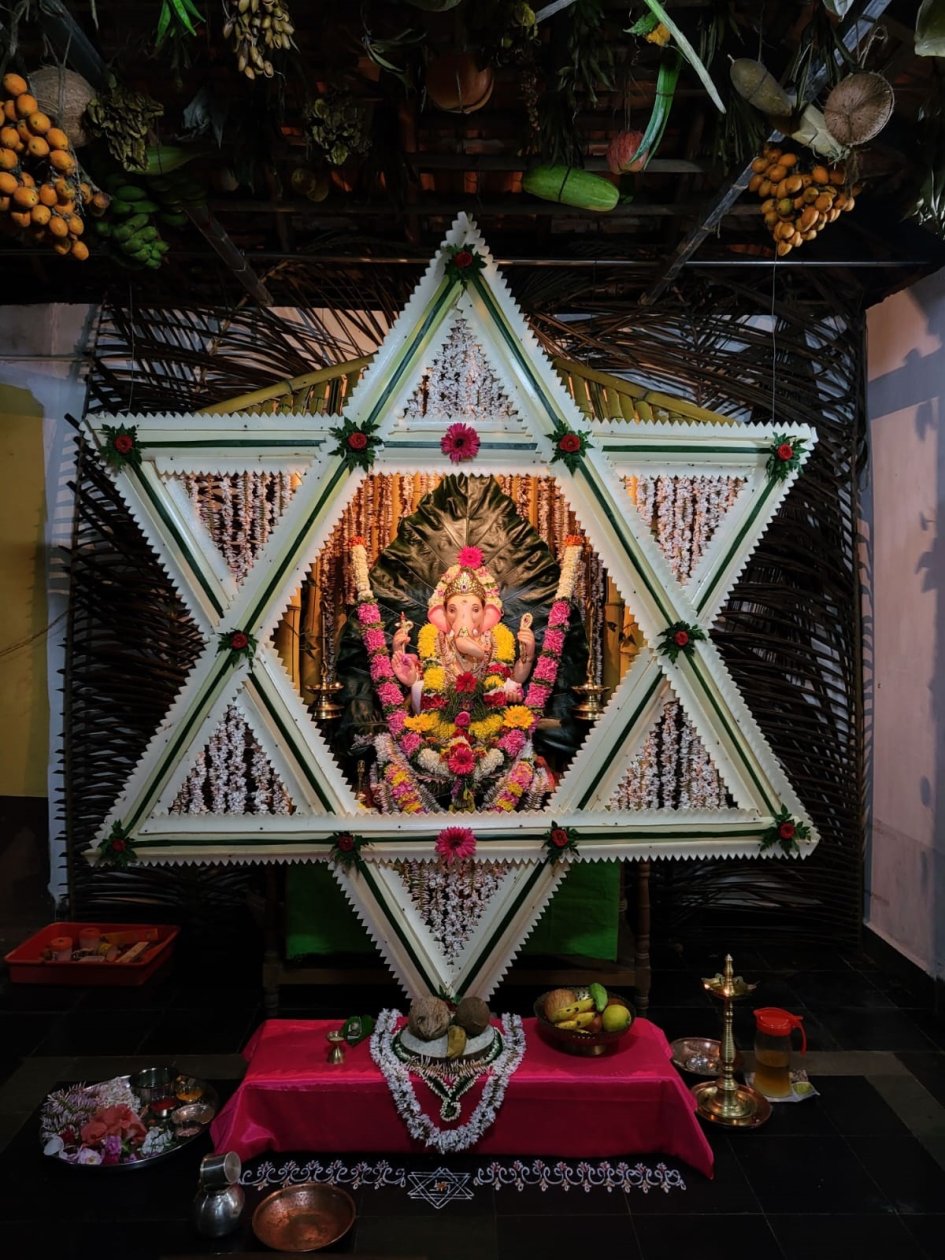
In Paingin, Canacona, there exists a unique way of decoration made from the banana grove for Ganesha’s Rang Puja. Several gabe, or banana stems, are cut, cleaned, and tied into a square or rectangular frame around the idol. Prabhav Tengse says the tradition has been there since his great-grandfather was a child.
“It has a natural element to it, like most Hindu practices,” Prabhav says. “You use what’s easily found, not what’s difficult to source.” Once decorated with jasmine and other leaves against the pale stem, the frame today often carries paper cut-outs and fresh flowers, now easier to come by than before.
The custom is common across rural south Goa, and in his own home, making the frame has become a small yearly ritual — younger family members now take it on, learning the shape and the patience from elders who learned it the same way.
Two Ganapatis, one home
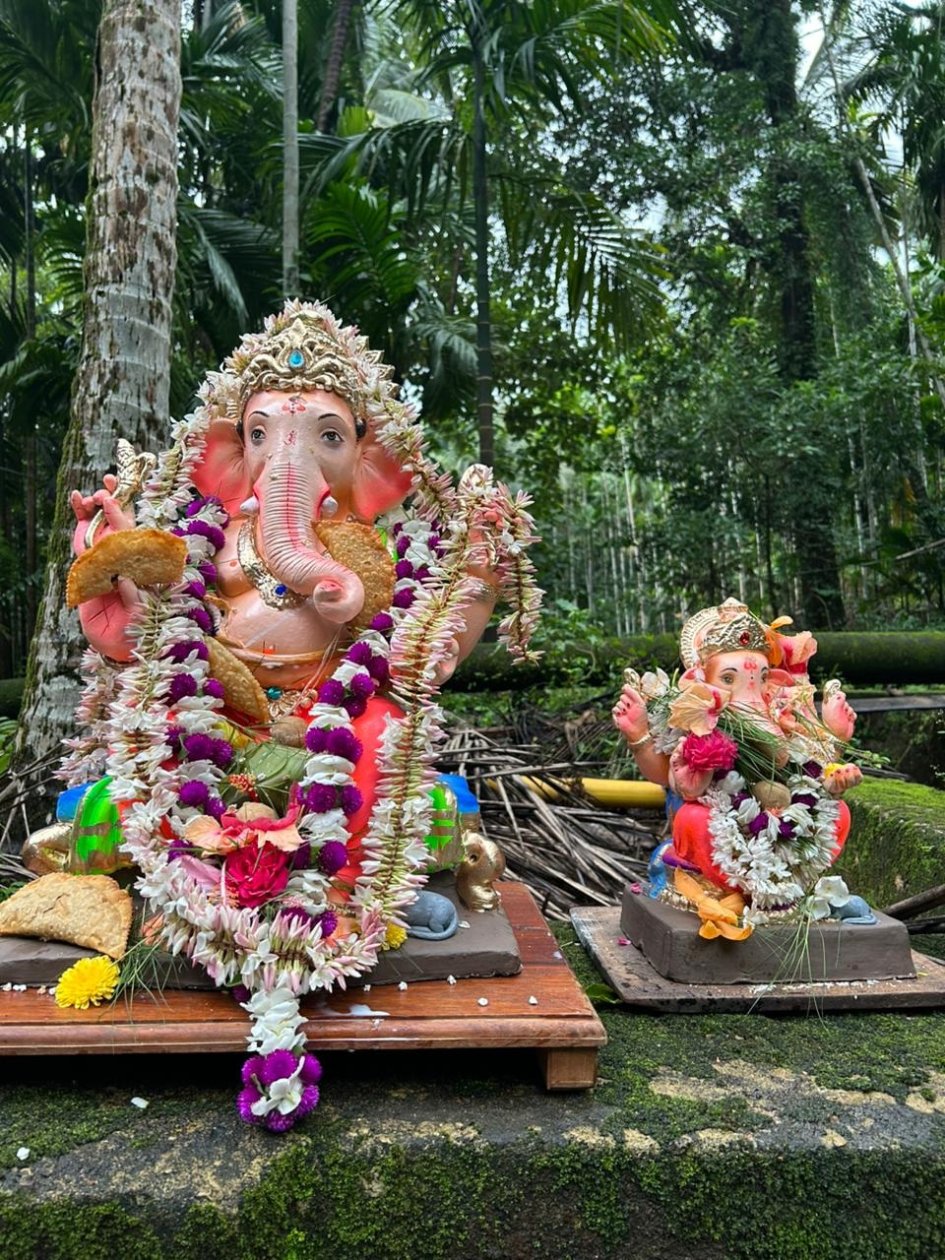
In the same Tengse household, Chaturthi has long meant two idols, not one — a larger Ganpati that stays nine to eleven days, and a little one that stays for just a day and a half beside the tulsi vrundavan. Family lore traces it to children once worshipping a small idol as play; when they stopped, misfortune followed, and the practice was restored as a proper, yearly custom. Both idols are prayed to identically — but it’s the smaller one, made and immersed with particular enthusiasm by children, that the youngest in the family wait for all year.
Rituals for the women and girls of the house
A day earlier, on Tritiya, some households observe Hartalika, a puja performed by women honouring Parvati and Shiva’s union and praying for marital harmony. As Meena from Saquelim describes it, a newly married couple performs it together in their first year; after that, it becomes the wife’s keep, along with a fast break usually after nightfall.
Gauri Pujan is another celebration involving the girls and women of the family. Five kinds of stones found around the well are placed in a tambya or kalshi, decorated with halad-kunku and worshipped with aarti for the goddess.
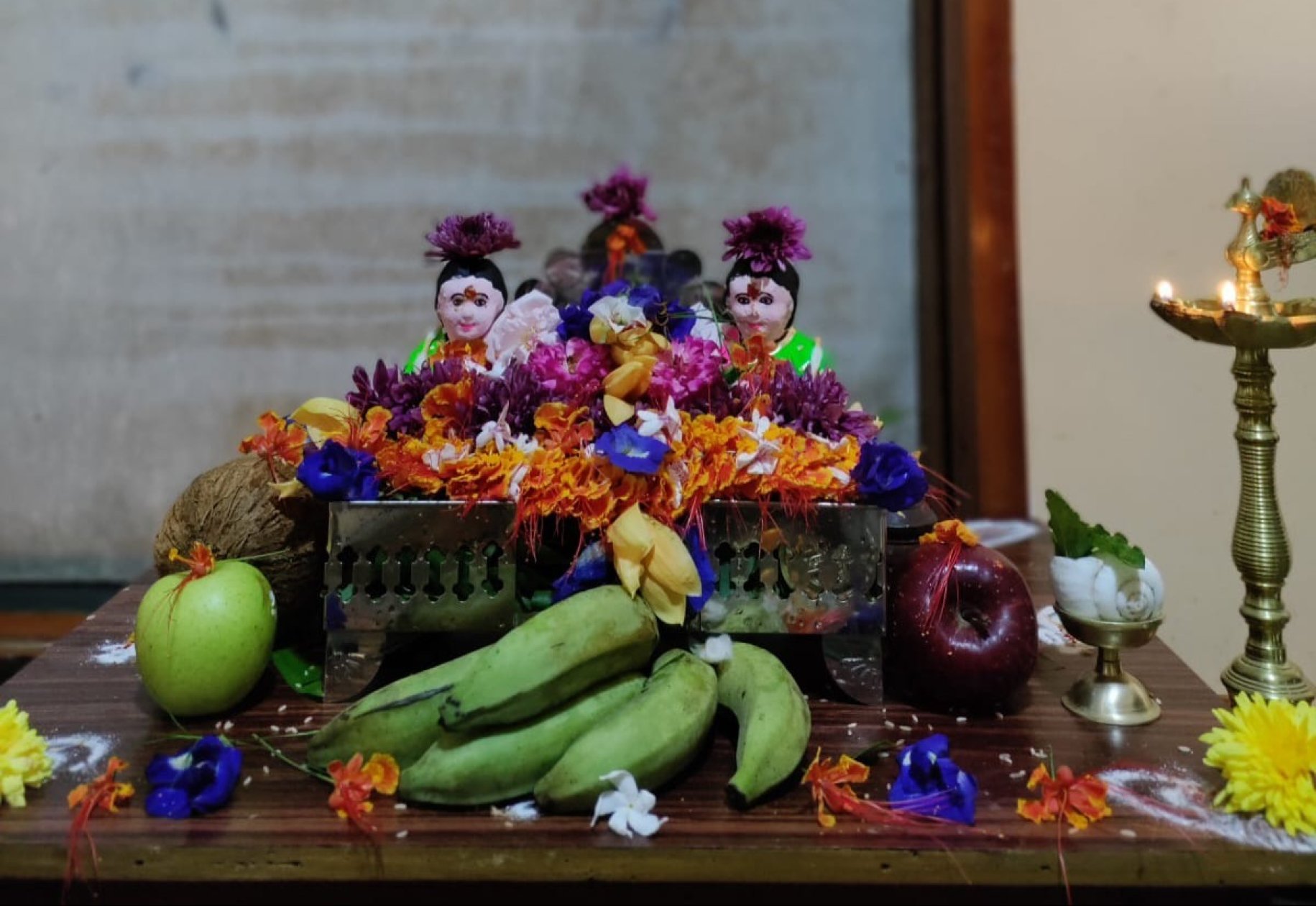
Water is drawn from the well into the vessel, then stuffed with patri, including turmeric leaves. A girl from the household then carries the kalshi back home and places it near the space where Ganapati is worshipped. While returning, the girl keeps some of the well water in her mouth before offering the naivedya. The offering is usually bhakari-bhaji, with the bhaji made from five kinds of wild leafy vegetables.
Tomorrow, as Goa welcomes Ganapati into its homes once again, these little traditions will come alive for each family in its own way, all of them adding to the many faces of Chaturthi in Goa.