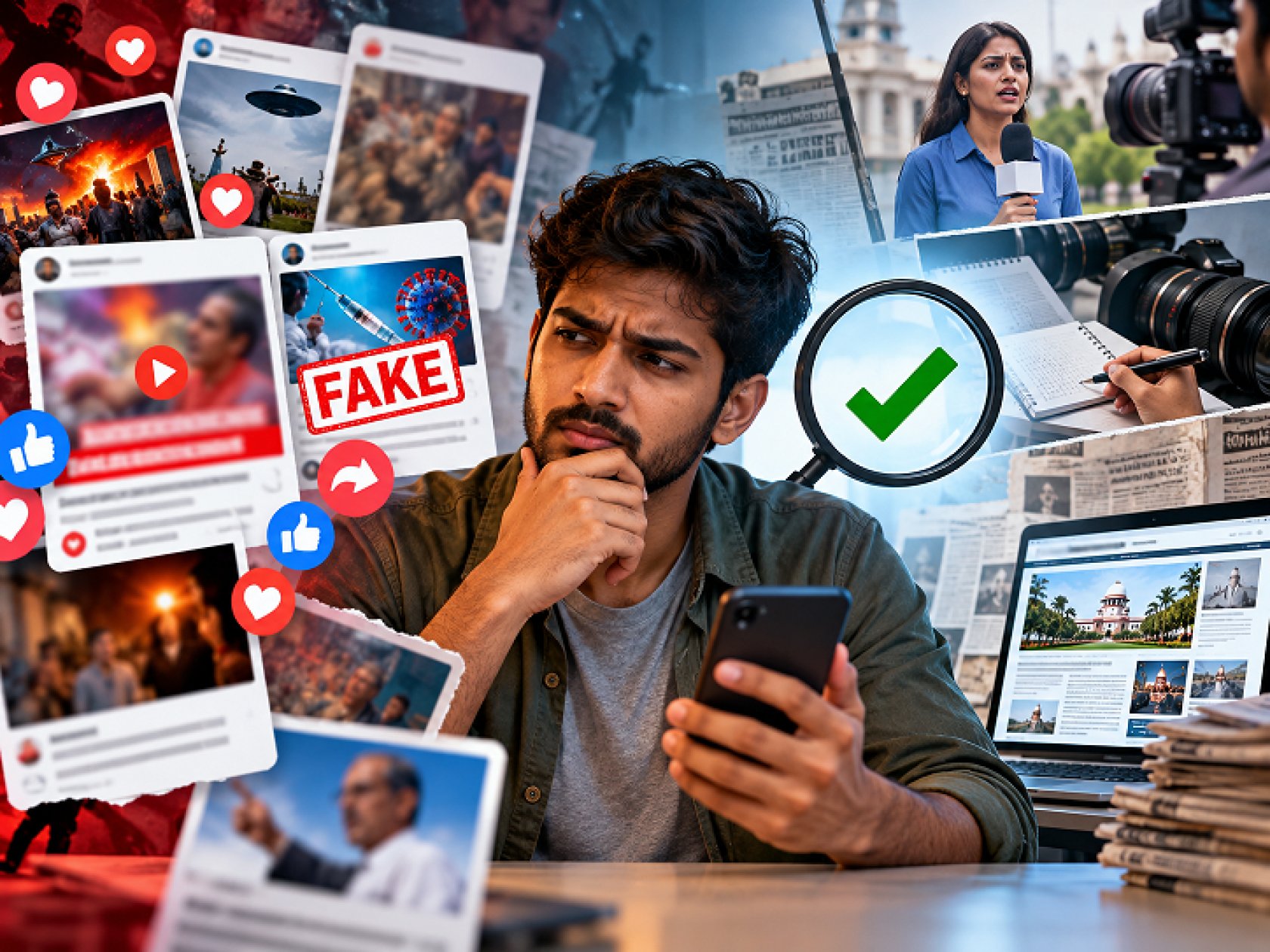
In an age when misinformation can spread in seconds, figuring out what is true and what is not has become a challenge for readers. Social media has made news more accessible, but with pages presenting themselves as news platforms, it is not always easy to know which sources to trust. As the world marks Global Media and Information Literacy Week under the theme “We all play a part”, journalists stress the need for people to understand how news is gathered and presented. While social media has opened up space for more voices, it has also made it easier for unverified claims to circulate as news.
Democratised informationSenior journalist Waman Prabhu points out that social media has democratised information sharing but has also allowed anyone to present themselves as a news platform. “These pages upload posts without following the basic principles of journalism. Many such pages prioritise sensationalism and views over accuracy,” he remarks, adding that unverified information is often published without accountability. However, not all social media pages sharing news lack credibility. Senior journalist Suhasini Prabhugaonkar believes it depends on the people behind the platform. “Established, experienced journalists, if they personally use Facebook or Instagram for social awakening, there is no harm in that,” she says. She also stresses the importance of using appropriate language when sharing information online.
Similarly, independent journalist Pamela D’Mello believes that credibility depends on the people rather than the platform itself. “Credibility is defined by the journalists, their objectives, principles, processes and sources,” she remarks. She points out that even mainstream media can publish paid news or politically motivated and one-sided stories, while some independent digital platforms do honest work in covering and analysing news. For her, credibility is built over time through consistent and accountable reporting.
Media ownership
Prakash Waman Kamat, a senior journalist currently working in the disability sector, believes the problem also reflects the lack of media literacy among audiences. Describing social media as a “double-edged weapon”, he welcomes its role as an alternative to mainstream media but warns against its misuse. “By imitating genuine news platforms, they often blur the line between verified reporting and personal opinion, making it harder for audiences to trust news sources,” he remarks. He also points to media ownership, noting that some corporate-owned outlets focus on profits while others promote political or ideological interests. “Because of this ownership, the space for objective journalism and independent views, analysis and opinions is narrowing day by day,” he adds.
Kamat believes social media has given people a more direct way to share information, but this freedom comes with responsibility. “On social media, you are the owner, the reporter or content writer, the editor and the distributor of content,” he points out, urging users to consider whether they will repeat the practices they criticise in mainstream media or follow journalistic ethics instead.
Verify before sharing
For readers, this means looking beyond how widely a post is shared before accepting it as fact. Prabhu reminds audiences that “virality is not credibility”, as likes, shares and views do not make a claim true. He advises readers to check sources, look for evidence and cross-check claims with credible news organisations. Sensational headlines, unsupported allegations and misleading images or videos also warrant caution. “Pause before you believe, verify before you share,” he advises.
Prabhugaonkar, who is completing 40 years in journalism, also emphasises the importance of verification in the multimedia era. “Trusted journalists will quote sources,” she remarks, advising people to use Facebook and Instagram “with utmost care”. She warns that the ease of setting up social media pages has allowed non-journalists and dubious operators to spread fake or motivated news. “Audiences should only trust platforms with a proven track record, which hold themselves to some accountability,” she says. She also advises readers to verify claims directly with government or private agencies and the people concerned.
AI and authenticity
Chief photographer Narayan Pissurlenkar points to another challenge: the growing difficulty of identifying authentic content, particularly with the use of artificial intelligence. He notes that verifying information on social media can be difficult when audiences have no way to confirm what they are seeing. “The true media pages will be the ones that give an in-depth tale, unlike the other pages that claim to be reporters reporting without verification,” he remarks. Concerns about misinformation also extend to public trust in institutions. Bosco de Souza Eremita, commentator-turned-farmer, says the government and the pillars of democracy are “tottering”. Comparing the situation to the biblical cities of Sodom and Gomorrah, associated with moral decay, he warns that “credibility in any sphere will require a chastisement, and that is on the way.”
As news reaches people through more platforms, readers need to look beyond view counts or how a post is presented. Checking who is behind a report and where the information comes from can help them make better-informed choices about what they believe and share. Media literacy, after all, requires both those who produce news and those who consume it to play their part.