


Goa has a rich history from times immemorial. The arrival of the Portuguese in Goa and the subsequent interaction of East and West also contributed to making Goan history a diverse one. Preserving artifacts from history has given rise to a lot of museums in the State. And while museums do feature on the list of things to see when visitors come to Goa, the question arises whether museums are in fact able to make it a complete learning experience by engaging visitors in understanding more about the artifacts on display.
“Just taking a stroll through the corridors and the galleries doesn’t fulfill the purpose of visiting the museums. There has to be an interaction with the artifacts. A person visiting the museum should be able to understand the history of the place in discussion. The museums have to initiate steps to make the visit to the museum a fun learning activity rather than a guided tour,” believes, Sawani Shetye, archeologist and instructor at Bhoomij Heritage group
Shetyle adds that in cities like Mumbai, there are activities like ‘Be a Curator for a Day’ where children are actively involved in the minor technological aspects of preserving artifacts, placements, the light effects etc. “This gets children to be a part of the process and they start liking the subject,” she says. In her own attempt to do something of this sort, Bhoomij heritage consultancy will be organising a trip to Goa State Museum and Customs museum on May 18. This visit, Shetye explains, will be a fun based activity specially curated for young minds to learn more on how museums work and make the nuances of museology simple to understand. The main aim behind this activity is to enhance the understanding of a museum and at the same time raise awareness about the field and introduce them to history in a fun learning way. There needs to be a little bit of glamour to attract and create interest in the audience and make them understand the subject, adds Sawani.
On the other hand while the museums are housed within the four walls awaiting visitors, a first -of-its-kind mobile museum titled ‘Living histories of land in Goa’ will be shortly starting its tour to various cities in the state. This museum hopes to enlighten people on the earlier environmental struggles in Goa which have been documented in the form of short films, original flyers and posters used during the struggle. The idea has been conceptualised by Dr Preeti Sampat, an anthropologist and assistant professor at Ambedkar University in Delhi. After completing her doctoral disssertation at the City University of New York which focused on special economic zones laws and the failure in implementation in Goa due to popular resistance, she received a small grant from the Werner-Gren Foundation for Anthroplogy, USA to take the findings her of her study further.
The online museum also has a website set up which has most of the documented works put up online for public viewing. It also appeals to people to contribute more such works. The mobile museum will be travelling to five places - Lohia Maidan- Margao, Ponda, Keri, Panaji and Verna between May 21-25 and the experience is open and free for all.
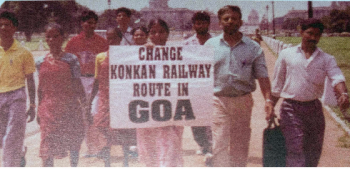
The documentation includes agitation against the Zuari Agro chemical industry which is probably one of firsts of its kind in the country where a movement took place against a polluting industry. Other agitations include the Konkan Railway agitation. In fact, the exhibition will have on display handouts displaying ‘Do not destroy Goa, divert Konkany Railway’ which were distributed asking people to attend a public meeting at Lohia Maidan on August 19, 1991. The short films, testimonials will give an historical overview of the social movement struggles right from the protest against the ‘master plan’ for tourism in the late 1980s which resulted in several arrests to DuPont’s Nylon 6,6 struggle in Keri where one protestor was shot dead.
“When we visit any museum, we look at the artifacts displayed and read what is written there. Here, however, we are trying to engage people through short film and live interviews of people who were present during the struggle. Anyone who was also present during the movement is welcome to share their experience,” explains Sulochana Pednekar, the team member and community correspondent at Video Volunteers. In this way there is a more personal connect to the event and it thus creates more impact. Given that there are struggles happening today as well, youth can learn from past struggles through this museum and better understand how to take the movement to protect the environment further and thus help safeguard it, adds Pednekar.


