


THE GOAN
PANAJI
In recent weeks, students in Goa have taken to the streets over different issues. It has sparked conversations across the state, but student protests are not new to Goa. Decades ago, students took on bus operators, education authorities and social issues, with some succeeding in getting what they demanded.
Bus fare fight
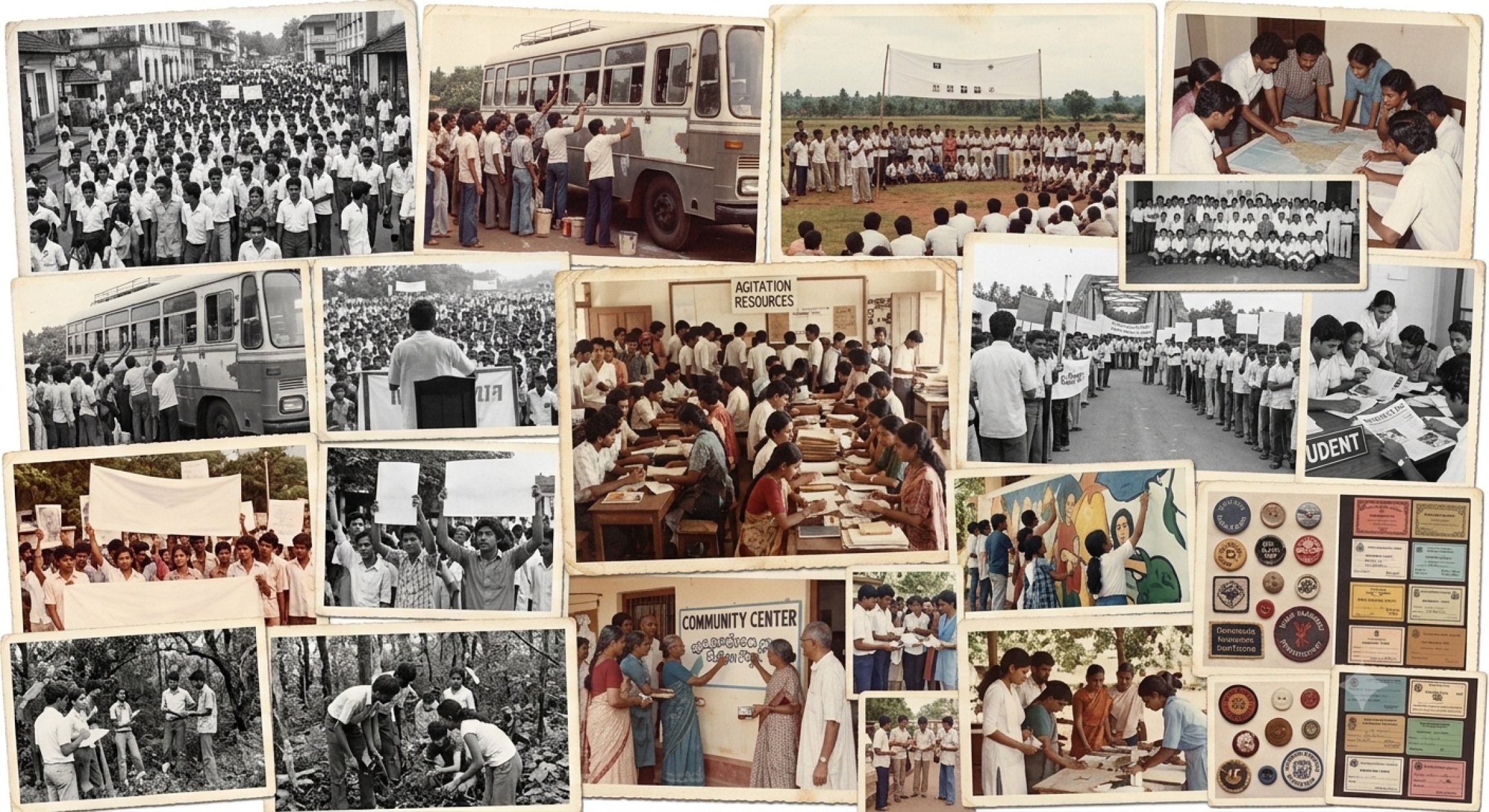
One organisation that brought students together was the Akhil Gomantaki Vidyarthi Sangathana, or All Goa Students Union. One of its first demands was a 25 per cent concession on bus fares. “The agitation was very successful as the private buses agreed for the 25 per cent concession,” says Prof Bhaskar Nayak, an ex-student activist and academician. The demand later went up to 50 per cent, making the agitation more aggressive. “Sticking posters on buses, painting the buses and then finally breaking the buses, it had reached even that level,” recalls ex-student activist and senior journalist Sandesh Prabhudesai. There was no Kadamba bus service then and private buses dominated public transport, so the pressure forced the government to respond.
Enforcing concessions
Getting the concession was one thing, but ensuring students received it was another. Prabhudesai remembers ITI students from Farmagudi hiding along the roads and waiting for buses that refused to give them the concession. “They used to hide between the cashew trees, and if they saw a bus that did not give the concession, they used to hit the bus,” he says. For Nayak, it changed things for generations. “Every student should be grateful because if that hadn’t happened, we wouldn’t have received the concession,” he says.
The bus fare issue was only one part of the movement. In July 1981, a conference at Ramnathi saw a section of the union break away to form the Progressive Students Union. Prof Sushila Mendes, an ex-student activist and historian, says the PSU did not want to join political parties and believed student activism should extend beyond colleges to workers’ issues and wider social problems. “It was not just students for the sake of a student movement,” Mendes says.
Medical marks scandal
The students later took up a medical college marks scandal. Mendes recalls that marks had been manipulated, leading to protests. In Canacona, students blocked highways, held rasta rokos, and gheraoed education officials. The agitation brought the Director of Education and senior officials to Canacona. Teachers were later appointed.
Street theatre
Students used theatre to take issues into villages. Through Sangarsh Natyamanch, they performed street plays on social issues. Prashanti Talpankar, an ex-student activist, academician and actor, recalls going to Cuncolim after a woman was allegedly assaulted by a local bhatkar. “We went from village to village taking the street play with us,” she says. Years later, people in some villages still remember the performances. The group travelled to Canacona, Sanguem and Quepem to investigate alleged forest destruction. Prabhudesai recalls going there with other activists, including Raju Naik, to take photographs and write about it. Some reports appeared as full-page stories.
Student journalism
Writing became another part of student activism through UDENT, a multilingual newsletter produced by students across Goa. Mendes recalls that it came about because mainstream newspapers did not always publish what students wanted to put out. Prabhudesai remembers that it carried reports and articles based on study and research. Some protests involved sacrifice. When Edmund Antao, then general secretary of the union, was refused admission to Chowgule College, he began a hunger strike at Margao Garden. After nine days, he was arrested at night. Sabina Martins then continued the hunger strike. She recalls pressure on the college management and delegations meeting the chief minister. Eventually, the college agreed to take Antao back.
Women activists
Women were part of these movements too. Talpankar recalls around six or seven girls being involved in 1985. Activism sometimes meant missing classes, but senior activists helped them keep up. “At that time, Desmond D’Souza was one of our seniors. He shaped me a lot. We used to miss studies, so he used to take us and sit and teach,” she says. A lot of the work happened away from the spotlight. People made posters, painted walls, sold magazines and organised meetings. “We see only those in the forefront, but that doesn’t mean there weren’t people working at the back end,” says Prabhudesai.
Lasting bonds
The movement brought people together. Students from different colleges and backgrounds formed friendships that lasted beyond college. Some relationships became something more. “If students shouldn’t love, then who should?” Prabhudesai says, recalling couples who met through the movement. Today, many former student activists are in their 60s and 70s. Some became professors, doctors, journalists and lawyers, while others remained involved in public issues. The streets and issues have changed, but the concession a student receives on a bus today carries that history. For the students who fought for it decades ago, it was never only about a bus ticket. It was about making themselves heard across Goa.


