


PANAJI
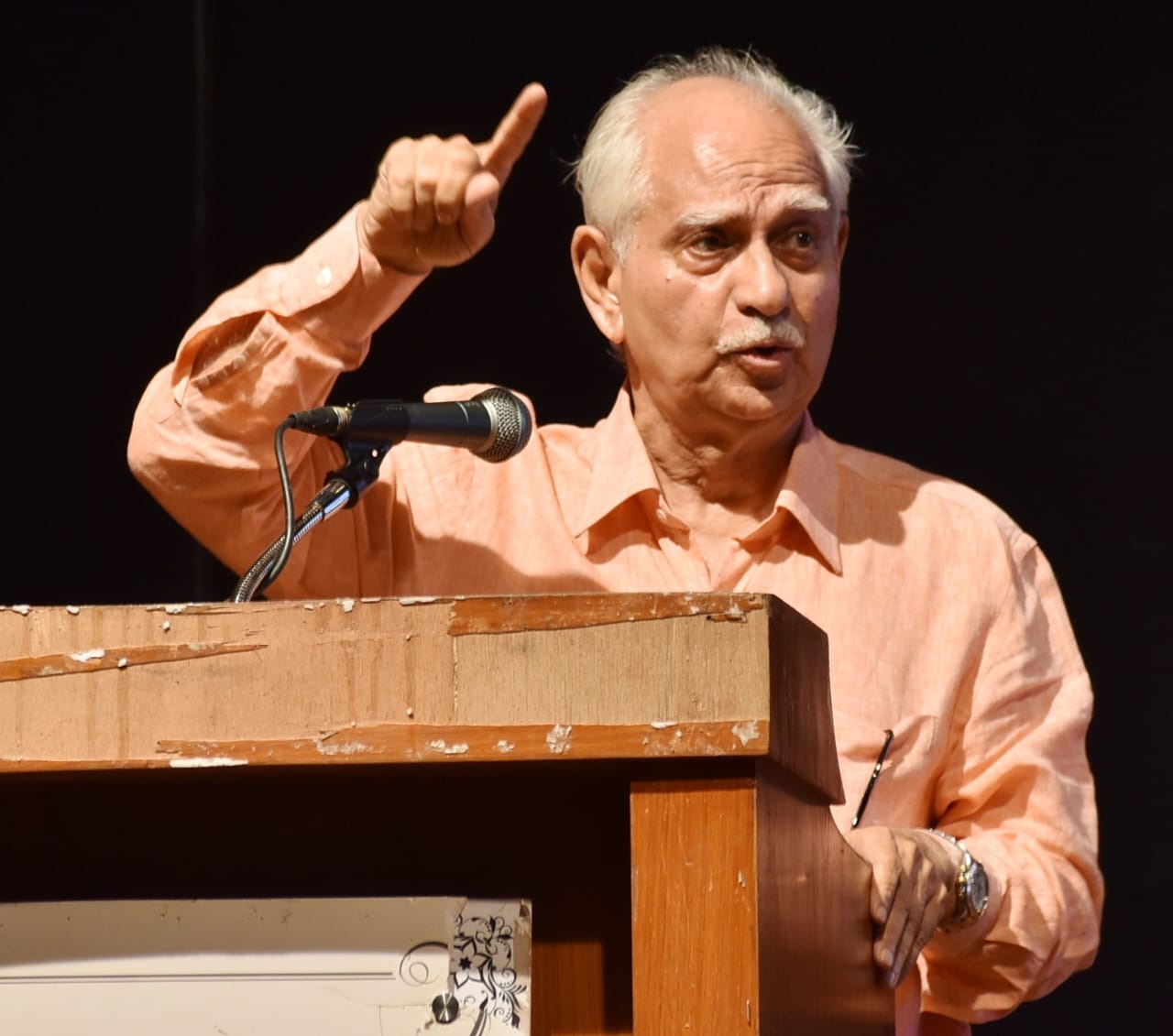
Children play in the garden, echoing the familiar dialogue, “Arre o Sambaa, kitne aadmi the?” Even after 50 years, Ramesh Sippy’s films draw crowds across generations. At the ‘Celebration of the Centenary Year’ at Ravindra Bhavan, Margao, honouring Late K. Vaikunth, Mario Miranda, and Laxman Pai, Chief Guest Sippy shared insights on cinema’s evolution. He reflected on how technology and changing audiences have shaped filmmaking.
TIMELESS STORIES
While audience preferences may have evolved, Sippy believes certain themes remain timeless. Stories of relationships, justice, love, and revenge continue to connect with viewers across generations. “People like films where there are good human beings. Simple relationships and the greed for money are common all over the world,” mentions Ramesh Sippy, Indian film director, producer, and screenwriter. He attributes the success of his films to these very themes. “When people exploit people, and somebody comes to take revenge, the audience is pleased, as ultimately good wins. While I know the world doesn’t work that way all the time, when it does, it is greatly appreciated,” he adds with a smile.
TAKING RISKS
In an era of instant media consumption, audience demands have evolved; however, there is still room for experimentation, Sippy says, recalling his father’s reaction to his first film, Andaz. “For me, each film is a challenge. My first film was a challenge. Andaz was a story about a widow and a widower. My father asked, ‘Are you sure you want to make this? The audience will be limited.’ And it was true,” he recounts. Although the film was a hit, it performed well largely in cities. “But it shows you can take risks with subjects. Not every film can be the same. I’ve always tried to make each one different. I like doing something new each time,” he adds.
AUDIENCE EVOLUTION
With each generation comes a new audience. From waiting months for a film’s release to consuming content instantly, the way people watch cinema has changed dramatically. Yet films from Sippy’s era continue to resonate across age groups. “The audience is definitely changing; they want a more realistic kind of film, which is fair. We have to bow to the audience as they are the ones who pay and watch the films,” Sippy mentions. Reflecting on the evolution of entertainment, he notes how cinema has adapted from the days of Doordarshan to OTT platforms. “There is a place for everybody. If they can’t see the film in the theatre, they watch it at home,” he remarks, adding that while younger audiences gravitate towards contemporary cinema, older generations continue to cherish the classics. Despite changing tastes, Sippy believes some emotions remain universal. “The audience will always like movies where the enemies are defeated,” he emphasises.
TECHNOLOGY AS A TOOL
For Sippy, experimentation and technology are valuable only when they serve the story. “There is no harm in using technology. It only helps you to tell a story. It cannot write or create the original story,” he states. Even in Sholay, the team went abroad because there wasn’t a 70 mm Technicolor laboratory in India at the time; the UK had one. “Technology helps, but it is not the basic thing. Today, AI does so many things more quickly. But if you rely on it for originality and creativity, it won’t happen. The human mind is cleverer. It has created AI, not the other way round. AI will always be helpful and a fine tool. If you use it correctly, it will help,” he comments. Ultimately, beyond tools and technology, what matters most to him is the integrity of the story and the courage to keep creating. “I would like to say, keep enjoying our films. The new generation will make them. I have done my bit. Maybe there might be a film or two left in me. Maybe I will make it, maybe I won’t. The challenge is to make it good enough. If it is, I will,” he reckons.
ORIGINAL STORIES MATTER
For Sippy, age has not diminished the curiosity that shaped his filmmaking journey. Even as cinema enters an era shaped by streaming platforms, rapidly changing viewing habits, and artificial intelligence, Sippy remains convinced that technology is only a tool. Audiences may evolve, and formats may change, but for him, the foundation of every memorable film remains the same: an original story and the human imagination behind it.


