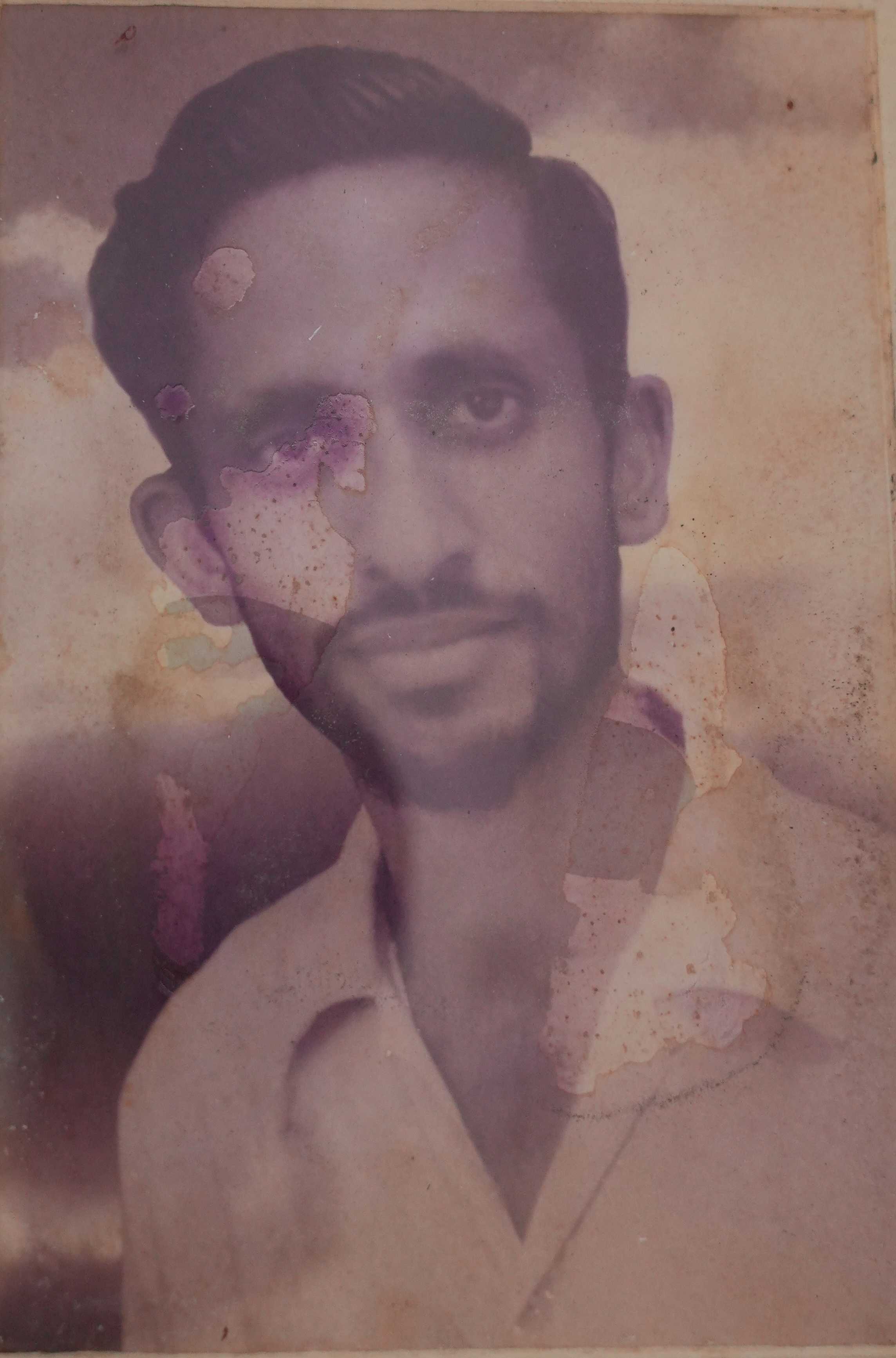
Long before he joined the ranks of freedom fighters alongside names such as Ram Manohar Lohia, Dr TB Cunha and Libia Lobo Sardesai, Chandrahas Naik was simply a young man running a carrier bus between villages. Educated and fluent in Portuguese, he had built a modest transport business with a few vehicles. But where others saw roads, he saw corridors of quiet revolt.
Chandrahas Naik played a vital role in Goa's liberation movement, distributing pamphlets that carried news of a revolution gathering strength. A transport operator by trade and a freedom fighter by conviction, he used his family's carrier buses to carry not just goods, but the very idea of self-rule.
"He used to take stops in certain villages and distribute pamphlets against the government," recalls his son Pradeep. "He was the first one to hoist the tricolour in Shiroda. Even during Portuguese rule, we had a tricolour."
That act of defiance cost the family everything almost immediately. Naik's activities soon drew the attention of the Portuguese authorities, forcing him into a life of uncertainty and resistance.
"My children will grow in free India. I want them to grow up in a free country, not under the Portuguese." said Naik.
For years, Naik lived between the jungle and the border as Azad Gomantak Dal fighters slipped into Goa by night and vanished by dawn. Back in Belgaum, his family survived on secret acts of kindness from neighbours, officials and villagers.
"People were scared to help us openly," his daughter Bharati remembers. "But they used to help us secretly."
His wife, Revati, held the family together through it all. There were mornings when the children woke to find their father simply gone, arrested again, and no money for milk, let alone medicine when illness struck.
"She was very strong," says Pradeep. "He was like a sanyasi (ascetic). She took care of us."
For the freedom fighters of Goa, Aguad Jail was not merely a prison, it was a sentence of erasure.
"Aguad Jail was feared," says Naik's son, Pradeep. "When they said Aguad, people used to tremble. It was like the Andaman and Nicobar Islands, once you went in, it was thought you would never come back alive."
Today, the Aguad Port and Jail Complex stands as Goa's foremost living memorial to that era; a space where the stones themselves remember what colonial power tried to silence. Walking through its corridors, one walks the same ground that held men like Chandrahas Naik, men who refused to let freedom remain a dream.
Despite arrests, exile and poverty, Naik remained a devoted father, ensuring his children received an education and a life beyond struggle.
One memory stayed with his children from a prison visit in Margao. A Portuguese officer looked at his children and asked him, "Why are you doing this?"
"My children will grow in free India. I want them to grow up in a free country, not under the Portuguese,” Chandrahas is said to have uttered.
When Goa was liberated, Naik found freedom but not stability. Unable to find work, he rebuilt his life through a new trade and finally gave his family the security he had long promised.
"Goans have an image," Bharati says with a laugh. "That a Goan doesn't care about anything except his siesta. But these are the Goans who fought for us to get that freedom, and that siesta. Under Portuguese rule, there was luxury. But we were not free. It is like keeping a bird in a cage, feeding it the best food. It will not be happy. It wants to fly."
On June 18, as Goa marks Revolution Day, the story of Chandrahas Pundalik Naik is a reminder of the burden of the cage a bird feels and what a flight out of it costs.