


DR UBALDINA NORONHA
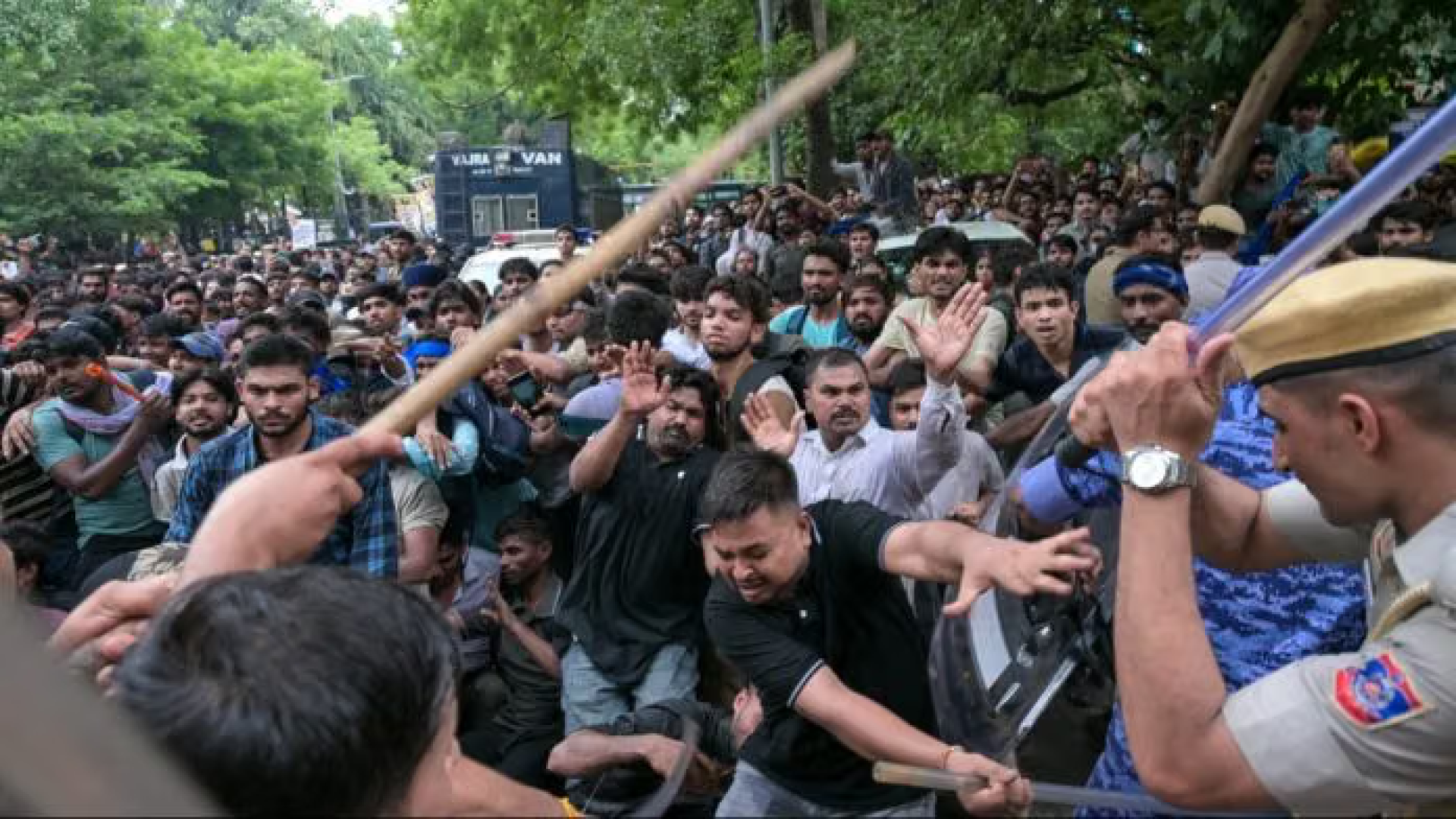
Young people from the Cockroach Janata Party, a non-violent movement of students, tried to march peacefully towards Parliament in the “Chalo Sansad” protest on July 20. Their primary demand was a fair exam system and accountability for lives lost due to paper leaks. They were met with tear gas, baton charges and brutality with no provocation from their side.
These scenes raise a deeper psychological and moral question: What happens inside a person, be it a police officer, a soldier or a government bureaucrat, when obedience to orders overrides the voice of conscience? And what happens to a society when this becomes a reality or routine?
Stanley Milgram was a social psychologist from Yale University in the 1960s. His work was shaped by the moral catastrophe of the Holocaust, where millions of Jews were systematically exterminated under Nazi rule. The Holocaust did not happen only because a few leaders were evil. It required the participation of thousands of ordinary people, be it soldiers, officers, administrators, railway workers, camp guards, clerks and so on.
He designed an experiment wherein a volunteer participant was asked to administer electric shocks to a learner whenever there was a mistake in the learning task. The learner, in reality, was an actor, and no real shocks were given, unknown to the teacher. With each error, the teacher was instructed to intensify the shock. The learners began to protest, shout and complain of heart trouble and eventually fell silent. If the volunteer hesitated or said they wanted to stop, Milgram, a calm man in a white lab coat, would respond with quiet, authoritative commands that the experiment must go on regardless. A majority of the volunteers continued to administer those painful and potentially lethal shocks in the presence of an authority figure. What Milgram revealed was that ordinary people can commit extraordinary harm when placed in certain structures of authority.
Milgram used the concept of an “agentic state” to describe what happens when individuals stop seeing themselves as autonomous moral agents and instead see themselves primarily as instruments carrying out someone else’s will.
In this state, personal responsibility feels reduced, and that makes it easier to engage in destructive obedience. Slapping a student or dragging them to a police station becomes discipline rather than assault. Firing tear gas at young people marching becomes crowd control rather than violence against vulnerable citizens. The officer on the ground may sincerely feel they are just doing their duty. Their seniors may insist it is necessary to maintain law and order. Besides, not every protest is peaceful.
Milgram’s findings indicate that the potential for destructive obedience lies in ordinary people, activated by certain conditions. What makes police personnel, soldiers or officials obey harmful orders, even when their private conscience might whisper that something is wrong? It requires a certain environment wherein questioning orders is discouraged while punishing those at the receiving end of state power for refusing to obey orders. Victims of such destructive orders are dehumanised. This environment can exist in democracies as well as dictatorships.
If destructive obedience is a human tendency, what protects a society from sliding into cruelty? Laws and protocols matter, but the deeper safeguard is integrity, the quiet, stubborn insistence on remaining a moral agent even within a system. For those in positions of power, police, military and bureaucracy, integrity means refusing to outsource responsibility and conscience.
Milgram’s findings show that many volunteers did experience moral conflict. Yet most continued. Integrity, in such moments, is the courage to act in line with that inner discomfort and do the right thing. A democracy that authorises force against its youth must be carefully guarded by conscience, not through routine obedience.
The Cockroach Janata Party protests will, like all movements, evolve, change, and perhaps fade into something else. Governments will change. Ministers will be replaced. The real strength of a democracy is not measured only by how much force it can deploy but by how deeply conscience permeates its institutions. The future of our democracy depends on this. And sometimes, integrity is more important than uniform.
( The writer is Associate Professor, Department of Psychology, St Xavier’s College, Mapusa)


