On September 3, the discovery of ancient relics at the historic Saptakoteshwar temple site in Divar once again brought attention to how much of Goa’s past is still waiting to be uncovered. The remains were found along the old pathway between Koti Tirth and Madhavachi Talli during restoration work.
LIVING HERITAGE
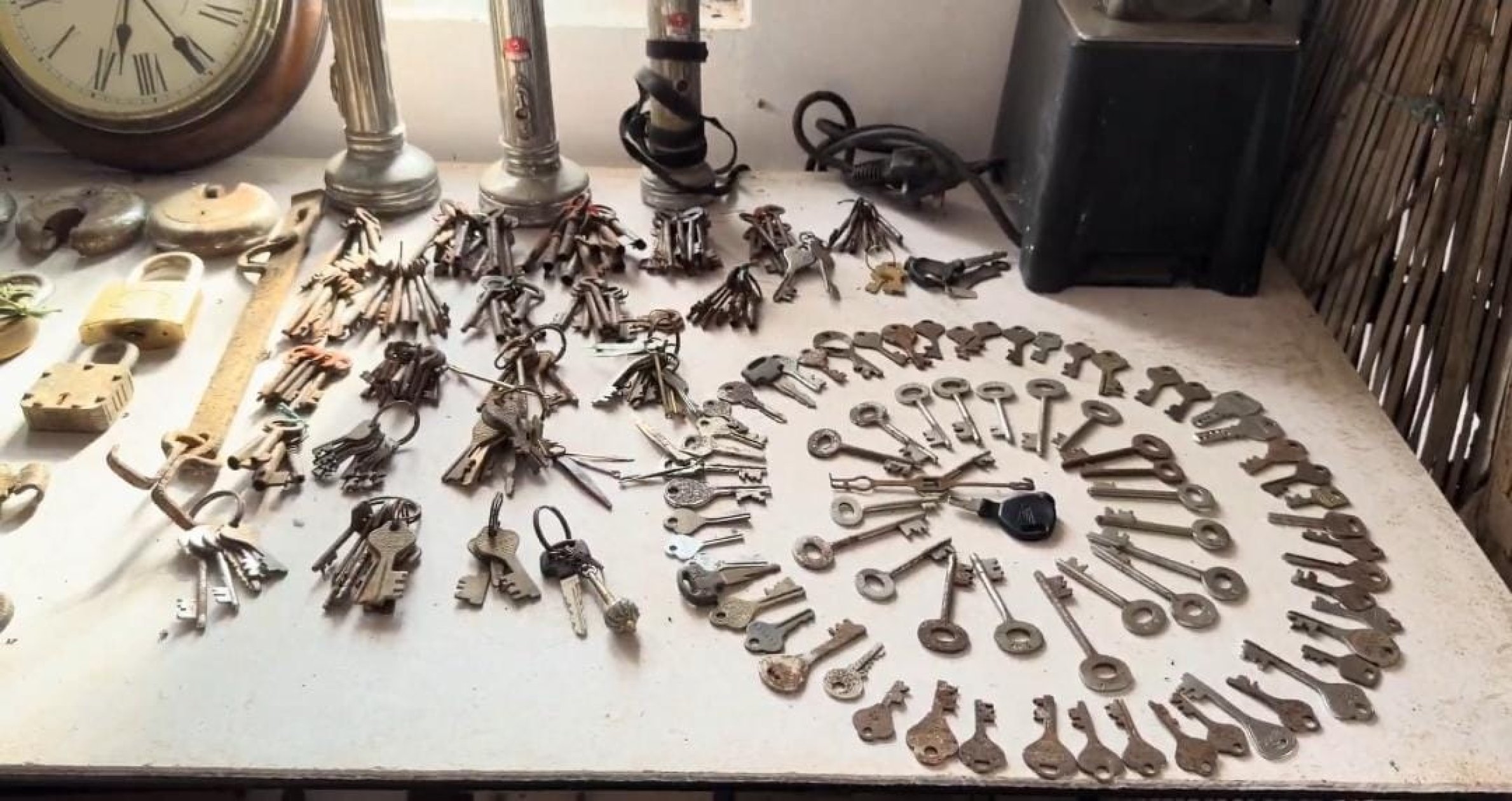
While discoveries such as these help piece together Goa’s older history, much of the State’s cultural past also survives in everyday objects, passed down through homes and communities. In Sattari, Gopinath Vishnu Gawas, founder of Amche Daaiz, has spent almost 25 years collecting and preserving such pieces of Goa’s social and cultural history. What began as an effort to save objects connected to an earlier way of life has grown into a museum with around 1,500 to 2,000 items, ranging from household objects and traditional tools to religious articles and artefacts. Many of these have also been donated by people, allowing objects that may otherwise have been forgotten to remain part of Goa’s living memory. For Gawas, Amche Daaiz is not simply a collection of old things, but a way of keeping the customs, practices and everyday life attached to them from being lost.
SHARED LEGACY
Even the name, ‘Amche Daaiz’, makes the museum feel personal. The idea behind the name was to make visitors feel that the heritage preserved here does not belong to one person, but to everyone. “Amche Daaiz, it is not mine, it is amche, ours. That’s why Amche Daaiz, so that everyone can feel like it is theirs,” explains Gawas. And perhaps that is what preservation is about too, keeping a part of the past not just safe, but within the reach of the community it came from.
Today, the museum has around 1,500 to 2,000 items, ranging from a few years old to nearly 105 to 110 years old. While some were collected by Gawas himself, many have been donated by people who wanted to see these objects preserved. “Many of these items have been donated, thus making this first Ethnographic Museum in Sattari an accurate reflection of Amche Daaiz,” he says.
OBJECTS SPEAK
Walking through Amche Daaiz is almost like taking a little time travel through Goa, one object at a time. Among the larger pieces are ‘tapli’, giant vessels once used for devkarya and other religious functions, along with copper ‘kalshe’ which have been used to draw water and ‘kalsulyo’. A special ‘thalo’ in the collection is being used by the Dhangar community while singing their folk songs and Gawas brings the tradition alive by singing a few lines. “Here we also have an old Samaee, whose uniqueness lies in its adjustable height and design. It is very old and not very easily available now,” he remarks. The collection also includes farming tools such as the ‘koiti’, used to cut sugarcane, along with other objects such ‘farraa’ or the old coal irons, old stoves, weights and ‘chalni’ or sieve.
Among the oldest in the collection is a wooden mould that was once used to make idols. Then there are the smaller curiosities that make a visitor stop and look twice. An old machine used to make sheviya, believed to be around 105 years old, sits alongside folk musical instruments and a ‘3 vatincho divo’. “Unlike the more common diyas made for five, seven or nine wicks, this one holds three. I have tried asking around for the origin of this diya, but I have not found any plausible explanation,” he mentions. Old coin-box telephones and old alcohol bottles from around the world add to the mix, showing just how wide the collection is. Several other items ranging for everyday household items like Jaati, to sewing machines, to typewriters, these are just few of the items from Gawas’ vast collection. Each object may be different in its purpose, age or story, but together they offer a glimpse into the many ordinary things that once formed part of life in Goa.
PRESERVING MEMORY
For Gawas, this journey with Goa’s past began when he was still a college student. “In 1992, we put up an exhibition as a part of our Saraswat College’s initiative. I had displayed a few coins and other items for the same,” he recalls. What began with a few coins eventually grew into a collection of thousands of objects and, later, a museum dedicated to preserving them. As he finishes the tour of Amche Daaiz, Gawas puts the idea behind his work simply: “It is our Daaiz, given to us by our ancestors. Hence, it is now our duty to preserve it.” Thus, in a State where pieces of the past can still come to light in unexpected places, Amche Daaiz is one place where the older Goa is being carefully kept alive, one object at a time.