


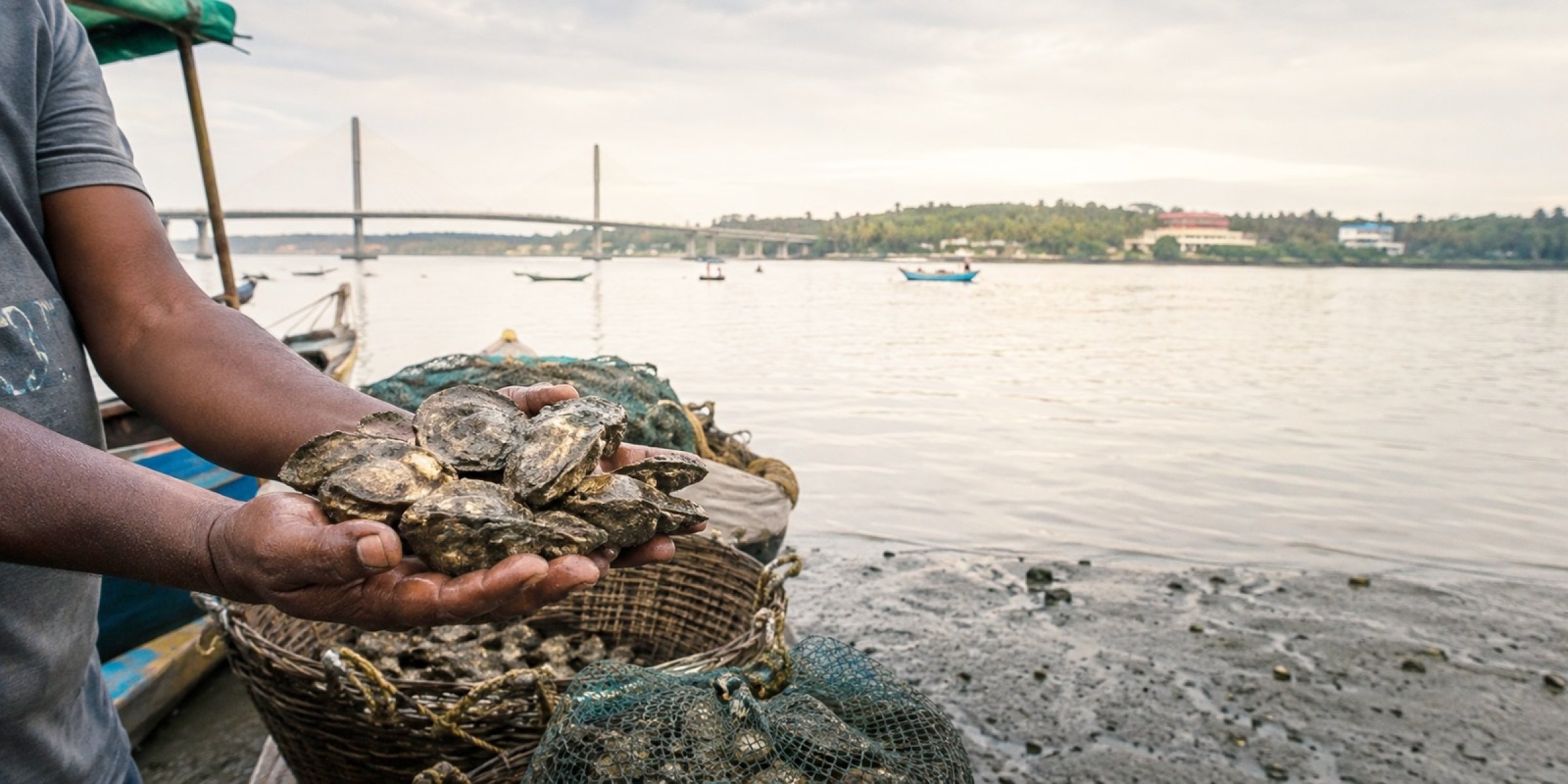
A niche delicacy among Goa’s many popular seafood offerings, oysters, or kalvam as they are locally known, have found themselves in the limelight for the wrong reasons. A recent study by scientists from the National Institute of Oceanography (NIO) has raised concerns over cadmium contamination in oysters. The findings, published last month, indicate that oysters were accumulating cadmium at concentrations exceeding permissible safety limits at most of the sampling sites studied. The findings have since raised questions not only about the safety of the delicacy but also about the condition of the waters where these oysters are harvested.
Calls for wider research
For local harvesters, however, the issue is more complex than simply declaring oysters safe or unsafe. Local fisherman Suraj Salgaokar believes the study should be accompanied by a wider investigation into the surrounding environment and the condition of the waters where oysters are harvested. “They are saying it is unsafe, but rather than just saying that oysters are unsafe, there should be proper research conducted even in the surrounding areas,” he says. Salgaokar says the waters cannot simply be categorised as safe or unsafe without understanding the larger environmental factors at play.
Demand remains steady
Despite the recent concerns, Salgaokar says there has been no visible decline in demand among his regular customers. “No, our customers who have been buying from us continue to do so. There is no decline in demand as of now. We have been doing this since I was 13; something should have happened? But it has not,” he remarks. His experience, he says, reflects the continued trust among customers who have been buying from local harvesters for years. However, he acknowledges that contamination concerns cannot simply be dismissed and that greater clarity from authorities and researchers would benefit both consumers and those dependent on oyster harvesting.
Chefs urge caution
However, the concerns raised by the study have prompted a more cautious response from those working in the culinary sector. Chef and culinary consultant Khabir Moraes says he would be vigilant and selective about sourcing oysters. “As you can’t trust every seller, as they might lie to sell their harvest. I would rather choose to avoid them until I feel they are safe to consume again,” he says.
Need for transparent testing
For Moraes, one of the most effective ways to address the uncertainty surrounding oysters would be through a transparent and comprehensive testing system. Rather than relying on broad warnings, he believes consumers should have access to clear information about the oysters they are purchasing. A detailed test report, he says, should establish the exact harvesting location or clearly defined harvest area, the date and time of harvest, batch or lot number, species, sample collection date, laboratory conducting the test, test methods, results and detection limits. Such documentation, coupled with appropriate food safety certification and regulatory clearance, could provide consumers with greater confidence about the seafood reaching the market.
Pollution in focus
The concerns also bring the condition of Goa’s waterways into focus. Salgaokar points to the increasing pollution in the Mandovi and believes that addressing the source of pollution should be given as much importance as testing the oysters themselves. “I have just one appeal to make to the authorities: rather than just saying oysters are unsafe, first prevent the pollution and sewage that is leading up to this,” he says. This very question of what enters Goa’s waterways is also a concern for him. Pointing to the activities taking place in the Mandovi, he says, “There are so many casinos in the river; where they dump their waste is a big question.” However, he does not place the blame entirely on casinos or government authorities. Instead, he acknowledges that ordinary citizens also contribute to the problem.
The concerns surrounding Goa’s oysters therefore sit at the intersection of food safety, environmental health, consumer confidence and traditional livelihoods. As Goa continues to grapple with questions surrounding pollution, sewage and waste entering its waterways, the controversy over oysters serves as another reminder of how closely the health of the environment is linked to what eventually reaches the dining table. For now, the demand for local oysters may not have fallen significantly among regular customers, but rebuilding wider consumer confidence will require more than assurances. Regular environmental monitoring, transparent testing, responsible harvesting and clear communication between researchers, authorities, sellers and consumers could help establish where the risks lie and ensure that Goa’s kalvam can continue to be part of its culinary tradition without compromising public safety.


