Dr ALVARINHO J LUIS
Vasco da Gama, one of Goa’s historic port-and-railway towns, occupies the strategically located Mormugão Peninsula overlooking the Arabian Sea. Named after the Portuguese navigator Vasco da Gama, who established a direct maritime route from Europe to India in May 1498, the town reflects Portugal’s maritime legacy. His voyage paved the way for Portuguese expansion and control over key trading routes linking the Persian Gulf, the Arabian Peninsula, and India’s west coast. Following the Portuguese conquest of Goa in 1510, Mormugão gained strategic importance.
Development of Mormugão
In 1624, the Portuguese began constructing fortifications at Mormugão to safeguard the harbour and control maritime traffic entering the Zuari estuary. Extending across the Sada headland, these defences, called Fortaleza de Santa Catarina, included walls, bastions, and military installations. In the 17th century, the Portuguese considered relocating their capital from epidemic-plagued Old Goa to strategically positioned Mormugão.
Between 1687 and 1734, efforts to transfer the administration led to the construction of several buildings, including the Government Palace, Custom House and Hospital. However, the proposed relocation never materialised, and Panaji eventually became Goa’s capital in 1843.
To revive Goa’s declining economy, the Portuguese later promoted Mormugão as a major commercial port. The Anglo-Portuguese Treaty of 1878 facilitated the development of a railway connecting Portuguese Goa with British India. Constructed between 1881 and 1888, it became a vital trade corridor. The railway boosted trade, passenger transport and the growth of commercial and residential settlements around the harbour, transforming Mormugão from a fortified maritime outpost into a thriving commercial gateway by the late 19th century.
Birth and Growth of Vasco da Gama
In 1886, Portuguese Governor Francisco Joaquim Ferreira do Amaral proposed developing a township east of Mormugão Fort towards Vaddem and named it Vasco da Gama. However, his plans were interrupted following his wife’s premature death and his subsequent return to Portugal. Although the Portuguese controlled the region from the 16th century, the planned township emerged much later. Following the separation of Mormugão Taluka from Salcete, the Portuguese administration incorporated portions of Chicalim, Vaddem and Mormugão into the new township, officially named Vasco da Gama by a decree in 1917.
Designed with broad streets, a market, commercial establishments and residential neighbourhoods, Vasco reflected Portuguese urban planning. The town comprised two principal zones: the bustling central commercial district and Baina to the south. Expanding maritime trade and industrial activities gradually transformed Vasco into a densely populated residential and commercial centre supporting Mormugão Port.
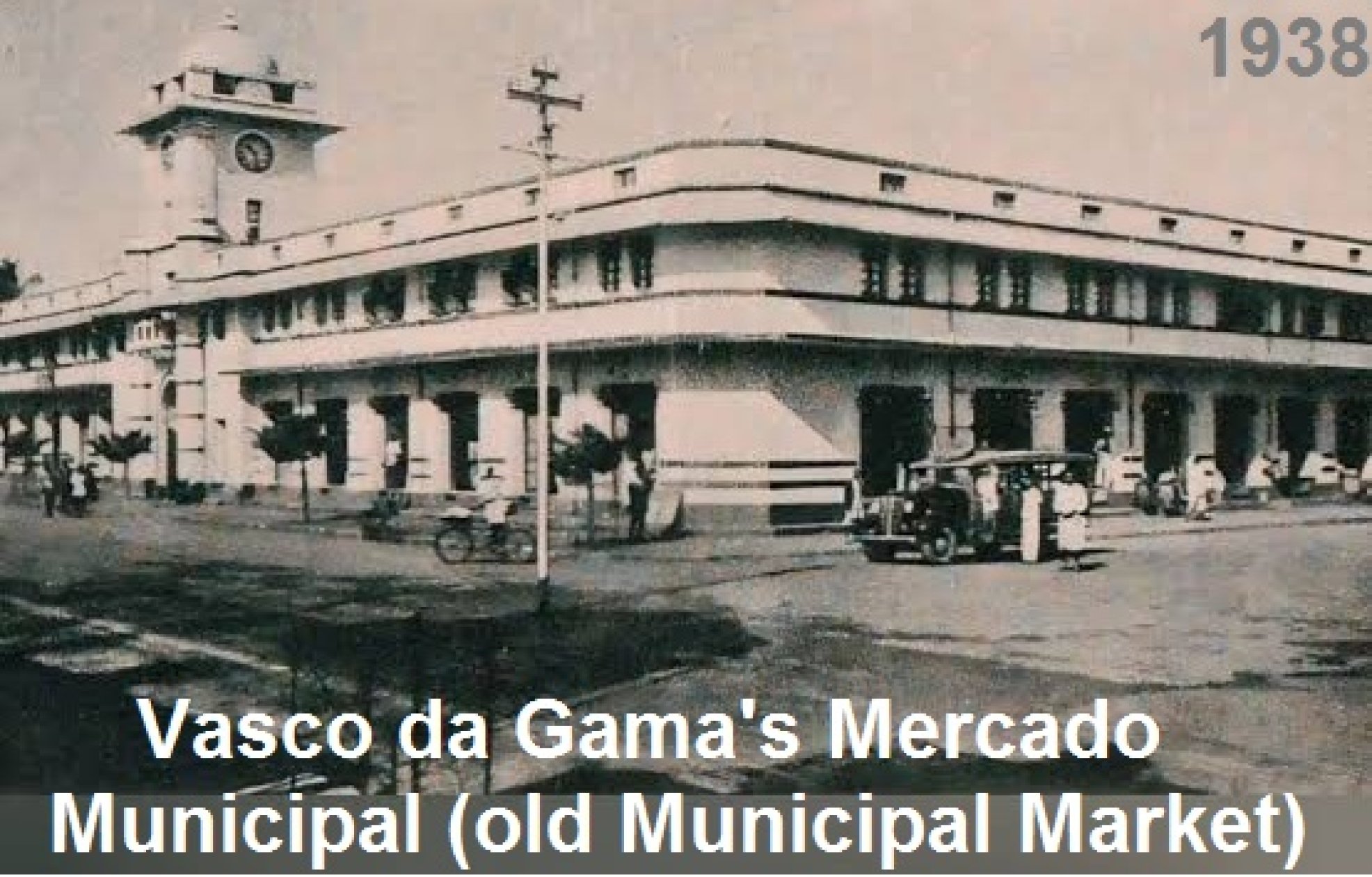
The 1920s and 1930s witnessed significant urban development. The Vasco Municipal Market, inaugurated in 1938 and expanded between 1959 and 1961, remains distinguished by its iconic clock tower. The Mormugão Municipal Council building, constructed between 1936 and 1942 along the former Avenida da Estação (Station Avenue), further exemplifies the town’s architectural heritage and commercial growth.
Religious and cultural heritage
The city’s religious and cultural heritage reflects its rich diversity and communal harmony. Founded by Jesuits in 1570, St. Andrew’s Church saw its first mass celebrated on April 5. Originally built with mud walls and a thatched roof, it was destroyed during military attacks and rebuilt using stone and lime around 1594. Other churches include St. Francis Xavier Church, Our Lady of Desterro Church, and Our Lady of Good Health.
The origins of Shree Damodar Mandir are linked to a devastating epidemic in 1898–1899, when Vasco residents sought blessings at Zambaulim’s Damodar Temple and brought back a sacred coconut (shreephal), which was installed at the Joshi family’s residence on Swatantra Path. When the epidemic subsided, devotees initiated the annual Damodar Bhajani Saptah, featuring 24 hours of continuous bhajan singing.
Shri Ganapati Temple, established around 1980 at New Vaddem, celebrates Ganesh Jayanti with devotional singing, religious rituals and a colourful palanquin procession. Sree Ayyappa Temple, established in 1977 at Mangor Hill, serves devotees preparing for their pilgrimage to Sabarimala through prayers and bhajans. Madina Masjid on F L Gomes Road and Gurudwara Sri Guru Singh Sabha reflect Vasco’s Muslim and Sikh heritage, respectively.
Aviation gateway
Dabolim Airport was built during the tenure of Portuguese Governor-General Paulo Bénard Guedes. Inaugurated in August 1955, it was named Aeroporto General Bénard Guedes in his honour. The Portuguese administration launched Transportes Aéreos da Índia Portuguesa, establishing air connections between Goa, Daman and Diu and destinations beyond Estado da Índia. Damaged during Operation Vijay in December 1961, the airport was subsequently restored and modernised, with civilian air services resuming in 1966. In November 1985, a Condor charter flight from West Germany marked a milestone in Goa’s international tourism. Building on a Portuguese-era aviation link, Dabolim Airport became Goa’s international gateway, boosting global connectivity, tourism, and economic development.
Entertainment and Education
The Cine Vasco is the first known cinema theatre in the heart of the city. Another popular cinema, El Monte, is located at Alto Desterro. Cine Shivam, K Sera Sera Miniplex, and Rajhans are part of the city’s post-liberation cinema landscape. Baina Beach and Grandmother’s Hole enhance the city’s coastal charm, offering picturesque seaside attractions.
Beyond entertainment, the city has evolved into a hub of scientific research, maritime expertise and education. The National Centre for Polar and Ocean Research at Headland Sada advances polar, Southern Ocean and Himalayan research, while the Fishery Survey of India at Bogda undertakes marine fisheries investigations. The National Institute of Hydrography, Institute of Shipbuilding Technology, Institute of Maritime Studies and Goa Shipyard Limited strengthen maritime capabilities through hydrographic training, technical education and shipbuilding. Established in 1972, MES College and BITS Pilani-Goa promote higher education and research. Government ITI provides vocational training, while Dnyanvardhini Divyang Training College and Sanjay Centre support special education. St. Andrew’s Institute offers secondary, higher secondary and ICSE education.