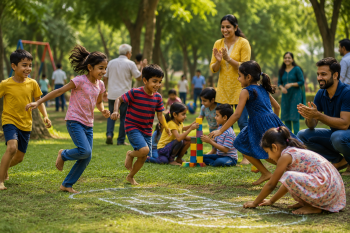
Every year on 11 June, the world observes International Day of Play, a day dedicated to recognising the vital role that play has in the lives of children. While play is often seen as a simple pastime, experts agree that it is one of the most important activities for a child’s healthy development. Through play, children learn, grow, build relationships and develop skills that will serve them throughout their lives.
The theme for International Day of Play 2026 is ‘Protect play, protect childhood’. The message is simple yet powerful. Childhood and play are closely connected, and protecting children’s opportunities to play is essential for their well-being. The theme also serves as a reminder that governments, schools, communities and families all have a responsibility to ensure that children have access to safe and inclusive spaces where they can play freely.
MORE THAN JUST FUN
Play is much more than entertainment. It helps children develop creativity, curiosity and imagination while building problem-solving, decision-making and critical thinking skills. Through play, children learn by exploring, experimenting and making mistakes. It also supports learning, as children often understand new ideas more effectively when engaged in enjoyable, play-based activities.
BUILDING SOCIAL AND EMOTIONAL SKILLS
Play helps children develop important social and emotional skills. Through play, they learn to cooperate, communicate, resolve conflicts and understand others’ feelings. It also supports emotional well-being by helping children relax, manage stress, express emotions, process experiences, overcome fears and build resilience as they grow.
IMPORTANCE OF ACTIVE PLAY
Physical play is vital for children’s growth, helping build strength, coordination and fitness through activities such as running, jumping and climbing. With screen time increasing, outdoor play is especially important. Regular physical activity improves health, concentration, mood and sleep, while helping children perform better in school and maintain healthy lifestyles.
WHY CHILDREN ARE PLAYING LESS
Despite its importance, play is becoming less accessible due to urbanisation, limited open spaces, safety concerns and academic pressures. Increased screen time has further reduced opportunities for physical activity and social interaction. Experts emphasise the need to balance digital engagement with traditional play to support children’s healthy development and well-being.
GLOBAL EFFORT TO PROTECT PLAY
The International Day of Play, observed on 11 June, was established by the United Nations in 2024 to highlight the importance of play in childhood. Supported by organisations such as UNICEF and UNESCO, it promotes safe play environments and recognises play as a fundamental right, not a luxury.
HOW EVERYONE CAN CONTRIBUTE
International Day of Play encourages people around the world to take action in both small and large ways. Parents can spend time playing with their children, schools can incorporate more play-based learning, and local authorities can invest in safe parks and recreational spaces. Community groups can organise events that bring children together and highlight the value of play in everyday life.
Importantly, supporting play does not always require expensive facilities or elaborate programmes. Simple activities such as outdoor games, storytelling, drawing and imaginative play can have a lasting impact on a child’s development.
PROTECTING THE FUTURE
International Day of Play is ultimately a reminder that childhood should not be rushed. Children need time and space to explore, imagine and simply enjoy being children. By protecting opportunities for play, societies invest in healthier, happier and more resilient future generations. As the world marks International Day of Play 2026, the message is clear: protecting play means protecting childhood itself. Every game, every laugh and every moment of imagination contributes to a child’s growth and helps build the foundation for a brighter future.