


Dr ALVARINHO J LUIS
For The Goan
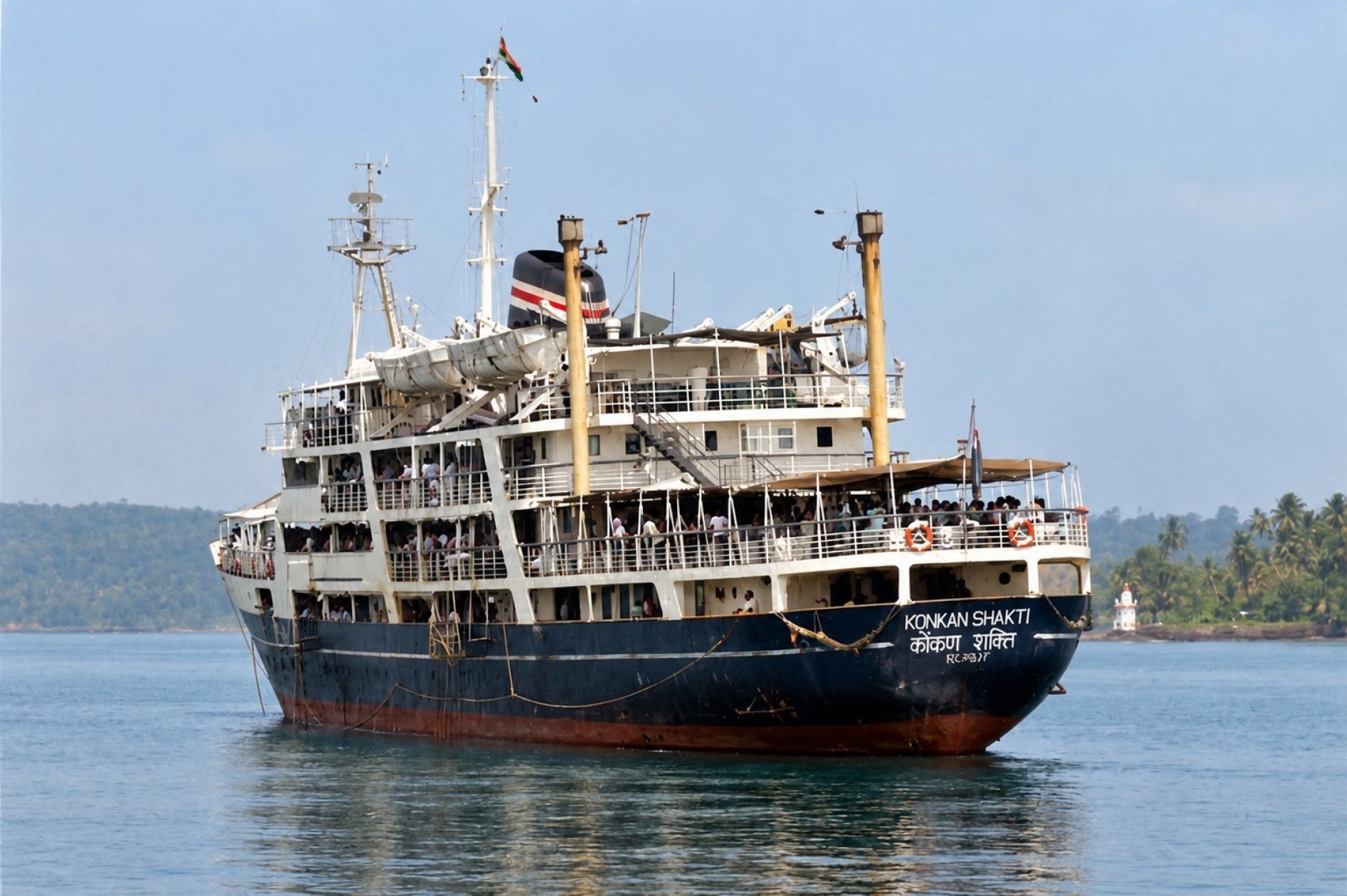
Back in the 1960s, 1970s, and right up to 1991, travelling between Bombay and Goa was an experience to remember. Before modern cruise services and convenient air travel became commonplace, two steamers—Konkan Sevak and Konkan Shakti—connected the two destinations, carrying passengers along the picturesque Konkan coastline.
Konkan Shakti was originally named Sarita and was owned by Chowgule Steamship. The company also operated vessels such as Konkan Sevak, Sarita and Rohini during the 1970s. Shipping companies, including Chowgule Steamship and the Mughal Line, initially operated the services before operations eventually came under the Shipping Corporation of India.
The steamers departed from Bhaucha Dhakka at Mazgaon, Mumbai, with one vessel leaving for Goa while the other returned. They stopped at several places along the Konkan coast, including Ratnagiri, Jaigad, Vijaydurg, Devgad, Malvan and Vengurla. At smaller destinations without proper harbour facilities, passengers and cargo were sometimes transferred between the steamer and the shore by canoe—an experience that added to the adventure. For some travellers, the affordable fare made the long journey worthwhile. Peter Carvalho from Calangute, who travelled by steamer more than 20 times, recalls those days with nostalgia. For him, the adventure began before reaching the ship—travelling from Kalyan to Byculla by bus, then heading to the port to board the steamer.
The voyage
The passengers were a mix of Goans, tourists, hippies, and travellers from the Konkan coast, all sharing the same picnic-like mood. Tickets were sold at the ferry wharf on Dockyard Road, Mazagaon, after which passengers waited eagerly for the gangway gates to open. Boarding was an event in itself. Passengers hurried to find a good place on the deck, spreading their bed sheets or sleeping bags over the available space and effectively staking their claim for the journey ahead. Then came the familiar blast of the foghorn—and the great voyage began.
Once settled in, strangers who might have jostled each other while boarding soon became companions. They opened lunch packs, shared drinks, and started talking. The easy-going Goan spirit gradually took over. Guitars were strummed, songs were sung, and friendships blossomed. By midday, the festive atmosphere filled the decks. Young lads played Hum Bane Tum Bane repeatedly for hours—over and over again. Couples also enjoyed playing cards—mendi code, adding another touch of fun and companionship to the long journey.
As the steamer moved southwards, guitars and other musical instruments appeared on deck, food baskets were opened, and conversations and laughter continued for hours. The journey itself became the destination. The steamers stopped at several places along the coast, including Vengurla, Malvan and Ratnagiri, picking up passengers and cargo along the way. At places without proper harbour facilities, passengers arrived in large canoes that ferried them to and from the steamer. The sight of these small boats approaching the huge vessel remains one of the vivid memories of those journeys. There were different classes of travel. A few cabins were available for passengers who wanted privacy and were prepared to pay more. The upper deck offered greater comfort, while the lower deck accommodated most travellers. Hippies with haversacks and guitars were another characteristic sight on these voyages.
The Bucket Man
Another unforgettable character aboard the old steamer was the bucket man, who would make his rounds carrying a bucket piled high with bottles of Limca and Thums Up. From the many pockets of his outfit came bottles of feni, sold at Goa prices even while the Gateway of India remained visible in the distance.
When the lunch bell rang, passengers took turns heading to the canteen with their meal coupons, often carrying their bottle of feni along. The menu featured delicious fish curry and rice, with fish so fresh it seemed to have come straight from the Arabian Sea. Meanwhile, the steamer gently meandered along the Konkan coast, with occasional dolphins adding magic to the voyage.
The Housie
After hours of watching pristine beaches, swaying coconut palms, and the endless sea, passengers would gather in the mess for a lively game of Housie. The ship’s electrical engineer called the numbers. Prizes for lines and full houses helped offset the ticket cost. Later, everyone returned to the deck to enjoy the sunset. As the steamer sailed towards Goa, feni flowed, conversations deepened, and soon the talk turned to God, love and the best Goan sausages—Goan spirit at its finest!
Dinner was announced in the now-familiar dining hall, which had gradually begun to feel like home. After dinner, passengers returned to the deck for the rosary, praying all five decades and the litany, followed by petitions for everyone and everything. The life rafts, earlier used as card tables, makeshift bars and changing areas, were now transformed into beds. As passengers slept, the sister ship passed in the night, and a reassuring toot between the two captains signalled that all was well.
Returning to Goa
Sunrise greeted passengers with smiles as the familiar silhouette of Goa’s coastline emerged—golden beaches fringed with swaying palms, bathed in the fresh morning air. By 9:00 a.m., the steamer passed Chapora Fort, Anjuna and Baga, with the Jesuit retreat house visible atop the hills, then Calangute, Candolim and Fort Aguada. Finally, sailing up the Mandovi River, past iron-ore barges, the voyage reached its unforgettable grand finale. It was time to disembark, exchange contacts and bid farewell to newfound friends. At Panjim jetty, excited relatives awaited their loved ones.
In the late 1980s, the two steamers—Konkan Shakti and Konkan Sevak—were requisitioned for service during the Sri Lanka conflict, ending the grand and much-loved Goan party at sea.
(Dr Luis, a scientist, freelancer, and son of the soil from Taleigao, has explored some of the world’s remotest frontiers, spending 30 days each in Antarctica and Svalbard in the Arctic, besides sailing across the fiery Southern Ocean during India’s polar scientific expeditions)


