KATHERINE MANUEL
The Goan I PANAJI
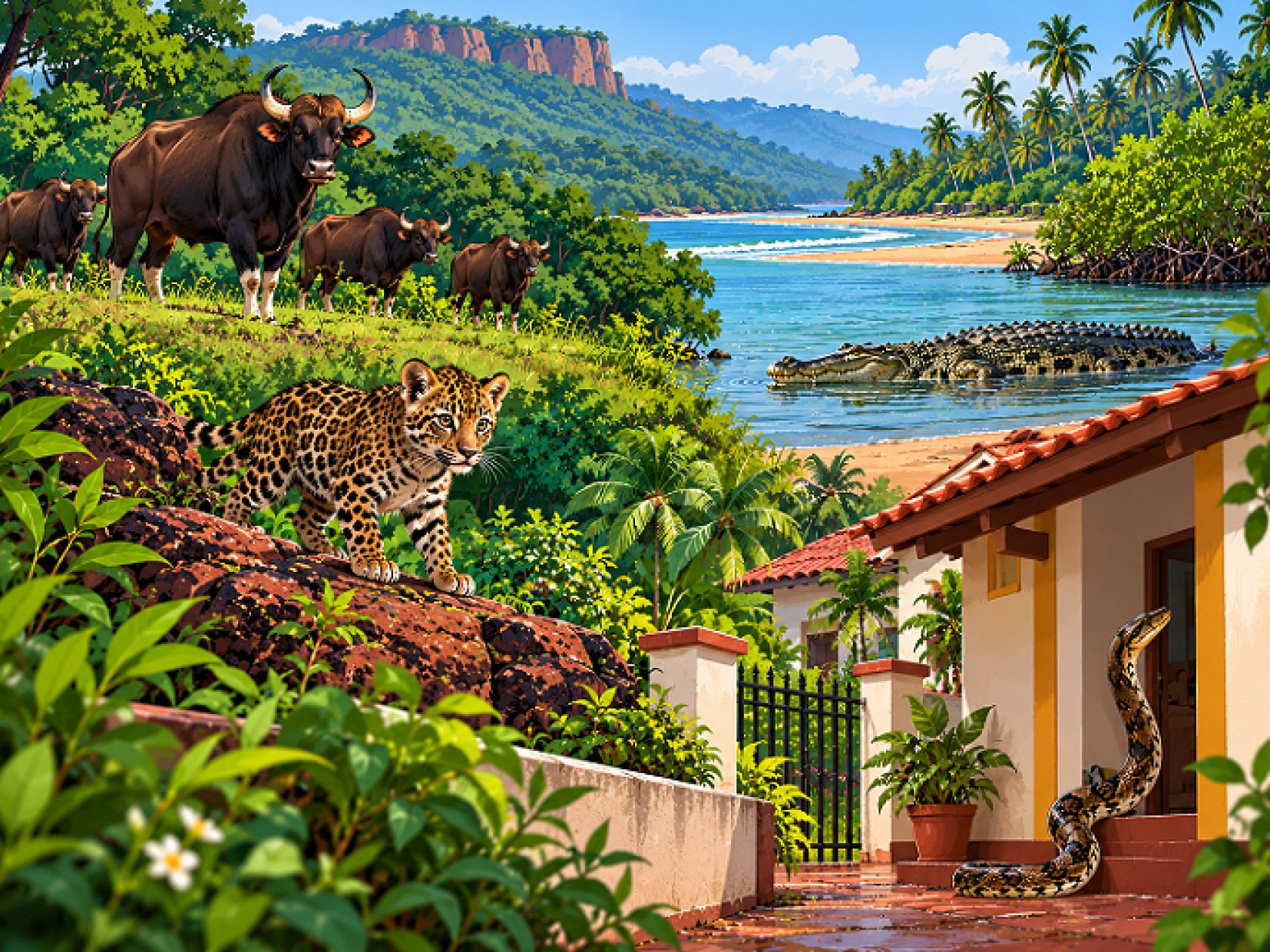
Gaurs in Sanquelim, crocodiles in Mandrem, leopard cubs in Khandepar and snakes of various species in homes and residential areas. As World Animal Day is observed, Goa’s rich biodiversity stems from its location in the Western Ghats and its tropical monsoon climate; therefore, it should come as no surprise that reports like these are a common occurrence.
Tiny beginnings
As Goa slowly moves towards urbanisation, animal species in the State are threatened. Tallulah D’Silva, renowned mud architect and environmentalist, talks about the first affected species: “When we talk about which animals get affected, we do not realise that the first to go are the tiniest creatures - insects like bees, reptiles and amphibians like frogs. When these creatures disappear, there is a breakdown in the food chain.”
Growing threats
Aaron Fernandes, conservationist, secretary of the Chameleon Wildlife Organization and member of the Goa State Biodiversity Board, explains, “As is the case all over the world, not only Goa, most species are at risk due to habitat loss and fragmentation, and the global climate crisis. If one were to look at specialist species, one would see how altered ecosystems due to anthropogenic factors like unsustainable development can push them deeper into their dwindling niche habitats, reducing their range. A look at status assessments through bodies like the International Union for Conservation of Nature will prove this. If I were to name a few, since I study reptiles, turtles are definitely one among the many groups of reptiles. The slightest temperature changes can affect their physiology, breeding behaviour, and also sex ratios during hatching. Herps, or rather reptiles and amphibians, are known as bioindicators of the health of ecosystems. Pollutants in water bodies and other systems they rely upon can and do severely affect them first, and hence they, as a group, are at immediate risk due to these factors. Unscientific management of threatened species doesn’t help conservation either.”
Habitat under threat
These species are often impacted as soon as their natural habitats are destroyed. “The habitats under immediate threat are the ones that are considered wastelands and the ones not even considered to be habitats,” says Aaron. “These include laterite plateaus and most mangrove ecosystems. Additionally, certain forests of our northern Western Ghats are also under immediate risk from linear projects, unscientific planning and the disregard and non-recognition of their protected status.”
Goa’s plateaus are one of the most biodiverse regions, playing host to endemic species of flora and fauna. “The plateaus of Taleigao, Verna, Karapur and other places in Sancoale and Chicalim require protection,” says Tallulah. “These areas are witnessing deforestation and encroachment for various constructions.”
Into our homes
As the habitats of native animals are being compromised, locals begin to witness these animals entering their homes.
Aaron, who attends to wildlife calls, explains the appropriate response. “Any wild animal spotted inside anyone’s home needs to be professionally and ethically removed and released by an expert recognised by the forest department,” he says. “Species that are not dangerous to us also share space with us, as our homes also form a part of their habitat too. If an animal is in our compound with a chance to move away, that should be considered before removal. Translocating wild animals is never the best option, as it is more detrimental than good to both humans and the species that’s being moved. Coexistence is key.”
Pets and wildlife
Another point they both agree on is the response about our domestic pets in relation to wildlife. “All dog breeds today are a result of artificial selection that goes back almost 30,000 years. Early humans domesticated them from grey wolves, selected certain traits that were convenient, hunted with them, and made them our companions. Every single breed alive today is a result of that artificial selection,” says Aaron. “That’s why they are all different breeds and not different species; hence they are domestic and not wild. If they are not in our homes, left to proliferate and turn feral, they are a threat to local biodiversity.” In case of such an encounter involving a wild animal, his instruction is clear: “Any pets like cats and dogs should be tied and kept inside the homes till a wild animal has had that chance to move away.” Tallulah echoes this sentiment: “Our dogs and cats often prey on these wild animals like non-venomous snakes, lizards, frogs, and even birds. We need to ensure we’re keeping our pets in check so that they do not become a wildlife nuisance.”
Learning to coexist
Aaron talks about what we can do: “Wild animals usually don’t need human intervention at all. They need to be left alone, and their habitats need to be left alone too. However, as we are already pushing them further into pockets, we can at least start learning about them, accepting them in our space, and start unlearning what we think we know and relearning to co-exist with them around.” The solution to the human-animal conflict is not singular and concrete. It is an ever-evolving process of understanding human-animal cohabitation and creating awareness about the species around us.