


THE GOAN NETWORK
A pangolin found in a car shed in Collem, gaurs turning up near roads and farms, and Omkar the elephant moving through fields are familiar wildlife stories heard in Goa. Behind these encounters, however, is a larger concern over what happens when the spaces animals live in begin to shrink.
PANGOLIN ENCOUNTERS
The rescue of two Indian pangolins from residential areas in Goa also brings into focus the issue of wildlife movement into human settlements, as Animal Week begins today. On September 29, a pangolin was found near a human habitation in Khajne, Pernem, and later released into the Mhadei forest. Two days earlier, another was rescued from a car shed in Collem, Dharbandora, and released in Mollem. Both animals were examined and found to be uninjured. Pangolins are nocturnal mammals rarely seen in human-dominated areas, and their presence in residential spaces exposes them to accidental injuries and human-wildlife conflict.
JUMBO TROUBLE
Omkar, the sub-adult elephant that moves between Goa and Maharashtra, has also returned to the state repeatedly this year. In August, he was seen moving through agricultural areas around Mopa and Tamboxem, damaging crops before being escorted back across the border. He returned to Goa in September, prompting the Forest Department to increase its vigilance in the area. For farmers, these visits mean damaged plantations and uncertainty over their crops. The elephant’s movements also raise questions about the routes available to wildlife across the state border and the challenges of managing animals that move through inhabited areas.
CHANGING LANDSCAPE
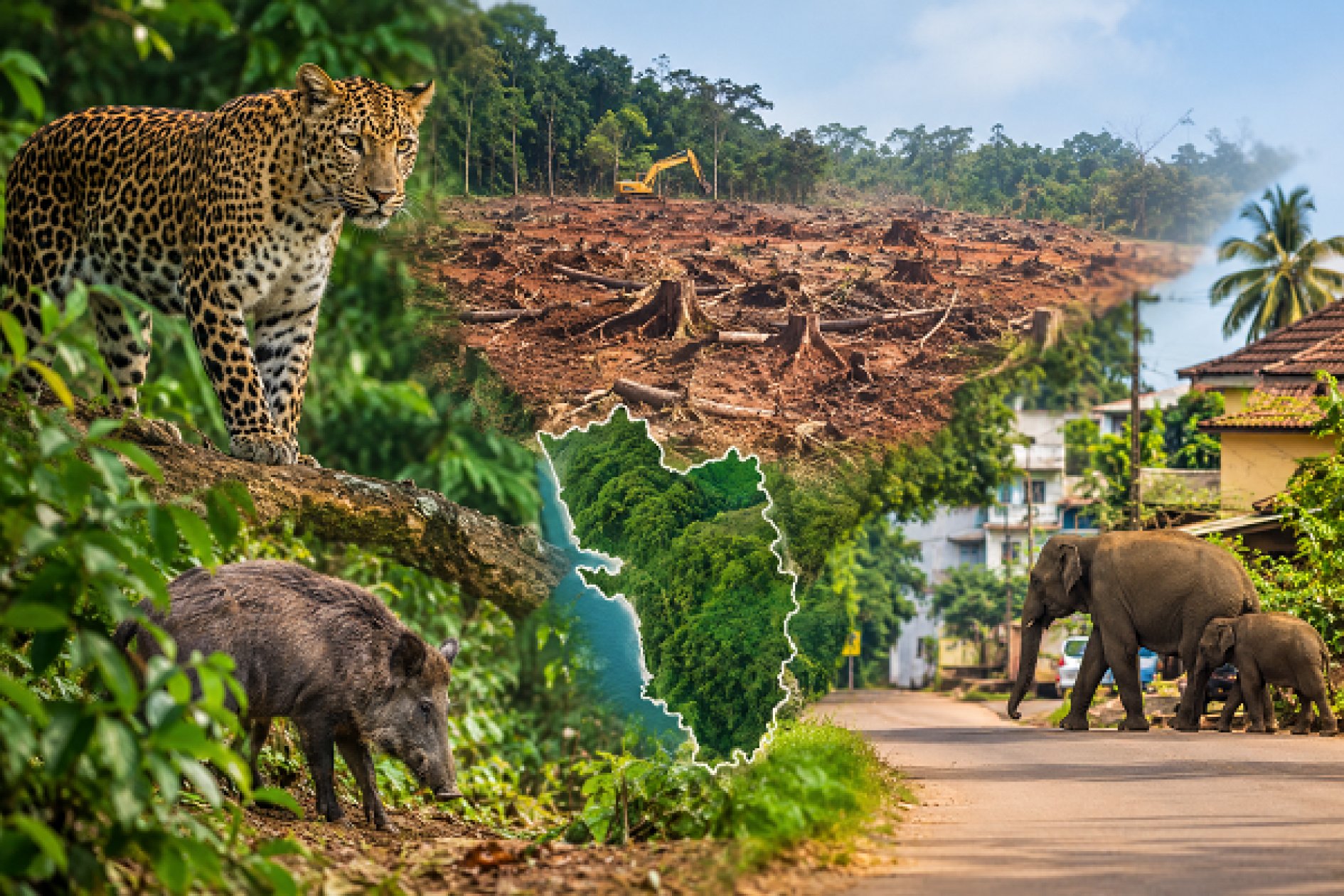
Such encounters are linked to the changes taking place across Goa’s landscape. Forests and privately owned wooded areas are cleared for housing, roads, commercial projects, and other infrastructure. Hill cutting and the conversion of agricultural land further alter the landscape. When a stretch of forest is cleared, animals lose access to food, water, shelter, and familiar routes. Roads and buildings can divide larger habitats into smaller patches, making it harder for wildlife to move between feeding, breeding and resting areas. Development along these routes can also bring animals closer to people, farms and traffic.
The Western Ghats, which run along Goa’s eastern region, make habitat loss a particular concern. The range is recognised as one of the world’s biodiversity hotspots, and Goa’s forests support a variety of mammals, reptiles and birds. The Bhagwan Mahavir Wildlife Sanctuary, for instance, is home to gaurs, leopards, deer, pythons and cobras. Thus, the loss and fragmentation of forest areas affect how these species find food, shelter and mates, while disturbances to wildlife corridors can push animals towards settlements. Food and water shortages within degraded habitats, changes in cropping patterns, and growing human activity also contribute to human-wildlife conflict.
THREAT TO LIFE
The impact is visible in the movement of animals across roads and through villages. Gaurs may enter farms and settlements while searching for food, while snakes can find their way into homes and other built-up spaces. For residents, these encounters can mean fear, damage to crops, and the risk of injury. Animals face the danger of being hit by vehicles, injured during rescue operations, or harmed when people attempt to drive them away. The Forest Department’s rescue teams play an important role in responding to such situations, as seen in the recent pangolin rescues.
Wildlife Week, observed from October 2 to 8, brings attention to the need to protect wildlife and the habitats they depend on. In Goa, this means looking at how land is being used and how forests, water sources, and animal corridors can be protected as development takes place. The movement of gaurs, snakes, elephants and pangolins into human spaces is a reminder of the pressure on the landscapes they inhabit. Protecting wildlife requires preserving the spaces that allow animals to find food, water and shelter and to move safely through the state.


