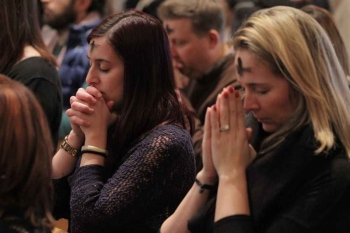
On March 2, the Catholic Church world over observes Ash Wednesday. It marks the beginning of the journey of 40 days with fasting and abstinence that culminates with Easter which is celebrated on April 17. The Lent season replicates Jesus’s sacrifice and fasting in the wilderness for 40 days where He endured Satan’s temptations (Mk 1:13; Matt 4:1“11; Lk 4:1“13). The Church has set aside this period for retrospection and an opportunity to the faithful to undo all unrighteousness through the sacrament of reconciliation, prayers, fasting, and self-denial.
Ash Wednesday derives its name from the practice of rubbing ashes in the form of a cross on the forehead of worshipers. It was introduced by Pope Gregory as a reminder of human mortality, and as a sign of mourning and repentance to God. While marking the cross the priest recites, “Remember that you are dust, and to dust, you will return.” (Gen 3:19). Following the example of the Ninevites, who did penance in sackcloth and ashes, the ashes on our foreheads symbolise grief that we have alienated from God by committing sins. According to Romans (5:10), “For if, when we were enemies, we were reconciled to God by the death of His Son, much more, being now reconciled, we shall be saved by his life.”
Ash Wednesday evolved from the ancient Jewish tradition of penance and fasting as a spiritual discipline. There are several purposes of fasting. It is the most widely accepted practice to avert or terminate a calamity by eliciting God’s compassion. For example, God mitigates Ahab’s punishment because he fasted and humbled himself (I Kings 21:27“29). King David fasted in the hope that the Lord will be gracious to him and the boy will live. “But now that he is dead, why should I fast?” (II Sam 12:22“23). Many other passages also indicate the use of fasting as a means of winning divine forgiveness (Ps 35:13; 69:11; Ezra 10:6), implying that fasting is an act of penance, a ritual expression of remorse, submission, and supplication.
The 40 days of Lent have special significance in the Jewish-Christian scripture. Moses spent fasting for 40 days with the Lord and he wrote on the tablets the ten commandments on Mount Sinai (Ex 34:28). After fleeing from Queen Jezebel, Elijah travelled 40 days to Mount Horeb where he had his angelic encounter (Kings 19:8). The Israelites had wandered for 40 years in the wilderness (Josh 5:6), and Jesus spent 40 days in the desert praying and fasting in preparation for His ministry (Matt 4:2). The flood which destroyed the earth was caused by rain for 40 days and nights (Gen 7:17).
As far as fasting is concerned, the church has set some minimum obligations either to undertake a complete fast or a bread and water fast. Ash Wednesday and Good Friday are commemorated by fasting-abstinence from meat. These days, Catholics between the ages of 18 and 59 (whose health enables them to do so) are permitted to eat only one full meal, which may be supplemented by two smaller meals, which together should not equal the full meal. Quite a few observe very strict fasting during all the days of lent by consuming a strictly vegetarian diet, keeping meat and fish off the menu.
There are three traditional pillars of Lenten observance - prayer, fasting, and almsgiving - to make Lent a replication of Jesus Christ’s sacrifice. Following the Russian aggression in Ukraine, Pope Francis and also the Archbishop Rev Fr Filipe Neri Ferrão have urged believers to devote themselves intensely to prayer and fasting on Ash Wednesday, so that the Queen of Peace preserves the world from the madness of war, and with the spirit of brotherhood, fears and divisions will be overcome.
Follow these recipes to make your Lenten journey spiritually meaningful. Attend Eucharistic celebration regularly and engage in deep prayer in the presence of the Blessed Sacrament. To practise veneration, say a decade of the Rosary daily, or read a verse from the Bible and meditate on how to embody Christ’s love by taking help of Daily Flash. Come out of your comfort zone by leaving aside alcohol, smoking, gossip, lust for women, riches, junk food, and other bad vices, and use the season to fill in the voids of your heart with virtues. Be more patient, kind, and helpful to your neighbours, the needy and suffering, especially the elderly. Contribute generously to the Good Samaritan Fund. If you can stretch a bit then walk the Way of the Cross or undertake a pilgrimage.