


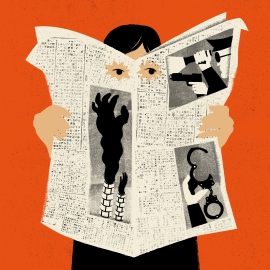
The Union Government is set to appoint a fact-checking entity that will flag fake news or disinformation relating to the government on online platforms like Twitter, Facebook and YouTube.
According to the IT Ministry, the flagged content will have to be taken down by the platform within three months of notification to avoid any legal action and also risk losing the 'safe harbour' provision, which is a legal immunity that protects platforms from being liable for third party (users) content, similar to the United States' Section 230.
While fake news has been largely prevalent in the digital sphere and can be damaging as well as difficult to put out like forest fires, tackling it has never been easy.
Fact-checking bodies went all out during peak Covid to label and suppress misinformation. Some organisations like Facebook went even a step further, suppressing potential vaccine side effects under the pretext of preventing the promotion of vaccine hesitancy as per Sagaar Enjeti of Breaking Points.
Hence, having an entity that vets misinformation is quite a tricky endeavour. Special interests and politicians can easily weaponise these entities to their benefit.
The Indian government's move to curb fake news has been received with widespread criticism from the press, news broadcast organisations and civil rights activists and can also be perceived as Orwellian.
The Editors Guild of India, terming the announcement as draconian, stated that it was deeply disturbed by the decision which essentially gives the government the power to decide what is fake and what isn't.
CENTRE'S SHADY BEHAVIOUR
The Centre's behaviour in recent court cases is enough to arouse suspicion and concerns over the working mechanisms of the fact-checking body.
On January 31, 2022, the Ministry of Information and Broadcasting refused to renew the broadcast licence of Malayalam news channel MediaOne on grounds of ''national security'' over its alleged links to Jamaat-e-Islami-Hind.
Challenging the Centre's action, MediaOne approached the Kerala High Court which then upheld the decision citing that the government has the liberty to decline the renewal concerning the security of the State. It also observed that the government doesn't have to disclose complete reasons for taking such an action.
The Kerala HC's order was later stayed by the Supreme Court on March 15, 2022. It allowed MediaOne to resume operations.
MediaOne was unable to defend itself since the "national security" reason provided to deny the company the licence renewal was submitted to the HC in a sealed envelope.
On April 5, the Apex Court set aside the Centre and the HC's order and slammed the government for its sealed cover procedure, stating that it goes against the principles of natural justice whilst also restricting the right to a fair and reasonable hearing.
TWITTER'S TROUBLES
Last year, Twitter filed a plea over the blocking of 10 accounts issued by the government between February 2021 and 2022 which called for blocking certain information and suspending several other Twitter accounts.
In September 2022, Twitter told the Karnataka High Court that the Indian government cannot block accounts without first issuing notices to the user and the company itself.
Twitter argued that the Central government should submit a notice stating the intention to block the account and the reasons behind it. The counsel for Twitter also cited Article 18 (1)(a), the right to freedom of speech which permits citizens to freely express their opinions, ideas and beliefs within the framework of the law, including the criticism of the government.
It also stated that a majority of the takedown orders of hundreds of accounts were related to the criticism of the government over its handling of the farmers' protest and the Covid-19 pandemic.
In response, the Centre argued that most of the blocking orders were pertaining to national security and public orders. The HC, on April 21, reserved its verdict.
In another chilling development from August 2022, Peiter Zatko, former head of security at Twitter, and whistleblower alleged that the Indian government had put an agent on the microblogging platform's payroll to access sensitive user data. A Twitter spokesperson refuted the claims calling him a disgruntled employee.
CENTRE CLARIFIES
The Union government, on April 21, clarified that it won't take down opinions or satire in response to comedian Kunal Kamra's petition at the Bombay High Court.
It also wanted his plea dismissed. “It is reiterated that the role of the fact check unit is restricted to any business of the Central Government, which may include information about policies, programmes, notifications, rules, regulations, implementation thereof, etc. The fact check unit may only identify fake or false or misleading information and not any opinion, satire or artistic impression,” the government’s affidavit said, according to Livelaw.
The affidavit also claimed that false information has the ability to fan separatist movements, intensify social and political conflict while weakening public trust in democratic institutions.
ABSOLUTE POWER
While the curbing of misinformation is important, the latest amendment will give the government absolute power, making it an adjudicator of truth.
Critics are wary that the move will enable the government to censor content or news that might harm its reputation or credibility, thus enabling the ruling party to dictate narratives.
Social media organisations and intermediaries are more likely to cooperate with the government than risk litigation and lose their 'safe harbour'. With a population of 1.4 billion, India is also a lucrative marketplace for social media organisations which gives them an even bigger motive to comply with new regulations. Should the government use social media organisations to do its bidding, it may lead the country down an authoritarian path.
The new rules will also stifle journalism in the country and silence voices that the government perceives as a threat. Leaders in the opposition will also have a tough time trying to get their message out should any dissenting content be labelled as misinformation. It is still unclear whether those affected will be able to appeal the decision.
India is slowly entering a new phase where the people may not get to decide or form an opinion based on the information presented to them, but rather swallow the pill that the government thinks is right which takes over the individual's way of thinking that finally makes them part of the government apparatus.
TWITTER TO ABIDE BY INDIAN RULES: MUSK
In a recent interview with the BBC, Twitter chief Elon Musk claimed that social media rules in India were very strict.
The statement came in the backdrop of Twitter's blocking of tweets related to the controversial BBC documentary on Prime Minister Narendra Modi.
Musk, an advocate for free speech, has often been criticised for blocking posts or users outside the United States, however, since the $44 billion acquisition, the Tesla CEO did also mention that he will abide by the laws of the country that the platform operates in.
He reiterated the same in the BBC interview saying, "The rules in India for what can appear on social media are quite strict, and we can't go beyond the laws of a country... if we have a choice of either our people go to prison, or we comply with the laws, we'll comply with the laws."


