


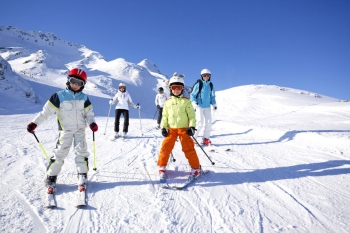
Staffordshire University graduate Rachael Carver and Professor Fiona Tweed have investigated the impacts of melting snow and ice on the future of tourism.
The findings of the study were published in the journal 'Geography'.
The study is based on field research that Rachael undertook in the European Alps for her dissertation and highlights how resorts are introducing a range of measures to prolong the ski season including glacier blankets and artificial snow.
BSc (Hons) Geography graduate Rachael explained: "At university, I developed a passion for understanding human interaction with the environment and the importance of climate change."
"I visited the Stubai Glacier in Austria on holiday and was intrigued by the fact that they were trying to conserve the ski industry. It left me asking lots of questions so I decided to go back and learn more," Rachael added.
The site uses protective blankets to reduce ice melting and wind erosion. It is also slowly transitioning from winter to summer tourism with new attractions including playgrounds and viewing platforms.
Rachael surveyed tourists and, despite these environmental changes, 70 per cent said that they would return to the site if the glaciers were not there, citing mountains, scenery and hiking opportunities as reasons.
Resorts around the world are using similar strategies and many rely on snow machines. However, the use of most snow and ice generation, and conservation measures have been caught up in a loop of unsustainability, consuming energy that contributes to climate change.
Rachael said: "At the rate, we're losing glaciers, doing nothing is not an option for these industries. There will be a lot of people adversely affected by the economic impact of not having this tourism."
"It was interesting seeing different solutions to the issue. Most places understand that these practices aren't a long-term solution, but it is buying them time. I think adaptation is key. Yes, they were designed as ski resorts but they can be turned into something else with a little bit of foresight and planning," Rachael added.
Rachael believes that resorts should provide visitors with opportunities to explore mountain environments in different ways; for example, by introducing hiking routes, mountain bike trails, viewing platforms and educational attractions.
The study also explores more innovative solutions such as grass skiing which has been introduced by resorts in the Czech Republic where there is often only one month of reliable snow each year.
Fiona, Professor of Physical Geography, said: "It was a pleasure to collaborate with Rachael to get her undergraduate research published. I worked with her as I would any research co-worker; we drafted an outline plan together and had regular meetings to review progress and share ideas."
"Climate change is the defining issue of our time with many far-reaching impacts and implications. Several students in Rachael's year group did projects that had climate change at their core. We're looking forward to equipping more students with the skills to work on climate change-related issues as part of our new BSc (Hons) Climate Change and Society degree," Fiona added.


