Pondcar's essay talks about caste, edu options in pre-1961 times, the Kossambis, and radicalisation of freedom fighters such as TB Cunha
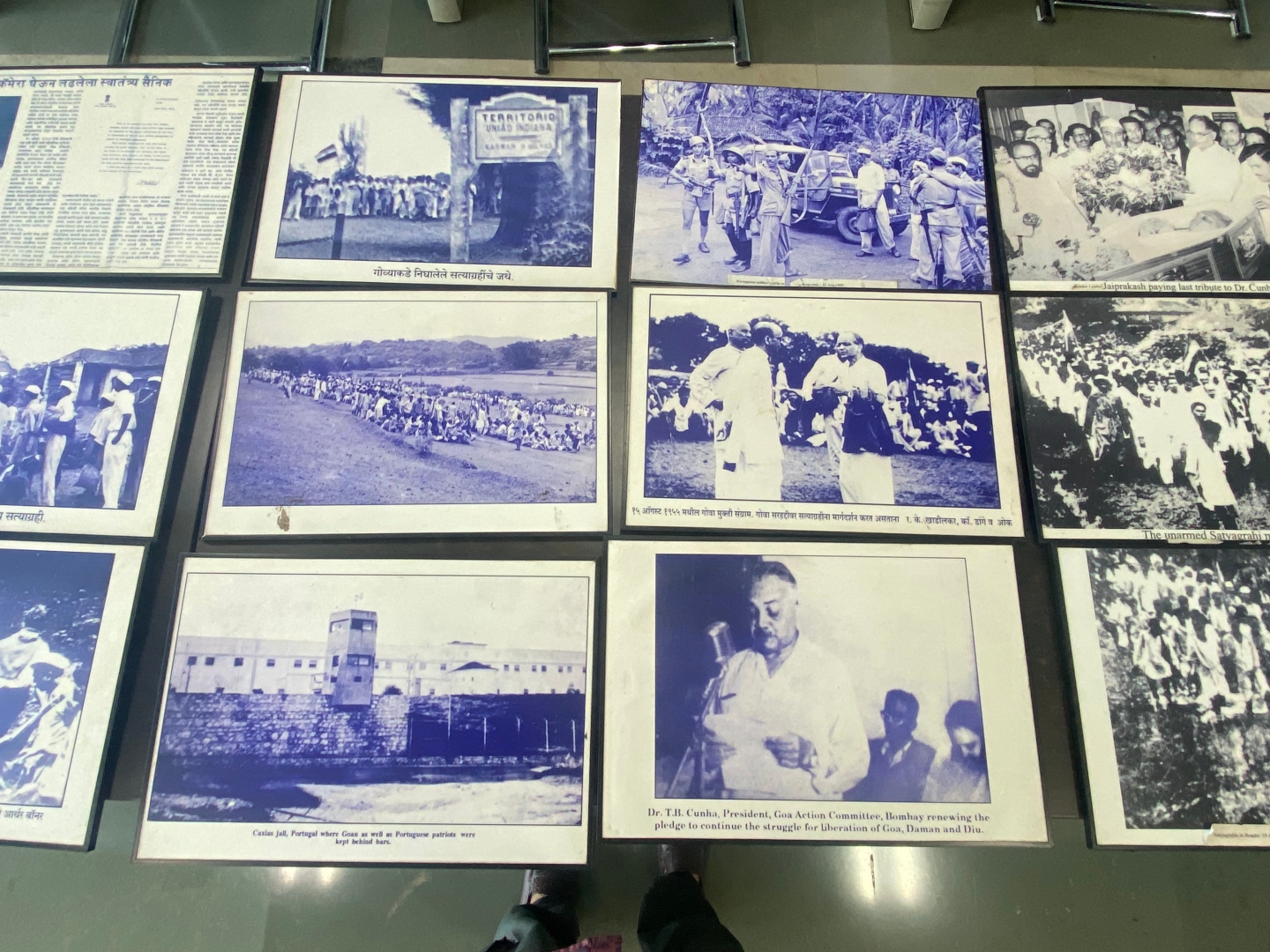
Amidst the many conflicting trajectories of Goan historiography, some chapters have yet to be adequately written. Historiography, or the study of how history is written--including the methods, sources, interpretations, and biases that shape our understanding of the past--tends to ignore that all aspects of Goa's past are not treated equally. Some get the focus, others don't.
Goa's historiographical currents have been many, and diverse. From the colonial-ecclesiastical consolidation in the 19th and early 20th century; to the early-mid 20th century local Catholic elite intellectual historiography; the nationalist and post-integration reinterpretations of the 1940s-1970s; the social-history expansion of the 1970s-1990s; the global/connected histories from the 1990s; some (still-emergent) subaltern/marginality emphasis from the 2000s; and the Hindutva-oriented historiography from the late 20th century to present; among others.
In this context, a recent essay is by a daughter (or granddaughter) of Goa, Soniya Pondcar, titled 'When Goa’s Horizon Dawned Red: The Forgotten History of Communism in the State'. It makes for interesting reading. This narration tells us a chapter which many of more recent generations might not even be remotely aware of.
Her story begins at Dadra and Nagar Haveli. That's an intriguing place, and once connected to Goa. The Dadra and Nagar Haveli enclave is believed to have been ruled by local Koli chieftains, who were later defeated by the Rajput kings in the 13th century. Online sources suggest it supposedly changed hands between Shivaji and Somshah Rana. Then it came under the Maratha rule in 1739, and the latter acquired rights to collect revenue. Later, it was captured by the Marathas.
History suggests the Portuguese were granted D&NH in 1783 after a friendship treaty, supposedly as compensation for the damage to the Portuguese frigate 'Santana' by the Maratha navy in 1772. This gave the Portuguese the rights to collect revenue from 72 villages in Nagar Haveli. Later, they "purchased" Dadra and annexed it to the Estado Português da Índia.
The territories remained Portuguese for nearly two centuries, until July-August 1954, when local nationalist groups overthrew Portuguese authority in a brief armed uprising. That is where Pondcar's story enters.
(The area then functioned as a de facto independent administration until its formal integration into the Indian Union in 1961, when the Portuguese were ousted from Goa following Indian military action.)
From D&NH, Pondkar highlights the rivalries among those fighting Portuguese rule in Goa. This is something one might not hear in officially-aligned narratives of the times.
Focussing on another era in Goa, she also talks about anti-Communism within the Church, and how efforts were made to "shield the religious working class of Goa" from "growing communist propaganda".
She also reminds us of the Goan People's Party, and the "complex religious history" that Goa has seen over centuries. Caste, educational options in pre-1961 times, the Kossambis, and the radicalisation of freedom fighters such as Tristão de Bragança Cunha (1891-1958) are also focussed on. Campaigns through building an alternative media, and the working class Catholics in places like Bombay come within the ambit of her writing, which adds to creating a broader panorama. See it at thepolisproject.com/read/goa-communism-forgotten-history/
Given the generation the writer belongs to, her own family links to Goa, and the scarcity of information on this topic, the focus of the work here can be expected. In some ways, it is informative, and reminds us of easy-to-forget perspectives on Goa.
But one is also left with a feeling of wanting more. It doesn't, for instance, look at the role of the Portuguese Left and Goa pre-1961, and the stands they took on the colonial issue. Or, for that matter, the student movement of Goa itself in the 1970s-1980s. Or even the complex issue of the direct and indirect influence of factors like Liberation Theology in social movements and attempted Church reform in Goa, which played its role diverse if in unnoticed ways.
Radical politics is not the only subject which has not been adequately covered in today's Goa. Entire communities---less affluent ones---exist with hardly any writing to tell their own stories. Or, if they are covered, they are seen through stereotypes and cliches. Much like Bollywood describes Goans as a whole.... But that is entirely a different issue.
Protests and campaigns have changed hugely in the Goa over the decades. Till 1961, electoral politics (at least, that based on universal franchise) was unknown here. Following 1961, an intense amount of politicking hit the local populace, many of whom did not understand what was happening around them. Issues were made and unmade, sometimes in mysterious ways.
The 1970s saw intense student politics, which has been written about, but only in a limited way, and through just a few perspectives. Campaigns have changed their nature and shape over the years.
Nowadays, one can find so many Facebook activists (not intending to use this term disparagingly here, as that is legit for of campaigning in our times). Some take up interesting causes, though it's always easy to cast doubts on motives (rightly or otherwise).
What can be questioned is say five-minute videos by activists who spend their entire time cursing one another. Not just that, they don't stop at questioning each other's families, their parentage, the relationships they are supposedly in, and what not.
But this is not meant to trivialise one and all. Obviously, a lot of idealism, blood and sweat, went into many of the campaigns of the past. During my student days, I've seen idealistic youth spend their days consuming merely a twenty-five-paisa bhaji-pao---that was all they could afford while carrying on their campaigns.
Some did well for themselves subsequently; others felt they paid the price. But each has stories to tell, which perhaps would help us understand the bigger picture. To that extent, Pondcar's article takes the focus to an interesting, if forgotten, chapter of Goa's past.