Konkani's scripts need to work to fight discrimination against them. They need to build educational support, digital visibility and cultural prestige-building
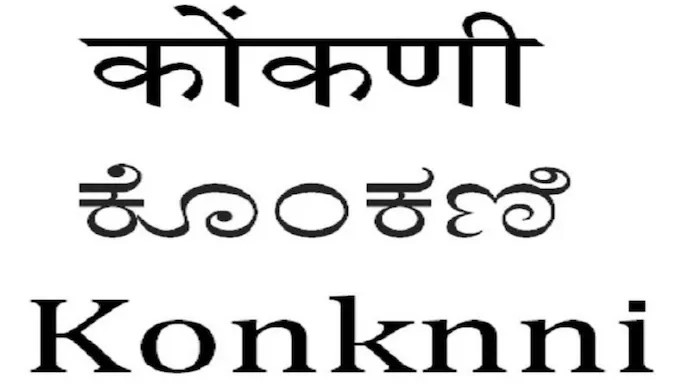
Going by Goa's language debate, it sometimes seems as if the only issue is about who gets the literary prizes, and what medium our children are compelled to study in.
Focussing excessively on just one or two aspects could give the wrong impression. Yes, the Sahitya Akademi is being patently unfair when it points to some old resolution and denies large sections of Konkani creativity its due. (Kannada script outside Goa, Romi within. And if history had been different, even Malayalam script and the Perso-Arabic could have surely grown too.)
But this is not a fight over the cake. There are more important issues at play here.
The issue behind the scripts is that of dialects, ways of life, traditions being sidelined, eroded and slowly sought to be phased out of existence.
Romi Konkani, and other scripts too, face forms of linguistic marginalisation. “Linguist” usually refers to the deliberate destruction or systematic suppression of a language by state power, education policy or cultural coercion. Here, we see this happening with parts of the language.
In the case of Goa, supporters of Romi Konkani often point to several issues:
* The privileging of Nagari Konkani in official policy after the 1987 Official Language Act,
* Weaker to non-existent state support for Romi-medium education,
* Very limited representation in schools and administration,
* Lower institutional funding,
* The exclusion of Romi writers from some literary structures historically,
* And the fact that a very large body of Goan Catholic literature, tiatr, journalism, songs and diaspora writing exists in the Roman script but is often treated as secondary or “non-standard.”
One script gained state-backed legitimacy. The other survived mainly through its own determination.
Keep in mind that scripts are never neutral in Goa, and elsewhere too. They encode religion, caste history, traditions, migration and competing ideas of authenticity. Romi backers have reason to fear that an entire literary-cultural ecosystem (with its own orthography, literature, newspapers, archives, recipes, music and traditions) could slowly become de-legitimised or disconnected from younger generations. There are a number of forces at play here. Script marginalisation. Unequal language policy. Cultural erasure. Unfair and unequal institutional recognition within a shared language community.
“Konkani” has to be seen more as a network of historically layered dialects. Each has been tied to specific communities, scripts, regions and cultural practices. That helps understand the politics of “ethnolinguistic erasure” underway here.
Romi Konkani is not merely Nagari Konkani written in another alphabet. Romi has its own phonetics (distinctive ways it pronounces sounds, stress, rhythm, vowels or consonants). Likewise, its lexical choices (words, expressions, vocabulary) can differ. It has its own unique liturgical traditions, oral rhythms, tiatr culture, Goan Catholic identity, centuries of Indo-Portuguese contact, diaspora histories and dialect zones in central and coastal Goa.
We are often told that Konkani is being "standardised". But, in reality, many “languages” are political umbrellas imposed over internally diverse speech communities. Take the case of what we know as "Hindi". What gets called “standard Konkani” privileges certain dialects, scripts, caste histories and literary traditions over others.
If schools stop transmitting Romi to the next generation and the official recognition privileges another script, then the younger generation is bound to shift towards English.
When publishing declines and the centuries-old archives become inaccessible, public prestige gets attached only to Nagari forms.
This endangers not just a script, but a distinct ethnolinguistic ecosystem (an interconnected world of language, identity, customs, memory, religion, art and everyday social practices shared by a particular community.)
Goa is not alone in facing such challenges. Scots fought the imposition of "Standard English". Occitan, the Romance dialects of southern France and Italy-Spain, the language of medieval troubadours, has fought back. The Ainu from northern Japan and parts of Russia celebrate their rich, distinct culture. Regional Italian dialects are resisting being absorbed into standard Italian too.
In each case, the decision-makers sought to keep alive a standardised elite version. But, as their campaigners pointed out, living community variants were being absorbed, de-legitimised or museumised.
Many decades of unfairly discriminating against Konkani scripts and dialects have passed by, largely unnoticed and unchallenged. Correcting the situation is not going to be easy, because those who have gained from the same are unlikely to let go of their privileges.
Some would argue that Goa's language policy emerged from post-colonial nation-building. It came from the desire to protect Konkani from Marathi dominance, not from a conscious desire to destroy Romi traditions. But outcomes matter as much as intent. If policies systematically weaken one speech community’s intergenerational continuity, the effect can resemble linguicide even without explicit malice.
You can call it “linguicide,” “language shift,” “sub-language erosion,” or “hegemonic standardisation”. The impact is as telling.
Challenging that requires a broader vision. Konkani's multiple scripts need to work to fight discrimination against them. At the same time they need to build educational support, digital visibility and cultural prestige-building. Initiatives could include introducing optional multilingual and multi script teaching; funding digitisation of manuscripts, newspapers and archives; supporting Unicode-friendly fonts, OCR (optical character recognition) tools and AI datasets.
To look into the future, there is also need to encourage Konkani publishing, subtitling and social-media content in these scripts. Creating fellowships for translators, lexicographers and teachers can help as well. Integrating them into public signage, festivals, theatre and broadcasting are parallel steps.
Non-Nagari scripts need to enter institutions of higher learning, despite the State's resistance to this. Community archives and digital humanities projects offer potential, while the means would need to be found to promote local-language journalism and children’s publishing. These traditions need to be treated not as relics or identity markers alone. They have to be seen as living intellectual and creative ecosystems capable of functioning well in our times.