While the feeble gurgles of Mhadei caused hiccups and heartburn, anxiety of losing the river filled the minds of the common Goemkars, when the bravado of the ruling class was countered by cynicism of activists and political opportunism of the opposition, there was little to celebrate it seemed.
However, a few green statutory entities have been working relentlessly in the state of Goa, against all odds, receiving little appreciation if not resistance. Among these ‘Green Watchdogs’ of the State are the Goa State Biodiversity Board and the Goa State Wetland Authority; statutory custodians that guard eco-assets of our landscapes and waterscapes, and preserve their intricate bond with the local community and ecology.
Happily for many of us whose ‘blood is greener than red’, and are chronically challenged by intransigent work culture of regulatory regimes; these two agencies are different in being proactive, task oriented and time-bound in deliverance. While Environment Minister Nilesh Cabral should receive a pat on his back from his bosses, perhaps this transparent and disciplined work template is institutionalized by Dr Pradip Sarmokadam who doubles up as Member Secretary of the Biodiversity Board and a Head of the Nodal Agency of the State Wetland Authority; a multitasking officer with qualifications, vision and strong connect with this soil and its people. Dr Sarmokadam has been able to achieve an ‘administrative anastomosis’ of tasks of GSBB and GSWA tactfully and the results are there for all to see.
As you read this, Goa State Wetlands Authority under directives from Ministry of Environment and Climate Change, Govt. of India is hosting a regional workshop on ‘Restoration of wetlands and integrated management plan’ for seven northern and western Indian states namely ; Gujarat, Punjab, Haryana, Rajasthan, Uttar Pradesh, Maharashtra and of course Amchem Goem !
These States constitute an important ‘regional wetland consortium’ for migratory birds that use the ‘Central Asian Flyway’ for winter visits. Incidentally, these States also top the list of economic performance indices like GDP; where land and water is viewed more as a ‘tradable commodity’.
Consequently in near future these very States may tradeoff their pristine ecology to earn interim profits, incurring long-term environmental liabilities. The bird calls in their wetlands may soon drown in the cacophony of industrial noise. The splash of their plumage colours could be dulled by the particulate emissions, and the water and land where they forage and recruit new individuals may soon be saturated with toxins or even be lost to reclamation for ‘lucrative economic purpose’.
Conventionally though wetlands are ‘Important Bird Areas’, their values go beyond just being avian habitats.
It is these States that hold some of the country’s prime wetlands that beyond offering habitat to birds of high conservation value, offer a range of ecosystem services from provisioning raw material and food to people and livestock, supply and purification of water, impounding water to preventing floods, protecting coast against erosion and sediment transfer and modulating local climate through carbon sequestration.
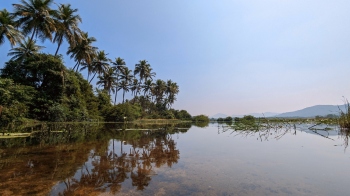
With its rich endowment of biodiversity, wetlands also support ecotourism as in case of the crocodile safaris of our Cumbarjua mangroves and birding at Carambolim Lake, besides being subject of education and research. The local communities demonstrate a cultural and spiritual connect with their wetlands and their ethos is complementary to their conservation priority.
India is a contracting party to the Ramsar convention on wetlands since 1982, and on Independence Day last year had 75 wetlands in its inventory of Ramsar sites.
Interestingly precision in regulatory framework and litigations concerning wetlands have been scuttled by absence of a comprehensive definition of wetland or perhaps too many definitions, as there are 42 types of wetlands. Perchance this is exactly what Shakespeare exclaimed “How every fool can play upon the word.” Very simply put, wetlands are ecological communities where the green meets the blue!
The 2023 theme for World Wetlands Day 2023 is ‘Wetland Restoration’, inviting affirmative action by investing financial, human and political capital to save the world’s wetlands from deterioration and restore those that have been degraded. For Goa’s wetlands I seek to plead for emotional investment too. I have visited some of the finest wetlands in Europe and Asia and am convinced beyond doubt that our ‘intelligent’ species continues to damage this fragile ecosystem globally. The greatest challenge in their conservation today is greed and cronyism.
Minister of state for Environment and climate change Bhupinder Yadav accompanied by Joint secretary MoEF CC and 75 Ramsar Site Managers from across India will partake in the National level launch of ‘Save Wetlands campaign’ at Nanda lake, Curchorem tomorrow. Nanda wetland is Goa’s first Ramsar site and should be our collective pride and responsibility.
I’d be failing in my responsibility as a citizen of this state and as a resident of Salcete in particular, if I do not seize this opportunity to highlight the imminent fate of many wetlands here that are set to be fragmented by the Western Bypass which the citizens are pleading to be built ‘on stilts’. Commonsense dictates that such infrastructure is built on higher elevations, to ensure integrity of the critical ecosystems. Unfortunately there is no dearth of people in decision making who keep distance from rational thinking and dialogue. And as mark Twain famously said “it is useless convincing someone to believe something, when the profit is in not believing it”.
Wetland Day celebrations in Goa; with central and state ministers, top-notch bureaucrats and PAN India Ramsar site managers in attendance is gratifying and surely highlights the significance of this fragile ecosystem and underpins the urgency of its protection and sustainable use. But this participatory spirit must be continuous and not sporadic!