


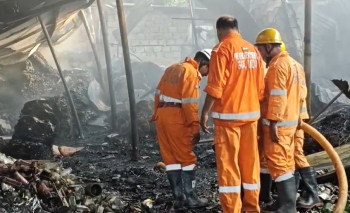
The Dicarpale neighbourhood woke to a loud blast renting the air in the wee hours of Thursday last week. A massive fire broke out at a scrapyard in the village sending thick plumes of smoke into the sky.
According to reports, the blaze rapidly consumed the premises, destroying plastic-processing machinery and a couple of vehicles before local emergency services brought the situation under control. The ‘towering inferno’ has however come as a slap on the face of district authorities who have been quite flippant to the existence of such ‘junkyards’ operating within their jurisdiction.
It starkly exposes the systemic negligence of the concerned officials, highlighting their failure to enforce basic zoning and safety regulations on illicit junkyards. Unchecked, these hazardous, high-density dumps continuously endanger local communities, rendering official oversight utterly ineffective.
The proliferation of unregulated scrapyards across the Goan countryside has become a critical environmental and civic issue. Not a single gram sabha meeting concludes without members expressing their concerns over their activities within their village limits.
However, with local authorities frequently ignoring village-level resolutions, residents are left without administrative recourse, effectively leaving environmental and development disputes unresolved.
Compounding Goa’s ongoing scrapyard crisis, the recurring blazes in Sancoale, Zuarinagar, and now Dicarpale highlight an alarming failure to enforce safety regulations and relocate hazardous operations away from residential zones.
Scrapyards are vast repositories of discarded and end-of-life materials, primarily serving as localized hubs for recycling, salvaging, and the circular economy. They prevent massive amounts of waste from reaching landfills and conserve natural resources by collecting, sorting, and processing materials to be melted down and reused.
Scrap is highly valued in the market because it is 100% recyclable and reusable, which saves massive amounts of energy and reduces the need for virgin raw materials.
Scrap often feels like ‘liquid gold’ because the booming recycling industry driven by rising base metal prices and e-waste value means that old metals like copper, brass, and steel yield high profit margins. The localized scrap trade thrives on these real-time values.
However, scrapyards today have turned into ‘Death wells’ due to the accumulation of toxic heavy metals, radioactive materials, and explosive chemical compounds in unregulated environments.
Instances where decommissioned medical devices or obsolete industrial equipment sometimes make their way into the scrap metal supply chain without anyone knowing is definitely a cause for alarm.
Industrial units disposing of burnt or used oil through scrap dealers is not unheard of either! Burning waste oil in scrapyards releases high toxic pollutants like heavy metals, dioxins, and sulphur into the air, while creating massive fire hazards.
This practice is quite rampant in scrapyards existing in the immediate vicinity of residential complexes. But somehow the plight of residents due to such polluting activities just doesn’t serve to goad the authorities into action.
It also came as a rude shock to learn that needles and surgical equipment primarily end up in scrapyards due to illegal dumping, improper segregation of hazardous waste, and illicit black-market recycling rings.
Because hospitals generate highly recyclable materials like high-grade stainless steel, it is alleged that rogue dealers often buy these items at high prices to reclaim the metal or to manufacture consumer goods like shaving blades.
Occasionally, medical facilities fail to properly destroy and sterilize single-use equipment, allowing unrendered surgical sharps into general metal processing pipelines.
It is also not unusual to have healthcare facilities or individual patients accidentally or negligently tossing contaminated sharps into standard domestic garbage. This waste then gets collected by municipal garbage trucks and funnelled into recycling and scrap facilities.
According to the World Health Organization (WHO), when hazardous medical waste catches fire - whether through accidental combustion, improper disposal, or uncontrolled open burning - it induces severe public health and environmental hazards.
The resulting harm occurs primarily through the release of airborne toxins, the spread of pathogens, and the creation of toxic ash.
Moreover, it is observed that over 95% of electronic waste is handled in the informal sector, often resorting to acid dissolving or open burning. This is known to release fatal, carcinogenic chemicals into the atmosphere.
A fire at a scrapyard is a serious threat due to the combustible mix of fuels, plastics, tyres, and chemicals. These incidents release toxic fumes and heavy metals into the air and groundwater, making them difficult to extinguish and threatening the immediate neighbourhood.
Scrapyards are generally considered high-risk environments for fire. Scrap piles pack combustible materials together, and oxidation can make them highly susceptible to ignition.
Scrapyard fires require urgent intervention of fire and emergency services. However, scrapyards have been the bane of firefighters and environmentalists due to the extreme fire hazards and toxic pollution they pose. Storing flammable fluids, unvented gas cylinders, and e-wastes create conditions where accidental blazes release toxic gases and threaten nearby communities.
Scrapyards significantly contribute to environmental pollution through the release of heavy metals, toxic chemicals, and hazardous fluids into the soil, water, and air.
The state fire and emergency services as always rose up to the occasion and were able to bring the blaze under control and protect surrounding areas in Dicarpale. But could their combined efforts succeed to manage the toxic runoff before it contaminated the environment!
The growing frequency of such events highlights not only a safety issue, but a serious environmental and public health concern, reinforcing the need for stricter prevention and enforcement measures. The administration needs to be mindful of the air quality in the affected areas.
Scrapyard facilities challenge local governments across the state by creating severe environmental hazards, zoning disputes, and infrastructure deficits. Without formal policies, municipalities and panchayats struggle to contain illegal and unregulated yards that threaten public safety.


