I admire Desmond Morris for his in-depth and cogent analysis of the purposeful construct of human body with all its anatomical assembly, not even exempting our body hair. From ‘The Naked Ape’ to ‘The Naked Women’ and ‘Human Zoo’ to ‘Intimate Behaviour’; I’ve read all his books. And with every new title my esteem has only increased for his remarkably ingenious scrutiny of our deep-seated animal instincts and the rationale of our inimitable human anatomy.
Morris has a clear message, that as human we aren’t special and in no way different from the animals, albeit our clothes and cosmetics can only fleetingly camouflage our wild lineage. He reminds us loud and clear that ‘we are not fallen angels, but risen apes’; stripping the veneer of civilization from our bodies, and making us stand as a ‘part’ of the animal kingdom, and not ‘apart’ as intelligent beings!
The reason he calls us ‘naked apes’ is because unlike the gorillas, chimpanzees and orangutans; our skin is indeed naked and devoid of thick fur. Instead we have some isolated patches of hair on our body. Amidst this scant patchwork of hair on our body, the ‘scalp crown’ stands out not only for its visibility and density, but also for its aesthetic value and the grooming efforts we put in.
The loss of our body hair is perhaps the price we paid for evolving from a hunter-gatherer of open plains, to a cave dwelling social species that learnt to make fire. A thick coat of fur would be an encumbrance for a close-knit social unit of hominids, as it would get messy and clogged with dirt, shelter and transmit parasites faster, and more importantly became redundant for insulation in a more ‘climate-controlled’ cave interiors. However, the head with all vital command-centres vested in the brain and sensory assembly needed protection against mechanical injuries. The eyes, ears and nose needed to be shielded from dust and was granted functionally dedicated hair.
The hairline follows a predictable trajectory in our lives; babies being born bald or with scant hair, the increment through adolescence and peak of youth, and then the ‘fall season’ of the scalp as we near far end of our life line. There are of course those exceptional ‘Hairy Toppers’ whose ‘keratin endowments’ are not affected by age and they engage in a determined antagonism to ageing and prop up their ‘hair dressing’ with regular visits to the saloon, trichologist and the wig-seller, in that order.
‘Balding’ which is thinning and loss of hair with advancing age does not remain just a cosmetic issue, but can often be traumatic experience with stigmatization and name-calling. However, it would come as a surprise to many that bald men have higher titers of androgens and therefore may rank higher on scale of masculinity than those with ruffled scalps!
For matrimonial aspirants, hair is an important personal asset and eligible bachelors and spinsters put in extra efforts to style and flaunt their growth. Hair is the natural prop that can alter face profile, enhancing the desirable features and hiding the ill-favoured. No wonder then that the good old barberias with the rickety furniture, water sprayers and the silent, saintly craftsmen holding scissors have been wiped off by the flamboyant saloons and hair stylists offering an assortment of styles like skin head, crew cut, corn-rows, mop top, mohawk, comb-over and oldilocks! From Rapunzel to Goldilocks of our childhood, and Marie Antoinette to Albert Einstein of our schooling years; it is indeed their hair that was a discernable part of their persona.
For years, I have had the monthly haircut that has progressively cost me from modest rupees two in seventies to the current sixty. Driven by cynicism, since 2019 I stopped grooming my scalp and currently sport a growth of four years tied in a petit chignon.
Notwithstanding the glamour and glory of heads embellished with hair, I have been intrigued by the bald heads. To me the bald head radiates hues of liberation, compassion, mysticism, penance, and discipline. While men look more menacing with shaved heads, their bald scalp accentuates intimidation, criminality and aggression at a certain age. The personnel of armed services are mandated to keep their scalp hair short and groomed as a matter of discipline. Of course we’ve had the iconic baldness of the ‘Mahatma’ that was a potent symbol of ahimsa!
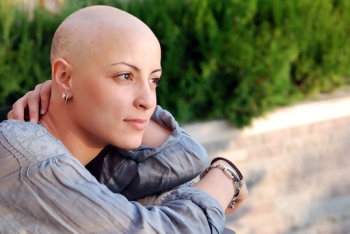
Indian history tells us about the abhorrent practice of tonsuring widows to restrict their socializing and prospects of remarrying. In the recent years I’ve met many young women including some of my own students who wilfully shave their heads to liberate themselves from the shackles of gender biased societal diktats. And to my eyes these bald and beautiful mutineers represent resolute courage. There is also a shade of compassion in this baldness, with many girls donating their hair as a gesture of solidarity and support to the cancer patients. Of course the hair can also go into making wigs for those suffering from chemotherapy induced alopecia.
The temple town of Tirupati in Andhra Pradesh has a profitable enterprise running on hair donated by devotees to Lord Balaji on fulfillment of vows. Bereaved sons of Sanatan faith shave their heads on demise of their parents as a part of mourning. Upanayana is an initiation ritual marked by shaving head such that a small crown patch of hair is left, signifying obedience and submission to religious authority.
To my reasoning, the tonsured heads of monks and celibates signal their detachment from mortal pleasures and a life hinged on minimalism and quest of the ‘atman’ or cosmic connect with self. I perceive a halo around such heads, reminiscent of a tranquil gleaming lamp flame in the dark garbhagriha of those antique temples where the deity enjoys silence and solitude instead of cacophony and crowd. Bald is incontestably beautiful!