Awaiting a train back home at the Mangaluru railway station the other day, I chanced upon a copy of a local daily.
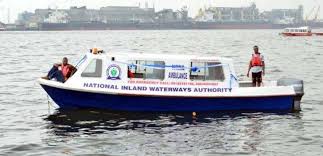
Tucked in between the inner pages, the news that fishermen of Ullal region of Dakshina Kannada district have taken a landmark initiative by launching the zone’s first-ever “Boat Ambulance,” a life-saving service designed specifically for marine and river emergencies, stood out as an example of community-driven, rapid-response, and specialized humanitarian aid, aimed at saving lives in one of the most hazardous professions.
The ‘Boat Ambulance’ is intended exclusively for emergency medical evacuation during fishing operations in the sea or river.
Initiating this facility to help their ilk at distress in the sea, the fishermen association in Ullal believes that this inventiveness will encourage the state government to come up with similar facilities.
With no emergency boat services available during boat mishaps or squally weather conditions, fishermen were left to rely on their own resources, traditional knowledge, and, in many cases, the help of nearby fishing boats to manage rescue efforts.
The absence of dedicated, readily accessible emergency boats makes the already hazardous, sometime life-threatening work of fishermen, particularly during stormy weather, even more precarious.
An ambulance is a vehicle equipped for taking sick or injured people to and from hospital, especially in emergencies. From basic life support to advanced life support, ICU ambulances, air ambulances and boat ambulances; each ambulance service plays a vital role in saving lives and ensuring timely access to medical care.
Besides non-emergency patient transport ambulances, more recently we have been hearing of mobile intensive care units, motorcycle and e-rickshaw ambulances which are helpful in navigating densely populated urban areas, small vehicles for minor roads, and helicopters for ferrying patients in emergency situations.
Ambulance services dedicated to those in distress on seas and rivers, often referred to as water ambulances or marine ambulances, are specialized vessels designed to provide rapid pre-hospital care and transport for patients in aquatic environments.
‘Boat ambulances’ in India provide emergency services in areas where access to medical facilities is limited due to water bodies or remote locations. These ambulances also come equipped with the necessary medical equipment and are staffed with trained medical personnel who can provide medical assistance and transportation via waterways.
These services are essential for remote coastal communities, riverine areas, and areas inaccessible by road, providing a bridge between incident scenes and land-based medical care.
Boat ambulances play a crucial role in reaching individuals in coastal regions, islands, or areas prone to flooding, ensuring timely medical aid in emergencies.
‘EMRI Green Health Services’, is the largest professional Emergency Service Provider in the country. Today, 108 is synonymous with the best-in-class emergency service and has been acknowledged as the most efficient, speedy, reliable, and caring service provider in its category.
In order to improve response efficiency, as also reducing the scene to hospital time, boat ambulances are operated in areas that are better accessible by waterways than roadways. Boat ambulances operate as an integral part of 108 Emergency Response Service.
Based on EMRI and state health department information, specialized boat ambulances are deployed to serve remote, water-locked areas, operating as part of the 108 Emergency Response Service.
Reportedly, these units provide critical care, trauma support, and referral transportation to healthcare facilities.
However, the absence of dedicated medical rescue boats along the coastlines in the country have made emergency response extremely difficult. Fishermen often face accidents due to rough seas, capsized boats, onboard falls, or health issues. Returning to shore in such conditions is difficult.
Fishing is recognized as one of the most dangerous professions globally, with fishermen facing significantly higher occupational accident rates compared to land-based jobs.
The news about fishermen venturing out into the rough seas during monsoon season in search of a decent catch is often received with its own share of trepidation. But then it is quite normal for fishermen to brave dangerous seas to eke out a livelihood.
The risks are many. Fishermen out at sea have to contend with sudden weather change, heavy rain, strong wind, high waves, lightning, and low visibility. Besides, marine weather forecasts have never served to be accurate, further adding to their woes.
Even in the normal course, fishermen face extreme, life-threatening risks at sea, including vessel capsizing, fatal falls overboard, and entrapment in heavy machinery.
Evidence suggests that there is significant credibility to the argument that Goa’s traditional fishing community remains neglected and marginalized, despite their central role in the state’s culture and economy,
In such a situation wouldn’t the community be expected to take care of its brethren, particularly in times of distress or crisis! The ‘3D’ characteristics - Dangerous, Dirty, and Difficult - of the fishing profession make accidents a frequent and often accepted part of the daily life for fishermen.
However, mechanized fishing boats, while more advanced than traditional, non-motorized crafts, are equally prone to accidents, often due to higher speeds, engine-related failures, and in many cases, inadequate safety maintenance. According to maritime safety reports, these vessels face unique risks alongside common hazards.
Venturing out into the sea has become increasingly risky due to a convergence of unpredictable weather patterns and emerging environmental hazards.
Fishing is a critically important, traditional, and economic vocation in Goa, deeply ingrained in its culture and sustenance. It is considered the second-largest industry in terms of employment and income, with a significant portion of the population involved in fishing and related activities.
The safety of fishermen should be a priority as well!
Hence a feeling that a boat ambulance service manned by a trained team of divers and medical personnel, modelled on the same lines as that launched by the fishermen association in Ullal, will be a great initiative in Goa.