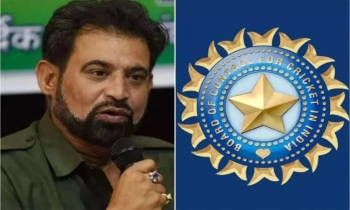
In a clandestine filming of an interview, Chetan Sharma spilled just far too many beans for the BCCI and bigwigs in cricket to ingest. It is unclear whether Sharma was tacitly pressured to step down as Chairman of Selectors or whether he did not want to go through more humiliation than he has already had to face under the BCCI regime which lords it over Indian cricket. For Sharma, there is obviously no turning back on this occasion. His resignation has been accepted and the only thing that remains is to hand the baton to someone who will protect all BCCI’s cricketing ‘beans and dirty laundry’ in safe-keeping and somewhere elusive. The BCCI’s message is plain: When there are hard truths to be reckoned around big names, you simply conceal them and find a guinea pig. Cricket’s misdeeds can be obscured only by a single ploy “ sack the vulnerable.
Interestingly, Sharma was sacked only in December, and then reinstated as chief selector after a meeting he was invited to by the BCCI bigwigs in a policy brain-pick meeting at which they reviewed performance and selection strategies of the team. Meanwhile, the rest of the selection panel was irrevocably removed. It was clear by then that the BCCI saw in Sharma a man who had substance and competence to manage the selection process. The sacking of the entire group of selectors happened not because they were incompetent. The BCCI badly needed fall guys to cover up the pathetic performances of their high-tag team in the 2022 T-20 World Cup last year-end in Australia. The selection panel became the guinea pigs when the more ethical option was for the BCCI Board to put up their hands and step down for their poor management of Indian cricket.
The TV news channel released video footage of Sharma talking about various matters relating to the national team, including alleged issues including those between Virat Kohli and former BCCI president Sourav Ganguly, and Jasprit Bumrah's injury. It appears that Sharma did not know he was being filmed surreptitiously.
It can be argued that organizational in-house intrigues must be kept under the lid. That does not make the interview itself ethical in its method. Just about everything the interview revealed was out there in public knowledge. Cricket fans don’t just watch and follow cricket. They are acutely opinionated. If there are 1.4 billion Indian cricket followers (highly exaggerated numbers) there are also that many opinions, analyses and critiques.
The BCCI has evolved into an elite club, many of whom have never held sober cricketing credentials. Major decisions are controlled by cricket’s corporate interests. They are the people who finance the game and the lobbies who defend their own interests as well those of their favorite players.
The Chetan Sharma episode also raises the question of journalistic ethics. The ethics of sting operations is a sternly contested issue in journalism. An interviewee's trust and privacy, must serve a larger public interest that far outweighs such violation. It must be last resort, and only when there is no other means of acquiring crucial information. For the corporate-backed media, sensationalism far outweighs fundamental and obligatory media ethics.
A sting operation is an operation that attempts to deceive a person perpetrating a crime. Planned and performed with great care a sophisticated confidence game. The word sting is derived from the use in the United States as a covert operation by the police aimed to snatch criminals. The word "sting" is synonymous with the idiom "fitting a trap" and this article uses the word "sting." It might be called research journalism or underdecked journalism in more refined ways. Sting operation is an exercise in information collection; it looks for information which is not easily available by simple requests and searches or which is actively discovered.
Sting operations are generally carried out to elicit information from hardened criminals which Chetan Sharma was anything but. This definition also applies to the selection panel. After all, they were not buying or selling spaces in the teams. Rather, the investigative team has infringed trust and used an outrageous method to unveil information about the inside workings of a team that should be left alone to handle their own working and team dynamics without the unsolicited help of a media outlet. In this regard, Indian media outlets are aping the US model at a time when several European countries will not brook what they call “this nonsense”. After all, a sting operation commits a person to innocently and candidly talk about sensitive matters in trust. Hence a sting operation is the equivalent of broken trust.
Is ‘candid camera’ needed to even covertly trap a persistently corrupt government official/or criminal? How far can the media, for example, go to extract truth by the use of hidden cameras to access information? After all, matters of corruption are widely known. The fine print of the corruption may be missing. This is where democracy comes into operation. A well-organized peoples movement/civil society group can ‘gherao’ a corrupt official until they are allowed to access and expose information. The media’s role is to accompany such processes and shun shady ways of getting to the truth. Distinguished legal practitioners will vouch that evidence secured through illegality raises questions. Surely sting operations are not a legitimate means of gathering evidence.
Chetan Sharma did nothing evil except to expose how big names in India cricket may have befooled the public. After all, the spilled beans were in the cricket market space. The big chiefs in BCCI are the ones who must vacate their places and allow for good, clean, cricket and its administration.
Chetan Sharma deserves to be reinstated. The media house must be boycotted.