The recent discourse in Goa surrounding the usage of terms to describe migrant communities, particularly those originating from Karnataka, has reopened an old question in Indian constitutionalism: where does social classification end and unlawful discrimination begin? The public criticism by Kannada organisations of the Revolutionary Goans Party (RGP) for the alleged derogatory use of a collective reference has ignited a debate on dignity, identity and constitutional protections. While emotions run high, this moment demands sober analysis grounded in legal principles. And here, the Constitution of India offers both guidance and guardrails.
Collective references
and law of defamation
The first principle that requires emphasis is that the law traditionally distinguishes between harmful defamatory statements directed at an identifiable individual and general statements referring to a large, indeterminate class. Tort law and criminal defamation jurisprudence have repeatedly held that a sweeping reference such as “all lawyers are liars” does not amount to actionable defamation unless a specific, ascertainable person is targeted. In Rahul Gandhi’s disqualification episode, although the political remark centred on the phrase “all Modis…,” the offence was triggered when an identifiable person sharing the surname alleged personal harm and obtained conviction. The principle thereby reinforced is this: unless a class is narrow enough that individuals are clearly identified, or unless a specific individual is directly defamed, collective references do not ordinarily attract penal consequences. The current context in Goa must therefore be seen through this lens, not to justify impolite expressions, but to recognise where constitutional and statutory fault lines lie.
Reasonable classification
and constitutional identity
Article 14 guarantees equality before the law and equal protection of the laws. Yet, it has long been settled that equality does not equate to uniformity. The Constitution itself enshrines the doctrine of reasonable classification supported by intelligible differentia.
Articles 15(3) and 16(4) authorise protective measures for distinct communities. The Supreme Court has consistently upheld targeted welfare for specific classes so long as the classification:
1. Is based on intelligible differentia, and
2. Bears rational nexus to the objective sought to be achieved.
India’s unity in diversity has always depended on recognising, not erasing, social realities. Classification based on region, language, domicile or cultural origin routinely informs welfare planning, reservations, and administrative policies. Without identifying groups, equitable governance would be impossible.
Thus, acknowledging a migrant community from a particular region as a sociological group is not unconstitutional. What is prohibited is discrimination that violates dignity or denies equal legal protection.
Unity is not uniformity
Goa’s history and demography exemplify a unique confluence of cultures -- indigenous Goans, long-settled communities from across India, expatriates, and migrant workforces contributing to the State’s economy. The challenge is not diversity itself, but ensuring dignity, lawful treatment, and non-hostile discourse amongst communities.
It must be remembered that labels arise historically, sometimes organically, sometimes pejoratively. They evolve, and society’s maturity lies in transforming identity-markers into inclusive recognition rather than exclusionary weaponry.
Thus, the issue is not whether groups can be socially identified. The constitutional answer is yes India permits reasonable classification. The question is how we treat those we classify. Classification is permissible; humiliation is not.
Directive principles
and social harmony
Part IV of the Constitution, the Directive Principles of State Policy, places a positive obligation on the State to foster social harmony, promote justice, and ensure dignity. Social integration, prevention of discrimination, and peaceful coexistence are constitutional aspirations. While not enforceable in court, they must inform public discourse and political conduct.
Political parties, civil society, and citizens share this duty. Speech that humiliates or intentionally wounds dignity, even if not always criminal, fails the constitutional ethic of fraternity under the Preamble.
The Goan context: Need
for constructive dialogue
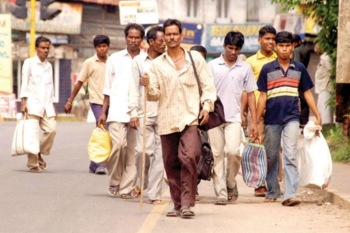
The ongoing debate in Goa illustrates deeper anxieties: cultural preservation, land ownership patterns, employment vulnerabilities, and demographic anxieties intensified by rapid urbanisation and tourism-driven economics. These concerns are legitimate and deserve structured policy discussion not hostility against communities or generalised suspicion. Targeting marginal migrants while ignoring larger structural causes such as land speculation by wealthy entities, unregulated real estate inflows, and planning lapses misdirects public energy. As critics rightly highlight, systemic scrutiny must focus on powerful economic actors, not struggling daily-wage earners.
Towards a mature
democratic culture
A constitutionally mature society must hold two truths together:
1. Identification of social groups for policy purposes is permissible and often essential to ensure equitable governance.
2. Public rhetoric must not cross into humiliation, harassment, or hostility for that violates constitutional morality and human dignity.
In other words, diversity can be acknowledged without disrespect. Communities can be named without being shamed. Identity can exist without insult.
Conclusion
Goa’s strength has always been its ability to assimilate while preserving identity. Reasonable classification when rooted in governance needs, not prejudice, strengthens federalism and multicultural citizenship. But the dignity of every individual and group must remain paramount.
Unity is not achieved by ignoring differences. Instead, India’s constitutional promise flourishes when differences are recognised, respected, and harmonised not weaponised.
Goans and migrants alike are part of the State’s evolving story. The task before us is not to erase diversity, but to ensure that diversity deepens fraternity, not fractures it.