Finally the south-west monsoon has arrived in Amchem Goem, with accompanying boisterous dark-grey skies ripped by silver flashes, incessant torrent, gushing water, liberal splash of green across the landscape and of course the seasonal siesta forced on people here by this cool weather.
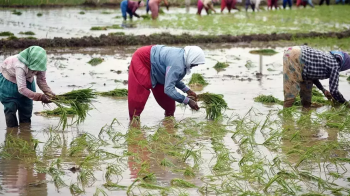
I am intrigued by the multiple shades and influence that this wet season has on our lives. For us Goemkars, it is a respite from the scorching heat of the just tapering summer; a magic potion for the heat rash that torments the skin. For those who continue reaping the harvest of their toil and trust this benevolent soil, it is an elixir that puts life in the desolate paddy fields, inviting other crawling and flying creatures to partake in this gratis feast.
Rains cast a wet spell on the ambience, and sitting in one’s cozy home looking in the distance through frosted, foggy windowpanes, sipping from a steaming coffee-mug is an ethereal experience. On a cold rainy morning as we wake up to the sound of pitter-patter, staying blanketed in a warm quilt is a joy unparalleled!
To my blurring vision as neo-Xaxtikar, the sight of few farms that have tenaciously resisted conversion and escaped the evil eyes of the real estate giants, bustling with farmers and their animals driven by agrarian enthusiasm and energy is nothing less than magic. In a state where we have had some chimerical proposals for ‘impounding rain-water and exporting it to arid countries in exchange for oil’, one may only hope that these ‘Quixotes in authority’ do not install ‘rain-gauges’ in agricultural fields and bill the farmers for the volume of rain-water utilized towards irrigation !
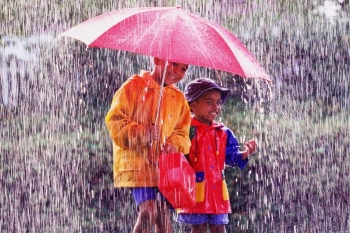
I have fond memories of the rainy seasons of my childhood in the 70s, when the rains were more punctual and predictable, unlike their missed onset in the recent years that we blame on climate change. In the last week of summer vacation, parents would be busy retrieving rainwear from closets, and if one was lucky to have outgrown the raincoats, or had perforated shattered umbrellas; a visit to the market would be in the offing. I still remember the visuals and sounds encountered as a school-going child on the shops selling this ‘monsoon merchandise’, just as the ‘fragrance’ of the new raincoats, water-bottles and gumboots is etched in my memory till date.
Over the years I’ve witnessed the helplessness of monsoon scientists meticulously modeling data, to predict the onset of rains, and yet this ‘water of the skies’ leaving room for skepticism in their trained minds. Apparently the ‘Math of Meteorology’ flouts fixity, and for that matter natural manifestations do not conform to rigid calculations of human ability.
As a tropical country, we are in the ‘monsoon zone’ of the world and this annual precipitation shapes our climate, terrain, biodiversity, history, ecology, economy, culture and health. The southwest monsoon arrives from the Arabian Sea, and hits the Western Ghats of Kerala before any other parts of India. Goa, also a beneficiary of the Western Ghats, the showers arrive with a gap of 3 to 4 days, subject to many factors that aid stabilization and advancement of monsoons from Kerala.
Nestled amidst the Western Ghats, Goa in monsoons is a nature lover’s delight, with Dudhsagar waterfalls cascading through the ravines, our forests glistening green with fresh foliage, fireflies and bioluminescent mushrooms lighting the forest canopy, Malabar gliding frogs at their acrobatic best between the branches, millipedes and centipedes scouring through leaf litter, and the ground crowded with creepers, herbs and ephemerals offering testimony of the eager soil’s vigour for sprouting life. While rain inspires philosophers, poets and romantics, it is also true that deluge, destruction and disease are the ‘dreaded triplets’ of this wet season! In Goa where rice is our staple cereal, rains guarantee our food security. In this season we have to be guarded against pathogens that can invade us through air, water and food; not to miss several vector borne diseases like malaria, chikungunya and dengue.
As we endure an incrementally changing climate regime, to be ‘smart’ in the sense of planning and digitization of civic amenities for citizen’s convenience in cities is not enough, but our living spaces must be ‘climate smart’! This element of ‘climate resilience’ must be integrated in planning of our townships and cities, besides in the design of our dwellings.
The trend is clear and monsoons shall be irregular in space, time and intensity. Events of extreme precipitation will test our architectural and engineering prowess, as also our investment and preparedness towards mitigation and management of monsoonal disasters. Cyclones, flooding, landslides, uprooting of trees, collapse of weakened and dilapidated structures are various possible threats to life and property during the rains in Goa. Even in absence of all these extreme manifestations, our urban spaces are susceptible to quick inundation due to disrupted drainage, owing to changing land use and clogging by non-degradable wastes. While ‘smart’ is opting for new and modern, ‘prudence’ is recognizing the time-tested and traditional, whatever may be the context!
I have my own apprehensions about our systemic response time to natural calamities driven by adverse weather. With nature’s flickery temperament and unforeseen strikes, our response should be pre-emptive, rather than reactive. The authorities need to have precision mapping of all such vulnerable areas in the state, with regular capacity building of ground personnel and state of the art equipment, besides sensitization of vulnerable population.
Finally, we must remember that ‘Yere yere pawsa, tula deto paisa’ is just a poetic fantasy, monsoons cannot be invited, deferred and diluted with monetary inducement of money. It is a natural phenomenon and nature shall never be subservient to our will…