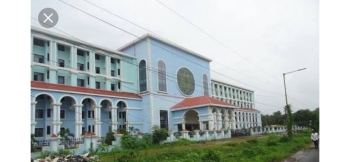
A stroke patient’s clock starts ticking the moment symptoms strike, but at South Goa District Hospital the system seems stuck in slow motion. Every passing minute without treatment means more of the brain is irreversibly damaged: around 2 million brain cells die each minute of an untreated stroke.
Modern emergency triage protocols demand that such patients receive definitive care within the “golden hour” ideally a CT scan and thrombolytic therapy (clot-busting drug) within 60 minutes of arrival.
Patient’s nightmare
in Margao
Picture this scenario: It’s 3:00 am in Margao and a 73-year-old man awakens with slurred speech and a drooping face classic stroke signs. His family rushes him to the new South Goa District Hospital (SGDH), expecting a fully equipped facility. After all, this is the district’s premier government hospital, a 500-bed institute built for ₹220 crore with promises of “modern medical infrastructure including OPD services in 33 specialties… latest diagnostic and laboratory facilities”. Surely, SGDH can handle a simple stroke emergency, right?
On arrival, however, the family’s hope falters. The triage area is sparsely staffed just a couple of nurses and one resident doctor scrambling to handle whoever walks in. At this early hour, only a skeleton crew (one RMO doctor, two nurses, and a general duty attendant) mans the emergency.
Instead, the overwhelmed staff at SGDH struggle to even assess the patient quickly. In a situation where “quick initial assessment… is vital for saving lives”, precious minutes slip by.
Where are the
specialists?
The stroke patient urgently needs a CT scan to confirm an ischemic stroke and rule out a bleed. But SGDH lacks a round-the-clock radiologist on duty. Imaging services exist in name, yet radiology at SGDH operates only during limited hours it is not a 24x7 service. At night, a technician might perform an X-ray or CT, but interpretation and specialist consults are another matter. The result? Emergencies like strokes or heart attacks cannot be definitively treated at SGDH. The stroke victims family members, after waiting for that CT scan, would learn that any serious brain intervention requires transfer to Goa Medical College (GMC) in Bambolim. In other words, South Goa’s “district” hospital functions more like a transit point, stabilising patients if possible and then rushing them off on a 30+ km ambulance ride to the North. For a stroke patient, this likely means missing the golden hour entirely. By the time he reaches Bambolim for specialised care, the damage is done.
Subpar services in
state-of-the-art shell
What makes this situation especially infuriating is the contrast between SGDH’s shiny exterior and its hollow capabilities.
Consider the basic infrastructure in the wards. Patients sweated under non-functional air conditioners and idle ceiling fans as power outages crippled the building. The ventilation system failed, and there is no natural cross-ventilation by design.
Each ward at night is often staffed by just one duty doctor and one GDA (ward attendant), responsible for dozens of ill patients. Even basic services like a 24x7 pharmacy are absent; the pharmacy shuts by evening due to staff crunch, forcing patients’ relatives to run out to find medicines at night.
Meanwhile, one group is present in disproportionate numbers at SGDH: Goa’s Home Guard personnel. Walk through the corridors and you might find more uniformed guards and security staff than medical aides.
Overcrowded and
underequipped
Despite its 500-bed capacity on paper, SGDH has only about 350 beds activated for use. The consequence of this under-utilisation is predictable: bed shortages. On any given day, it’s not uncommon for the hospital to exceed its available beds and park patients on wheeled stretchers in the corridors. Instances of male ward patients spending the night on stretchers, while nurses scramble to tend to them amid the hallway traffic. Such scenes recall the old Hospicio hospital’s worst days: the very scenario SGDH was supposed to eliminate.
This overcrowding isn’t just uncomfortable; it compromises care for vulnerable patients. How is a single duty doctor on night shift to monitor a ward bursting at the seams? How can infection control or patient dignity be maintained when people are lined up in corridors?
The cost of delay and
need for urgency
When it comes to stroke, trauma, or any critical illness, delays kill. “Time lost is brain lost,” and in stroke management every second counts. The American Stroke Association recommends door-to-needle (tPA injection) within 60 minutes for ischemic strokes, a benchmark that top hospitals worldwide strive to hit. Goa’s triage protocols similarly classify such cases as utmost priority. Once a critical emergency case reaches a hospital, definitive treatment should ideally begin within one hour, according to emergency guidelines.
Lives are at stake here. Behind every statistic is a real patient: a father who won’t recover from his stroke because tPA came too late, a breadwinner whose heart stopped on the long road to Bambolim, a crash victim who lost crucial time being shuttled around. These are tragedies that a well-equipped district hospital is supposed to avert.
Time is brain, time is heart, and time is life. The authorities in Goa must remember this as they allocate resources and personnel to SGDH. A stroke patient arriving at 3:00 am should not be made to feel that he might as well have gone to a primary health centre. Until SGDH dramatically improves its emergency response and ends its referral culture, South Goa will continue to lose precious lives and precious time. That is a price no society should be willing to pay.