The other day, while listlessly finding my way through Facebook, I came across something that caught my attention. It was a post about how a customer with a small bill gets treated in a cafe in Panaji.
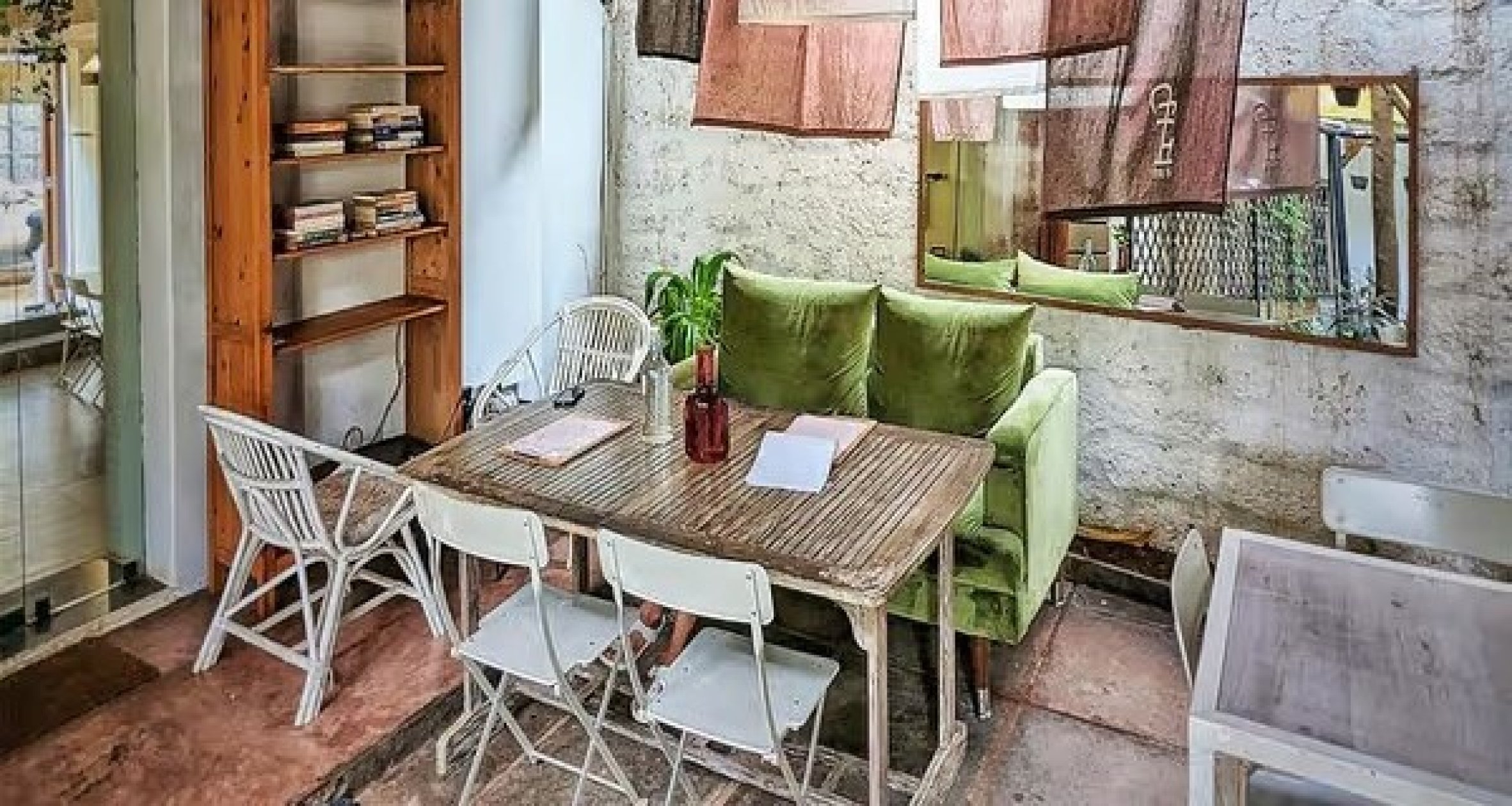
The poster alleged being treated unfairly at a small cafe in Panaji''s Latin Quarter after ordering only a coffee. Despite offering to move if more customers arrived, the poster was later told that beverages were takeaway-only (without any prior notice) and then asked to leave before finishing the coffee, ostensibly to make room for incoming customers.
The resultant discussion was interesting; with so many joining in. The poster argued that other customers ordering salads, juice and cake were allowed to remain. The suggestion was that the decision was based on the relatively low value of their order rather than seating constraints. Many issues here. Lack of transparency, inconsistency in treating customers and discourtesy were the other charges raised.
The poster wrote on Facebook, on leaving, that the resolution was never to return.
From a customer's point of view, this is understandable. One felt the same when a bookshop owner (now no more in operation) told this columnist: "We get all sorts of people browsing our books. If you want, you can buy; but browsing is not allowed." It was hurtful, because how can one decide on a book without going through it? Secondly, you can't afford to buy every book you see. It's only natural to be curious about a book you may not buy.
But there is another side to the story. That is, the business story. Each year, a number of eateries, cafes and restaurants open up all across Goa. Many don't survive for long. The Verna-based couple Diana and Edwin Pinto, many years back, put together a very creative guide to the restaurants of Goa.
When asked about newer editions, they said they simply could not sustain the same. The reason? Many such restaurants simply folded up by the next season, unable to sustain themselves. They could not face the pressures of running a business, especially in Goa.
The pressures small businesses face in Goa are widely known to everyone. But it perhaps never gets sufficiently discussed, noticed or focussed on, with the aim of drawing solutions.
Restaurants want a quick turnover of tables for a reason. Their revenue depends not only on how much each customer spends, but also on how many customers they can serve using the same limited seating.
A person occupying a table for two hours over a single coffee represents a potential loss of business. This is especially true if several other customers could have used that seat in the meantime.
This might not be rudeness. Restaurants also face substantial fixed and operating costs. We forget they are prone to high commercial rents, salaries, staff accommodation, electricity, commercial LPG, water, food inflation, maintenance, licences and even commissions of 30-40% on food-delivery platforms. In Goa, restaurateurs have recently too complained of rising utility and food costs, labour shortages and declining customer footfall.
The Old Latin Quarter of Panaji (Fontainhas and São Tomé) has some additional pressures. They have to cope with relatively small premises, limited seating, narrow streets, heritage buildings that can be difficult to adapt or expand, parking constraints and a tourist clientele that can be unpredictable and seasonal.
Of late, for some time now, the area is also experiencing growing visitor traffic. Much of it driven by social-media photography rather than actual spending at local establishments. Residents have complained about overcrowding, traffic obstruction and visitors treating the neighbourhood as a photographic backdrop. Cafes and restaurants no doubt benefit from the area's heritage appeal. Yet, they too realise that not everyone visiting the area necessarily becomes a paying customer.
It is time that small businesses got something more than mere lip sympathy. They have a long litany of woes, and nobody wants to take the trouble to look at this.
They anyway lack visibility, lobbying power, financial resources or even the political influences that larger, organised corporations have. Their problems are usually dispersed, and made to seem individualised. Till taxi drivers take to the streets, Goa doesn't wake up to the fact that they too are facing severe challenges (even if the customer feels overcharged at the same time).
If you see the problems of small businesses as the individual failure of the management, the wider symptoms will be easily overlooked. But when small businesses disappear, the fabric of a locality loses something that cannot be replaced.
Take their financial difficulties. These are many and diverse. Access to bank finance, the high cost of borrowings, delayed payments from customers, inadequate working capital, rising operating costs (electricity, rent, transport, packaging), manpower and skilled worker shortage, high employee cost, and even a dependence on migrant labour who can be hard to retain.
Then, Goa throws up many government and regulatory difficulties. Try out the licensing procedures, multiple inspections, and compliance requirements.
Online services can be poor, never mind what you're told how effective these are. There is a lack of awareness about government schemes too.
Market-related difficulties are not the least of the problem. Goa's market size is limited, without doubt. Business has a seasonal nature, it doesn't span the full year in many fields. Larger companies and online platforms are offering stiff competition.
Besides that, there are limited marketing and digital presence, the challenges of getting into markets beyond Goa, and perennially rising property rents.
As customers, we feel the pinch. But think of those on the other side of the fence too. They might not be selfish or short-sighted. They just might be working under another set of pressures... not quite apparent to us.