As a ruling party enters its penultimate year in power, dissent against its working style is almost guaranteed. That is precisely when the all-round holler to pull down the government gains momentum.
For the diaspora of sulking last-poll losers hoping for a favourable nod from their erstwhile dispensation, it is a time for reconciliation. Meanwhile, those who strayed into rival outfits begin trying to sweet-talk their way back into consideration.
Even the many sitting in the political wilderness, having maintained a stoic silence on their return to active politics, find this as good a time as any to make their intentions clear.
However, it is the new legion of ‘social workers’ who will no doubt spring a surprise by staking their claims to a bigger opportunity to ‘serve the masses’. The huge cutouts adorning municipal squares and village vantage points—greeting people on festivals and feasts—are clearly an investment in lasting goodwill toward a healthy electoral gain.
Beyond the scramble for party tickets, which is bound to spark fresh discontent among denied hopefuls, every constituency in the state must now contend with a wave of independent candidates entering the fray. Besides, shifting loyalties and past allegiances will prompt many fence-sitters to test the waters for political gain.
Adding to this churn is a familiar yet potent subplot in which the trusted campaign managers, fixers, and ground-level agents of sitting legislators quietly prepare to turn the tables on their masters. After years of nursing constituencies and building networks on their patrons' behalf, many now feel ready to claim the throne for themselves.
Meanwhile, calculated moves by dominant political families to consolidate their hold or expand into neighbouring constituencies will likely unsettle local aspirants.
As major political parties busy themselves forging alliances, or quietly undermining them, new political equations are set to emerge, reshaping the state's power dynamics in the days ahead.
It is now a level playing field!
Yet, more than the aspirants themselves, it is the loyal entourage trailing behind each hopeful that the public will have to reckon with. As the most visible extension of every wannabe legislator, it is this noisy brigade that will become firmly entrenched in the minds of voters.
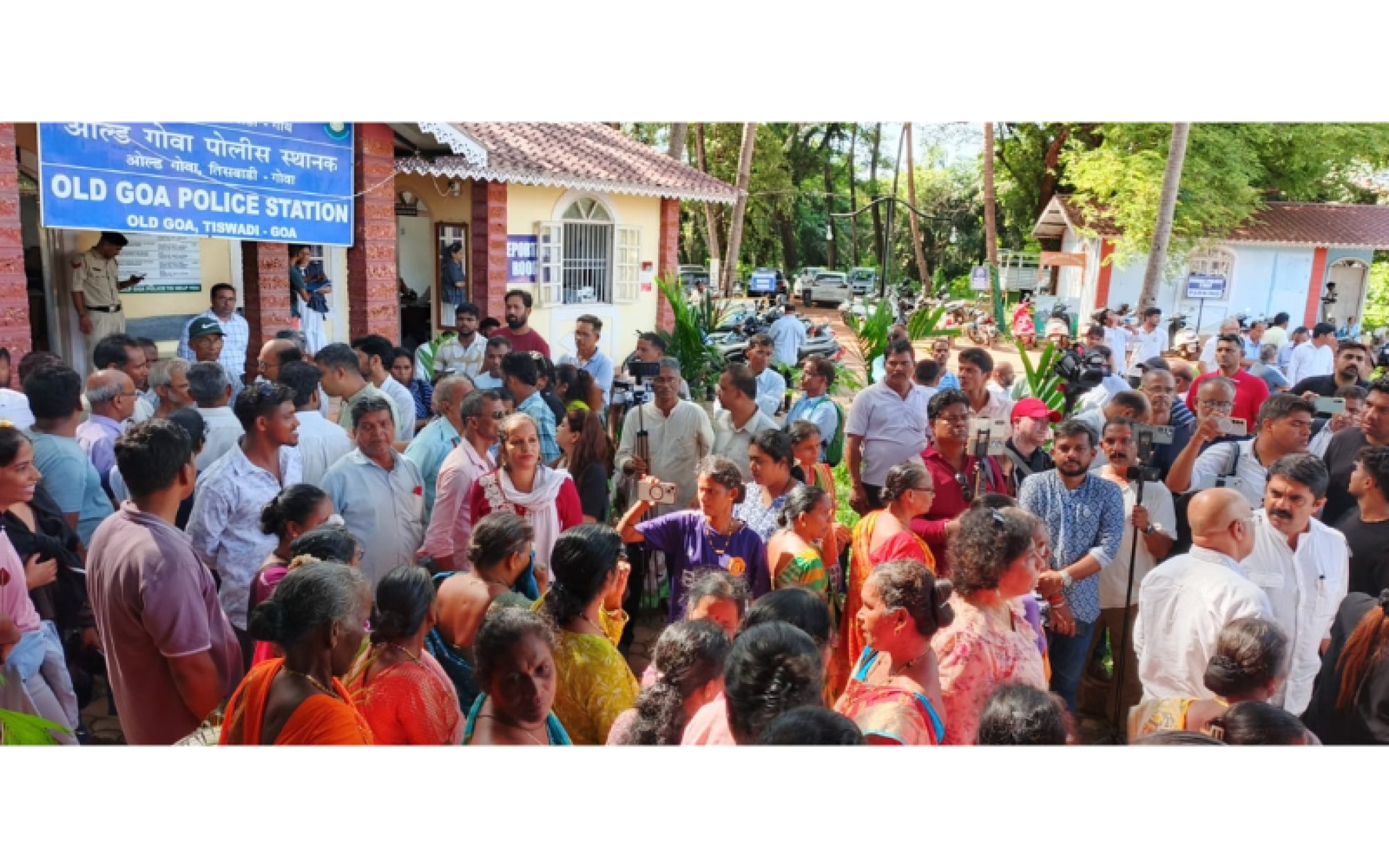
One cannot help but view the entire spectacle as an extended carnival, a drawn-out political 'tamasha' running right up to the eve of the polls, destined to deliver either a new government or merely a diluted version of the old one. However, it is the wave of agitations and acts of dissent across the state that is truly captivating the public.
Grassroots movements have come to define Goa's political future—or so it seems. Every localized protest is now viewed as a direct rebellion against the powers that be; every act of dissent, a revolution in the making.
Agitators have evolved from being mere protesters into recognized activists, fighting over every physical and geographical attribute of the state. From environmental destruction to potholed roads, civic failures have birthed a new breed of crusaders demanding accountability and systemic reform from the authorities.
However, it is the intensity of these protests—rightfully calling themselves campaigns and movements, that signals an evolution into something truly meaningful for citizens. That the agitations from the state have now reached the 'Mecca of protests' in the nation’s capital speaks volumes about their growing scale and resolve.
The fact that these crusaders have steered clear of politics, showing no intent toward a personal political baptism, sets them distinctly apart from the breed that reflexively opposes anything and everything proposed by the government in the name of development.
Unlike that class, which prides itself on nurturing political ambitions and decides to give shape to them through a vociferous and boisterous stand against the establishment, these citizens remain focused purely on their cause.
This lends an undeniable sincerity to their efforts to make the government see sense, climb down from its high horse, and withdraw controversial projects. In fact, it is often the unified mobilization of these campaigners that strips away official narratives and stamps these initiatives as deeply controversial in the public eye.
Yet it would be naive to assume they are immune to a subtle, gradual temptation, where even leaders who start out purely apolitical get swept up by the tide of their own popularity and begin eyeing the mantle of elected leadership. Inevitably, this leads to the fracturing of the movement, with narrow vested interests triumphing over the larger public purpose.
History, however, is unforgiving to such optimism. The pre-poll ritual of social activists and political commentators convening to float a front and guide communities toward capable candidates routinely collapses before taking off.
Equally uninspiring is the predictable talk of building an ‘alternative’ to challenge the ruling might, a tired quinquennial exercise that fools no one anymore. ‘Third’ and ‘Fourth’ fronts are relics of the past, and attempting to revive them now is doomed to futility.
In the end, the electorate is left staring at a familiar crossroads where neither entrenched dynasties nor idealistic street fronts offer a guaranteed cure.
While citizen movements have shown they can force the establishment to blink, converting street anger into lasting systemic change remains an unfinished task.
Ultimately, the true power of Goa’s grassroots crusaders lies not in forming a government, but in acting as a relentless check on whoever occupies the seat of power. By forcing policy retreats before a single vote is cast, these movements have proven that unified street pressure can disrupt patronage politics far more effectively than any hastily assembled electoral front.
Until the political class learns to fear the ballot as much as it fears a mobilized citizenry, Goa’s real opposition will continue to operate not from the Assembly floor, but from the streets.