Recently, while editing someone's book, I came across the concept of a German Verein. Like in some German pronunciations, the Verein is pronounced as fuh-RINE. It's an interesting and intriguing concept.
So, what is it actually? It is a German association, club or society built around a shared interest or purpose. It can range from sports and cultural clubs to choirs, professional and charitable bodies. Members pay subscriptions, elect committees and take collective decisions. Usually non-profit, they can however earn income and employ staff. "eingetragener Verein" (e.V., in short) means a formally registered association with its own legal identity.
In the Goa of the yesteryears, much of social activity was undertaken not through lavish government spendings, nor through large donations. But rather through what could today be called crowd-funding and crowd-sourcing.
From community-founded schools and educational institutions, established through local subscriptions, religious organisations and philanthropic efforts; to the kudds of Bombay, Poona, Calcutta or Karachi (village-based Goan clubs which provided very inexpensive accommodation, food, support and a cultural home to generations of migrant workers).
There have also been village sports clubs and gymkhanas, which nurtured football, hockey and other sports. Or 'clubs' set up often by expat groups in their villages back home (Tivim has four of these).
Environment groups, religious associations, music networks, knowledge-sharing networks, associations for the sick and indigent supported by local funding, campaigns to preserve the environment or battle over-tourism (much needed now), and so many others.
But, more recently, governments in our parts of the world treat voluntary initiatives with suspicion and doubt. You keep hearing about how foreign funding is blocked to some, tax benefits (even for money raised within India) is withheld to others including libraries, and religious organisations can be suspected that they could indugle in "conversions".
For New Delhi, voluntary organisations spell "national security" concerns, fears over "economic priorities" and political dynamics.
That is only one side of the story. While the voluntary sector often faces heavy regulatory scrutiny over potential misuse, financial and legal loopholes are equally vulnerable to abuse by large corporations and political entities, as seen in recent money-laundering investigations in Gujarat.
Big businesses can manipulate complex corporate structures, shell subsidiaries, and over-invoiced contracts to evade taxes or divert capital, while political outfits enjoy broad tax exemptions under Section 13A and offer 100% tax deductions to donors under Sections 80GGB and 80GGC. In Gujarat, some Registered Unrecognised Political Parties (RUPPs) collected thousands of crores in donations, issued fraudulent receipts for tax deductions, and routed the cash back to donors through shell firms after deducting a commission.
Leaving aside foreign funding, the bigger issue here is to ask why India doesn't do more to build its own voluntary sector (beyond politically-connected groups, like the RSS). This energy badly needs to be harnessed for the social change and alleviation from poverty (never mind what the stastics say, the eye tells it all).
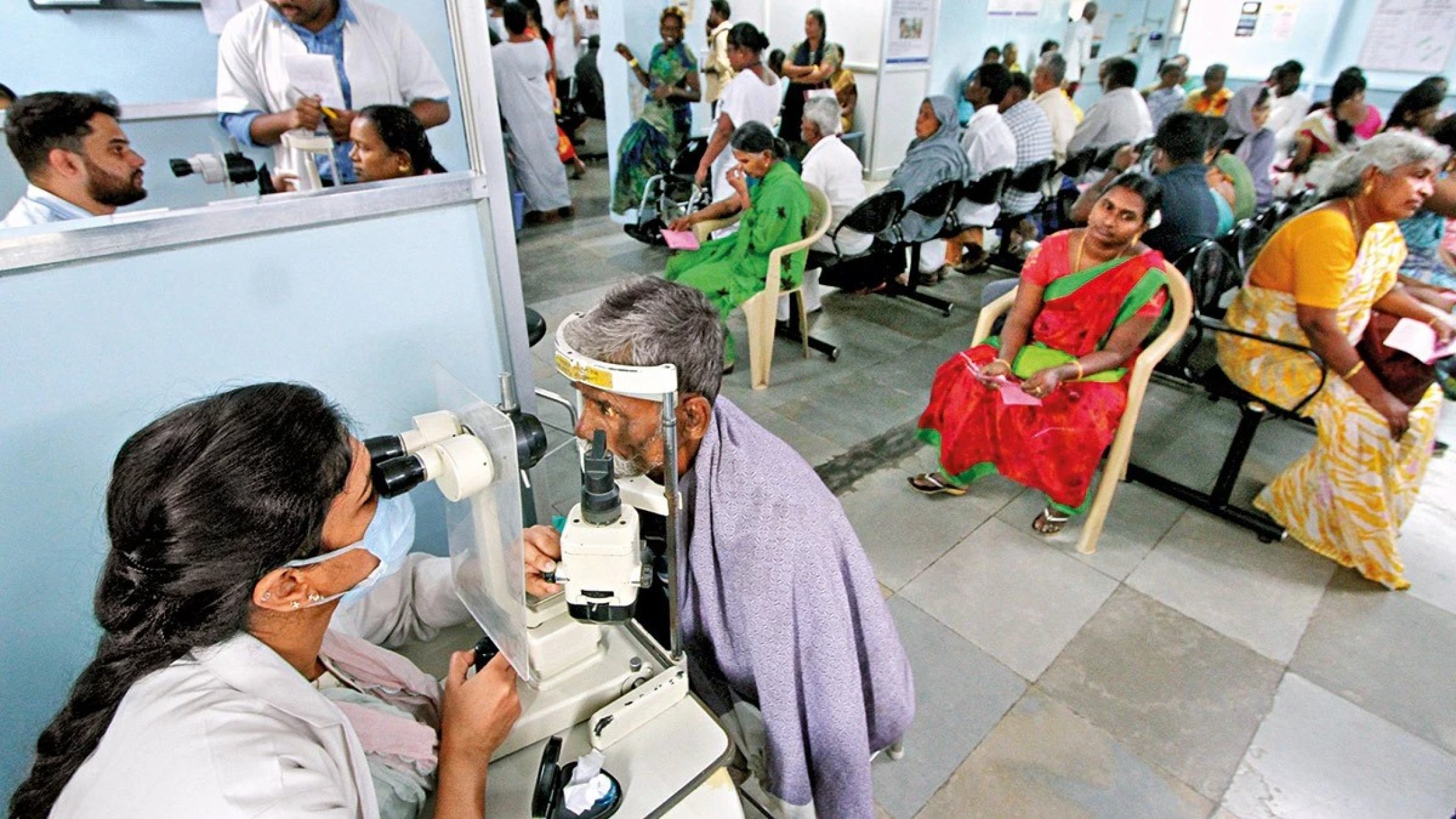
Some impressive initiatives are there already. Recently, I picked up a book (waiting to read it) called: "Infinite Vision: How Aravind became the world's greatest business case for compassion." It talks about the Aravind Eye Hospital in Madurai, which this columnist too visited for excellent and affordable eye-care.
Aravind's cross-subsidy model allows revenue from paying patients to fund high-volume, world-class cataract surgeries for over half of its patients completely free or at steep subsidies. It works without external aid. Who has not heard of the Jaipur Foot, the Sulabh Sauchalayas (which take sanitation to urban India in sustainable ways), and even many innovations to make technology affordable to the common man?
This has been quite widely studied. Books like 'The Fortune at the Bottom of the Pyramid: Eradicating Poverty through Profits (CK Prahalad), 'Grassroot Innovation: Minds on the Margin are not Marginal Minds' (Anil K Gupta), 'Frugal Innovation' (Aditi Ramdorai and Cornelius Herstatt), or 'Jugaad Innovation' (Jaideep Prabhu and Simone Ahuja), among others, have highlighted this widely.
But does the system allow for individual and group initiative? Leave aside the official claims...
So many examples from all over. France has its Association loi 1901 (a flexible legal framework for citizens to set up non-profits), Denmark's Forening, Netherlands' Vereniging, UK's Community Benefit Societies or Community Interest Companies, US's Community Foundations, Portugal's Associação nonprofits, and Japan's Specified Non-Profit Corporations or NPOs. Even Brazil has its participatory budgeting.
Once-called Third World countries have taken steps. Brazil has community association and solidarity-economy organisations. Philippines has its people's organisations, Bangladesh its Grameen-inspired village groups, Kenya's Harambee traditions sees pooling citizen resources for schools and more, Nepal has community forestry groups, and the Thais have community saving and household organisations.
India can point to its cooperatives, but those are from another era. The collapse of cooperative banks in Goa is a comment in itself.
In our part of the world, much charity is routed through religious or caste networks. People (and the governments) understand piety; which makes such organisations rife for manipulation and take-over even. But who will take care of the bread and butter needs of souls while they are still on this world?
Not only is there mistrust here, but the infrastucture is not available. India claims to have about 3.1 to 3.3 million registered societies, trusts, and non-profits, while central digital registries track roughly 5.8 to 6.3 lakh (580,000-636,000) active organizations. How many of these work efficiently and are active is anyone's guess.
The bottom line is this: How is social trust organised, how easy it is to register and maintain an association, and the state’s attitude toward citizen groups. In Germany, the e.V. is treated as the default building block of everyday social life, whereas in India, formal registration is often viewed as a heavy bureaucratic burden.