Sundeep Kumar Nayak
Every April, at the Goa Cashew Festival, we celebrate a crop most farmers still sell in its least profitable form. The grower sells raw nuts at the orchard gate; others process and brand them. The difference is value the farmer never touches.
Goa has an institution designed to close that gap: cooperative societies. Yet most have become lending counters and election fixtures. That is an expensive habit as cooperatives are being re-engineered nationally.
A quiet national overhaul
Since the Ministry of Cooperation was created in July 2021, the sector has seen major structural change. PACS, once largely limited to crop loans and waivers, now have model bye-laws permitting more than 25 businesses, including fair price shops, fuel dealerships, water supply, godowns and machinery hiring.
Nearly 80,000 PACS have been sanctioned for computerisation; over 63,000 already run on a common ERP platform, due for completion by March 2027. This makes societies harder to run as private fiefdoms.
Tribhuvan Sahkari University, India’s first national cooperative university, aims to train eight lakh professionals annually, addressing the shortage of professional managers.
FPOs have become a new unit of rural enterprise. The Centre’s scheme has crossed 10,000 FPOs, mobilising over 56 lakh farmers, nearly 22 lakh women, with turnover around Rs 9,000 crore. It is extended to 2031 and includes FPOs registered under State Cooperative laws. An FPO is a producer company with cooperative DNA — democratic ownership and corporate discipline: Cooperative 2.0.
The direction is clear: cooperatives must own the value chain, not merely lend.
Lessons from NCDC
I was MD of NCDC, India’s cooperative financier, from December 2017 to June 2022. Its business grew 146 per cent over its entire 1963-2017 record. The lessons apply to Goa.
Credit follows a business plan, not sentiment. Finance the value chain, not just the crop: more cashew without processing or a brand can add to a glut, while grading, roasting, cold storage and branding can change incomes permanently. NCDC’s fastest-growing exposures were in processing and marketing. Tie the market before building capacity. Professional management is a precondition of cooperative principles: elected boards should set direction and appoint qualified CEOs. Amul works because farmers own it and professionals run it.
NCDC now disburses over Rs 1,00,000 crore a year and has grant-in-aid designed to leverage roughly Rs 20,000 crore from the market over four years. The money is available. Goa’s share has been modest because it has not arrived with projects.
What successful cooperatives show
As elected Chairman of NEDAC, the UN-FAO promoted network of agricultural cooperatives across Asia and the Pacific, I saw that successful cooperatives are producer-owned businesses with brands and professionals. Amul works because farmers own the chain and professionals run it. Japan’s JA, Korea’s NACF and Taiwan’s farmers’ associations integrate services, processing and retail. Fonterra and Arla are farmer-owned multinationals.
Goa’s opportunity
Most Goan societies are in credit, banking, housing and services. Productive sectors — horticulture, fisheries, dairy and agro-processing — have thinner representation. The new state policy prioritises fisheries, horticulture, cold storage, logistics and fodder. Now comes execution.
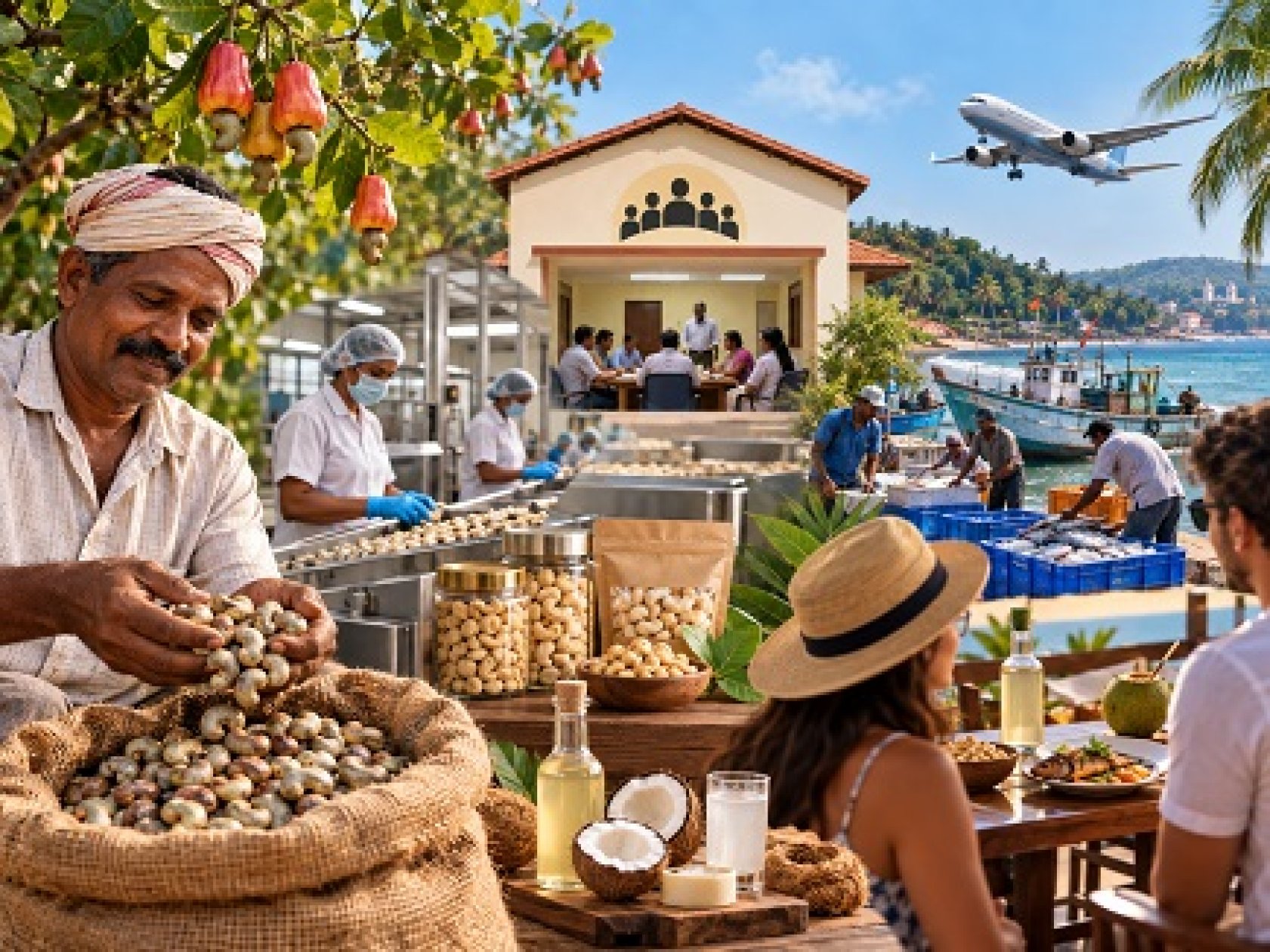
Cashew: Production in parts of Goa has fallen sharply. Processors face cheaper imported nuts and higher costs. Goan cashew received a GI in 2023; feni has had one for years. But a GI needs enforcement and marketing. A federation can certify, grade, brand, police counterfeits and negotiate shelf space.
Coconut: Goa sells nuts, while higher value lies in virgin coconut oil, neera, coir and health products. Clusters can build processing units.
Fisheries: The ramponkar sells on the beach because he owns no ice, cold room, truck or retail counter. A cooperative owning an ice plant, chilled vehicle and outlet can turn a distress sale into a priced sale; QR traceability would make seafood compete on provenance, not price. Goa already has proof: the Goa State Cooperative Milk Producers’ Union aggregates village societies and puts a Goan brand on local shelves. We have not replicated this for cashew, coconut and fish.
Goa’s unique advantage
Most states seek distant markets. Goa’s market arrives by air: roughly a crore visitors a year, eating within kilometres of farms. A hotel contract with a federation — Goan cashews in minibars, virgin coconut oil in spas, traceable fish on menus and authenticated GI feni at bars — could be worth more than subsidies. Tourism can become Goa’s captive value chain.
Next 24 months
Audit every society; revive viable ones under national model bye-laws and wind up the rest. Build three FPO/producer-company clusters for cashew, coconut and coastal fisheries, with balance sheets and professional CEOs. Take bankable projects to NCDC: cashew grading and roasting, a virgin coconut oil unit, and an ice and cold-chain network for fishing wards.
Create a single producer-owned Goan agri-brand and enforce its GIs.
Use the cooperative university and Goa institutions for skills. Insist on timely elections, published audited accounts and boards that set policy rather than run purchases. Cooperative failure is more often caused by capture than lack of funds.
The stake
In Goa, land that does not pay does not remain agricultural. Unprofitable orchards become plots; fishing wards that cannot provide livelihoods become resort sites. A rebuilt cooperative can make the orchard, bagayat and boat pay enough to withstand developers. The national scaffolding is ready: a dedicated ministry, digitised PACS, a cooperative university, an FPO template and a financier seeking projects. Goa need not invent anything. It needs to use what exists — and decide that a cooperative is a business its people own, not a queue at which they wait.
The writer is a former IAS officer who retired as Secretary to the Government of India. He is currently Professor of Practice (Visiting) at IIT Goa