JATINDER PAL SINGH & ANTHONY DE SA
Goa presents an intriguing paradox. It receives approximately 3,000 mm of rainfall annually—nearly three times the national average—and has substantially more usable water per capita than many other States. Yet every summer, parts of the State struggle with unreliable drinking-water supplies, falling reservoir levels and growing dependence on private tankers. The problem, therefore, is not simply a shortage of water. It is one of water management -- capturing, conserving, storing and distributing water efficiently.
This was one of the central messages to emerge from the inaugural edition of The Goa Roundtable, held on November 14 at Dona Paula. The Roundtable brought together policymakers, administrators, economists, scientists, industry representatives and civil society to move the conversation from familiar diagnoses towards practical solutions.
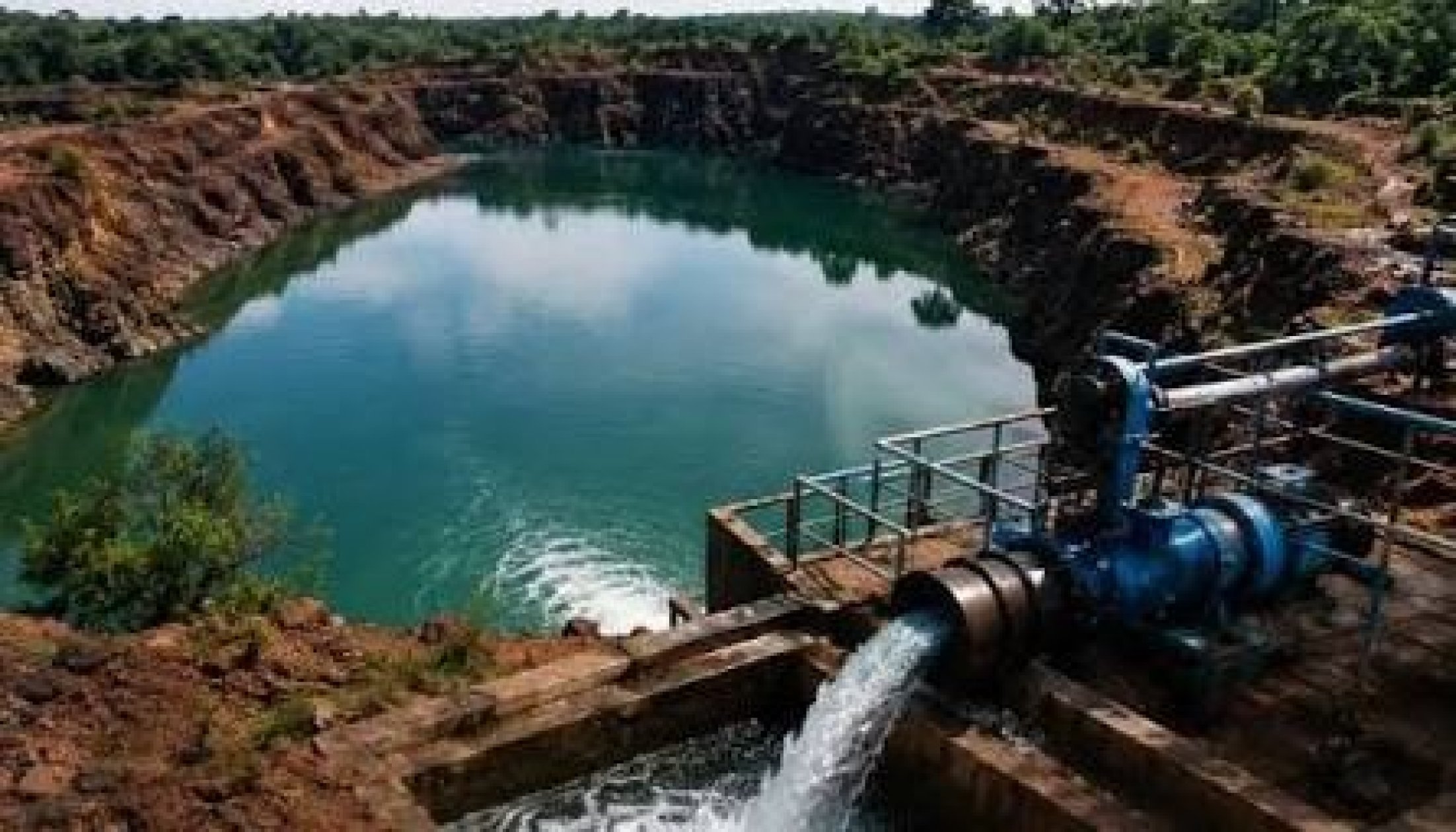
One opportunity deserves particular attention: The harvesting and utilisation of water accumulated in Goa’s abandoned mining pits. Figures presented at the Roundtable indicate that more than a hundred abandoned open-cast iron ore pits in eastern Goa collectively hold an estimated 150 million cubic metres of water. This water is replenished annually through rainwater run-off and subterranean springs. The reserve is substantial—equivalent to nearly a quarter of the water stored in the state’s dams. If even a quarter of this stored water could be put to use over the dry season, it could potentially yield more than 150 million litres per day (MLD).
These are indicative estimates, not engineering assessments. Actual availability will depend on each pit’s suitability, water quality, seasonal recharge, evaporation, infrastructure and environmental safeguards. Nevertheless, the sheer scale of this potential resource is too significant to ignore.
Nor is the proposition entirely untested. Water from some mining pits is already being pumped into the Khandepar river to sustain the Opa water-supply system. Tests have found its quality comparable to that of water from the Selaulim dam.
Goa now needs to turn this opportunity into a structured, scientifically evaluated programme to serve as proof of concept. The first step should be a comprehensive inventory of abandoned mining pits, assessing their water-holding capacity, quality, location, accessibility and suitability for water supply. This should be followed by pilot projects that examine treatment requirements, pumping costs, distribution infrastructure and long-term sustainability. A pilot project could be considered for the water stressed area of Tiswadi, particularly the Kadamba plateau and the adjoining hill tail-end area of Panaji.
The urgency is evident from Goa’s existing supply situation. Despite achieving universal household tap connections, only around 27 per cent of consumers receive round-the-clock water. The state faces an estimated drinking-water supply gap of approximately 65 MLD, which widens during the summer. Dependence on few major dams and long-distance pipelines also leaves the system vulnerable to declining storage and infrastructure failures.
South Goa is reasonably well supplied, but North Goa is particularly water-stressed. Construction and rising population density are straining local systems, often beyond their carrying capacity. Wells are being depleted; many show high levels of coliform pollution from septic tank seepage, rendering their water unfit to drink.
The mining-pit opportunity must, however, be seen as just one part of a broader water-security strategy. The Roundtable identified several complementary measures: Greater use of treated sewage; effective rainwater harvesting; protection of traditional wells, alongside controls on indiscriminate tubewell drilling by real-estate developers; revival of springs and streams; protection of khazans and their ingenious sluice systems; and more efficient water consumption. Treated sewage alone could potentially free up to 40 MLD for non-potable uses such as gardening, construction and industrial cooling. Rainwater harvesting, too, could make a significant contribution if existing regulations were properly implemented.
Water losses need attention. Ageing pipelines—some six decades old—leakage and inadequate metering undermine the reliability of supply. Water audits, repairs and modern monitoring must become priorities. Increasing the quantity of water pumped into a leaky distribution network will not, by itself, solve the problem.
Water must also be recognised as an interconnected ecological and economic system. Goa’s Western Ghats, wetlands, khazans, rivers and traditional water structures are not isolated environmental assets. They are part of the State’s living water economy and must be protected accordingly. Real-estate development, tourism and industrial expansion cannot be planned independently of the carrying capacity of local water systems. Goa’s ancient comunidades and its panchayats must be active partners in this effort, drawing on their local knowledge and institutional reach.
A recurring recommendation was the establishment of an overarching Goa Water Authority to bring together government departments, private-sector expertise, research institutions, civil society and local communities in a coordinated public-private-people partnership. It could provide the leadership and coordination that Goa’s fragmented water-management architecture lacks. Its role should include setting priorities, monitoring outcomes and ensuring that responsibility does not fall between departments.
In his inaugural address, the Governor of Goa Pusapati Ashok Gajapathi Raju reminded participants that water is sustenance for communities, not merely a resource or a supply. He called for unconventional solutions, stronger institutional collaboration and responsible management of natural resources. In his valedictory address, the Chief Minister Pramod Sawant articulated an ambitious goal: 100 per cent water security for Goa.
These ambitions demand more than mere incremental improvements. They require a shift in the way the State thinks about and manages water—from treating it as a commodity to be supplied, to managing it as a shared resource. The opportunity presented by abandoned mining pits is especially significant because it invites Goa to turn part of its mining legacy into an asset for the future, translating an environmental challenge into a social asset.
The Goa Roundtable has laid the foundation for this conversation. The next step must be an actionable blueprint with responsibilities, timelines, targets and accountability. It should identify which projects can begin immediately, which require further study, and how progress will be made public.
Goa has the rainfall, natural resources, scientific expertise and community institutions to make this transition. What it needs now is the resolve to bring them together—and to move from being a water-abundant state to one that is truly water-secure and water-smart.