It is said that ignorance is bliss. But if people want to hibernate in a state of bliss, quite oblivious to the happenings around them, they are living in a fool’s paradise. By continuing to exist in a state of perpetual assumption, they forget that willful ignorance provides temporary comfort, but ultimate vulnerability. The fragile illusion of safety eventually shatters when real-world consequences catch up.
We have come to assume that nature’s bounty is plentiful. However, the belief that there will always be enough food, water, and power to last for posterity—barring an occasional off-season—stems from a dangerous misconception about the finite nature of Earth’s resources and the carrying capacity of our ecosystems.
Historically, early human societies operated as hunter-gatherers, moving with the seasons to harvest what the Earth naturally provided. Over time, this relationship evolved into structured agriculture, allowing communities to settle and build civilizations.
However, weather vagaries and the depletion of natural resources due to human actions have put immense strain on our planet. While nature provides the essential building blocks of life—fertile soil, clean water, fresh air, and diverse ecosystems—these resources are not infinite.
Human activities such as deforestation, hyper development, and the burning of fossil fuels have accelerated climate change, leading to unpredictable weather patterns, severe droughts, and devastating floods. This ecological imbalance directly threatens global food security, water supplies, and biodiversity.
Why do we continue to ignore these flashing red lights!
The root of our inaction lies in a mix of corporate greed, political inertia, and psychological self-defense. For decades, short-term economic gains have been prioritized over long-term planetary survival. Politicians, bound by brief election cycles, routinely kick the ecological can down the road.
On an individual level, facing the sheer scale of climate collapse induces a form of cognitive dissonance. It is a psychological defence mechanism: when a threat feels too massive to fix, it is easier to pretend the problem does not exist, retreating back into the "fool's paradise" where tomorrow looks exactly like yesterday.
But waking up from this collective slumber requires a fundamental shift. The very first step humanity must take is to transition from a mindset of consumption to one of stewardship. We must dismantle the archaic assumption that the environment is an infinite resource to be exploited, and instead view it as a finite life-support system that we are responsible for managing.
This means redefining "progress" not by gross domestic product or industrial output, but by ecological resilience and sustainability metrics.
Today, while modern technology has transformed how we live, our survival remains fundamentally tied to the natural world. Protecting these ecosystems is no longer a charitable choice or a distant political goal—it is a matter of immediate self-preservation.
Only by shedding our willful blindness can we ensure that nature's bounty continues to support future generations.
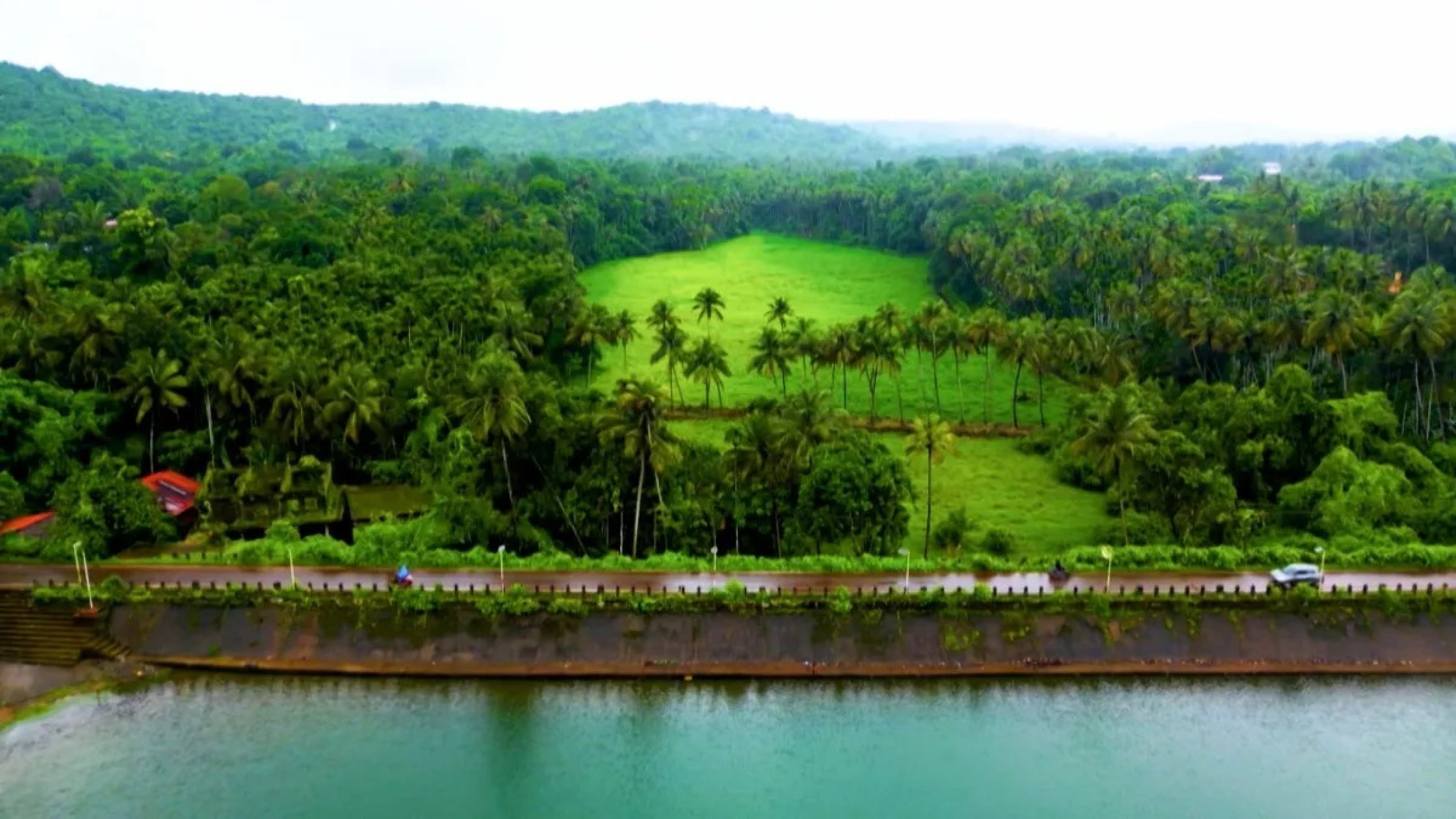
The coastal state of Goa is currently experiencing severe water stress, driven by a compounding mix of weather abnormalities, infrastructure deficits, and localized policy concerns.
While the State government maintains that its raw water reserves are stable enough to avert an absolute immediate catastrophe, environmental experts and local communities paint a far more critical picture on the ground.
A massive rainfall deficit is the immediate catalyst for the state’s water crisis. Environmentalists warn that this abnormal shortage has blocked natural groundwater recharge, causing traditional water bodies to dry up much earlier than usual.
Yet, locals appear assured that water can never be scarce in this coastal paradise. However, with the monsoon playing truant every now and then, the weather scenario has not been all that encouraging.
Assuming an absolute right over uninterrupted supply of basic utilitarian services, people have a legitimate expectation of continuous access to essential utilities like water, electricity, and sanitation.
But, it is wrong to assume that these services could be left entirely to the government. While the government is responsible for the infrastructure, an uninterrupted supply requires a shared responsibility between the authorities and the public.
If citizens consume resources blindly without contributing to conservation, even the best government systems will eventually fail due to resource depletion.
The idea that public services cannot be left entirely to the government stems from the fundamental paradox of infinite human demand versus finite natural resources. While a government can build advanced water treatment facilities, it cannot manufacture infinite natural resources.
If a community over-pumps aquifers and pollutes rivers, even the most robust state infrastructure will eventually face systemic failure and depletion.
Therefore, ensuring a long-term, uninterrupted supply requires active civic responsibility and concerted efforts from the public. Citizens must act as co-stewards of these resources by adopting sustainable conservation habits, such as rainwater harvesting.
Furthermore, the public plays a critical role in infrastructure protection, which includes preventing the contamination of local water bodies.
Ultimately, this relationship is best understood through the governance concept of co-production, where public services are sustained through a partnership between authorities and the community.
Meanwhile, the public must manage the micro-demand through mindful consumption and resource preservation. Without both sides working in harmony, the entire system becomes ecologically and operationally unsustainable.
Scientists claim that while the total amount of water on Earth remains constant, our access to clean, usable freshwater is shrinking drastically due to climate change, population growth, pollution, and mismanagement.
We are now in an age where we are witnessing the transformation of water from a basic utility into a high-value commodity, referred to as the ‘blue gold’ of the 21st century.
Despite the alarming reports of depleting water resources in the State over the past few years, locals have yet to come to terms with the enormity of the situation. This typical case of ‘hibernation in feigned ignorance’ aptly describes the widespread public apathy and collective denial regarding the looming water crisis.