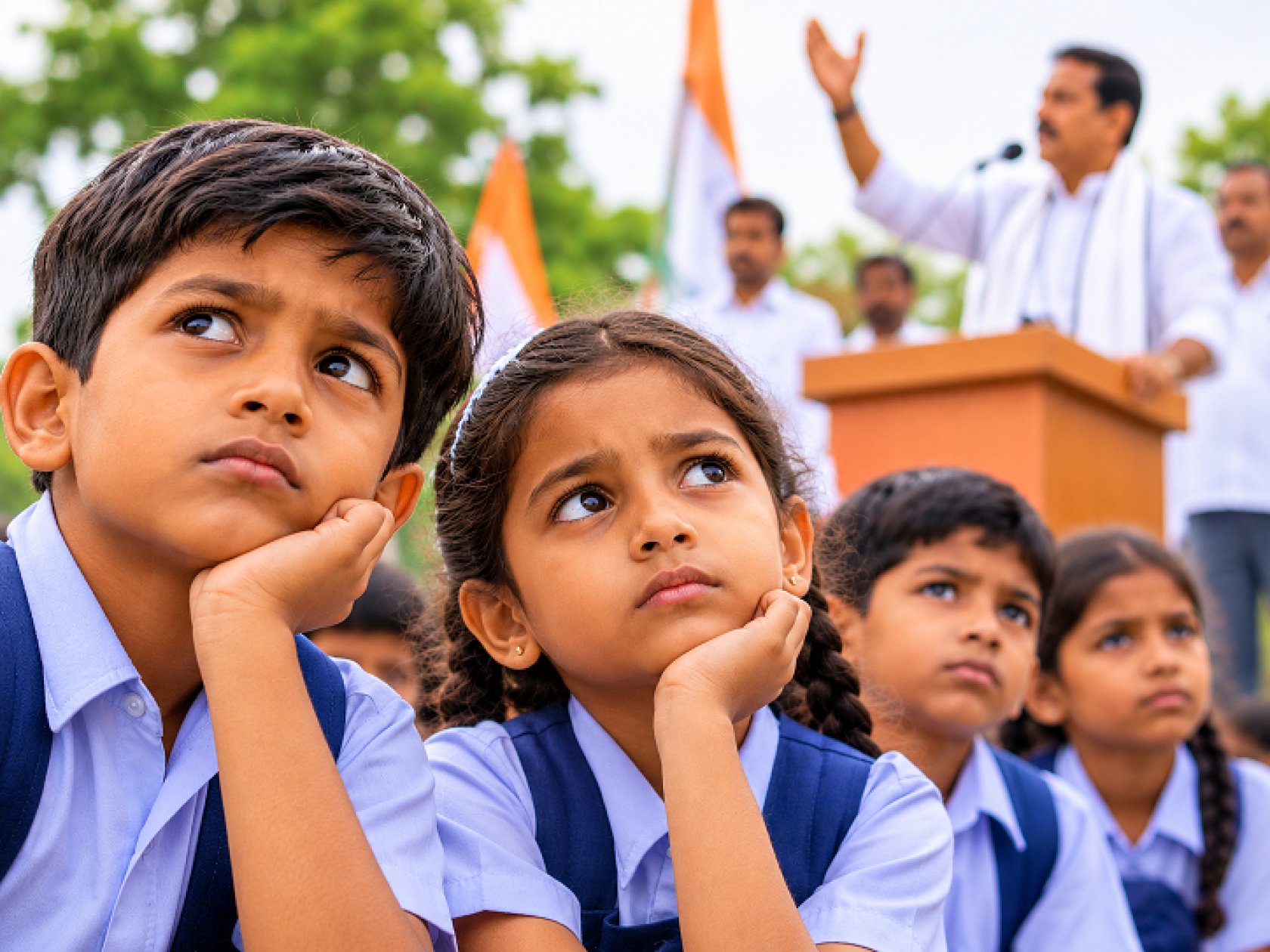
Today is Children’s Day. Across Goa, schools will organise celebrations, children will perform, sweets will be distributed and politicians will deliver their annual declarations of affection. Photographs will capture smiling faces, speeches will remind us that children are our future, and social media will overflow with messages celebrating childhood. By tomorrow, however, the decorations will disappear, the cameras will move elsewhere and the uncomfortable question will remain. What has actually changed for children who are unsafe, unheard or unprotected?
This year, that question deserves a political answer. Elections are approaching, and political parties are preparing their promises. Roads will matter. Tourism will matter. Jobs, housing and infrastructure will matter. But will children’s safety, mental health, participation and protection find a meaningful place in their manifestos? Children cannot vote. Is that why politicians find them so easy to forget?
Remember Curchorem? When allegations of sexual exploitation involving young people surfaced, Goa suddenly discovered an extraordinary number of child rights champions. Politicians protested, parties traded accusations, crowds assembled and cameras captured every expression of concern. The speeches were passionate. The indignation was impressive. For a brief moment, protecting children appeared to be everyone’s favourite political cause. But where are those champions today?
After the protests, who demanded a comprehensive prevention plan? Who questioned whether schools were teaching children about grooming, consent, manipulation, blackmail and digital exploitation? Who checked whether confidential reporting systems existed or whether survivors could access sustained professional support? Who insisted on measurable reforms instead of another round of political accusations? Investigations must follow evidence and due process. Political accountability, however, cannot disappear when television cameras leave.
Perhaps outrage has become Goa’s cheapest child protection programme. It costs little to condemn an incident, demand arrests and pose with placards. Building systems that prevent abuse requires money, expertise, coordination and persistence. One produces headlines. The other requires governance. Which one interests our politicians?
Curchorem was hardly Goa’s first warning. A seven year old girl was sexually assaulted inside a Vasco school toilet; years later, the offender remains unidentified. Children continue experiencing bullying, humiliation and physical punishment in spaces meant to protect them. Families seeking assistance after abuse have encountered delays, transfers and confusing procedures. Yet our leaders continue announcing zero tolerance, apparently hoping that repeating those words will eventually make children safer.
Where are the regular school safety audits? Can every child report abuse without fear? Are teachers equipped to recognise grooming and respond appropriately? Are Child Welfare Committees, District Child Protection Units, police stations and hospitals prepared to work together without forcing children through repeated traumatic experiences? Does anyone publicly assess what happens after a child seeks help? A school gate, committee nameplate or government circular does not automatically guarantee protection.
Consider substance use. We inaugurate drug free zones, organise rallies and photograph children taking pledges. But prevention requires trained counsellors, life skills, family engagement, early intervention and treatment. A banner cannot help an adolescent coping with trauma or peer pressure. Mental health receives similar affection on awareness days, while access to confidential, continuous support remains a serious concern. Apparently, celebrating wellbeing is easier than investing in it.
Online safety attracts another convenient political shortcut: ban something and declare victory. Children need protection from grooming, threats, extortion and exploitation. They also need digital literacy, responsive reporting mechanisms and opportunities to learn and participate safely. Why are decisions affecting their lives repeatedly made without consulting them? Children are rights holders, not merely subjects of adult instructions.
So, on Children’s Day, here is my challenge to every political party, sitting MLA and aspiring candidate: Publish a Children’s Rights and Protection Charter before seeking votes. Not another glossy paragraph hidden beneath education promises. A separate, public document with budgets, deadlines, responsible departments, measurable indicators and independent annual reviews. Tell families exactly what will change during your term and how they can verify it.
Commit to enforceable child protection standards across government, aided and private schools. Promise confidential complaints systems, independent safeguarding audits, trained personnel and accessible counselling. Strengthen frontline protection agencies and guarantee timely medical, legal and psychosocial support. Fund prevention of sexual abuse, substance use and online exploitation. Address bullying and discrimination. Include children with disabilities, children in institutional care and those from communities that rarely feature in campaign photographs.
And revive meaningful Bal Gram Sabhas. Children should identify unsafe roads, broken playgrounds, dangerous school routes, harassment and neighbourhood risks, then place their proposals before Panchayats. Municipalities should establish equally meaningful forums. Publish children’s recommendations, record official responses and report progress. Participation is not inviting a child to speak after every decision has already been made. That is decoration masquerading as democracy.
Political parties should invite children to shape the charter through safe, inclusive, nonpartisan consultations. Explain how their concerns will influence village plans, municipal priorities and state budgets. If leaders can spend months listening to prospective voters, surely they can spare time to hear those who cannot vote yet.
Parents, your ballot carries the power your children do not yet possess. When candidates arrive at your doorstep, ask what changed after Curchorem. Ask whether your child’s school is safer, whether counselling exists and whether a child reporting abuse receives immediate assistance. Demand the charter, the budget and the deadline. Do not let bicycle distributions, scholarship announcements or Children’s Day photographs settle the argument. Benefits matter, but they cannot replace rights.
To every politician preparing today’s sentimental message: spare children another declaration that they are our future unless you are prepared to protect their present. Children are not campaign accessories, charitable beneficiaries or convenient symbols of innocence. Their wellbeing is a measure of responsible governance.
This Children’s Day, let celebrations become an examination of political priorities. Let children ask questions, parents demand answers and parties publish commitments that can be independently verified. The protests over Curchorem were loud. The absence of sustained public accountability since then is troubling.
Will your election manifesto finally speak for Goa’s children, or must another child suffer before your political concern returns?