GUILHERME ALMEIDA
MARGAO
With water levels in State-owned dams and reservoirs witnessing a sharp decline due to the delayed monsoon, both government officials and citizens have turned their attention to ponds, lakes and other water bodies to assess the availability of water in the coming months.
While authorities continue to reassure the public that there is no immediate threat to drinking water supplies, experts point to a largely untapped resource that could help address Goa’s growing water concerns — treated sewage water generated by Sewage Treatment Plants (STPs).
Every day, millions of litres of treated water produced by STPs across the State are discharged into rivers and nullahs for want of a comprehensive policy to utilise the resource. Goa’s traditionally abundant rainfall may have discouraged serious consideration of treated wastewater as an alternative source in the past, but the current situation has revived the debate.
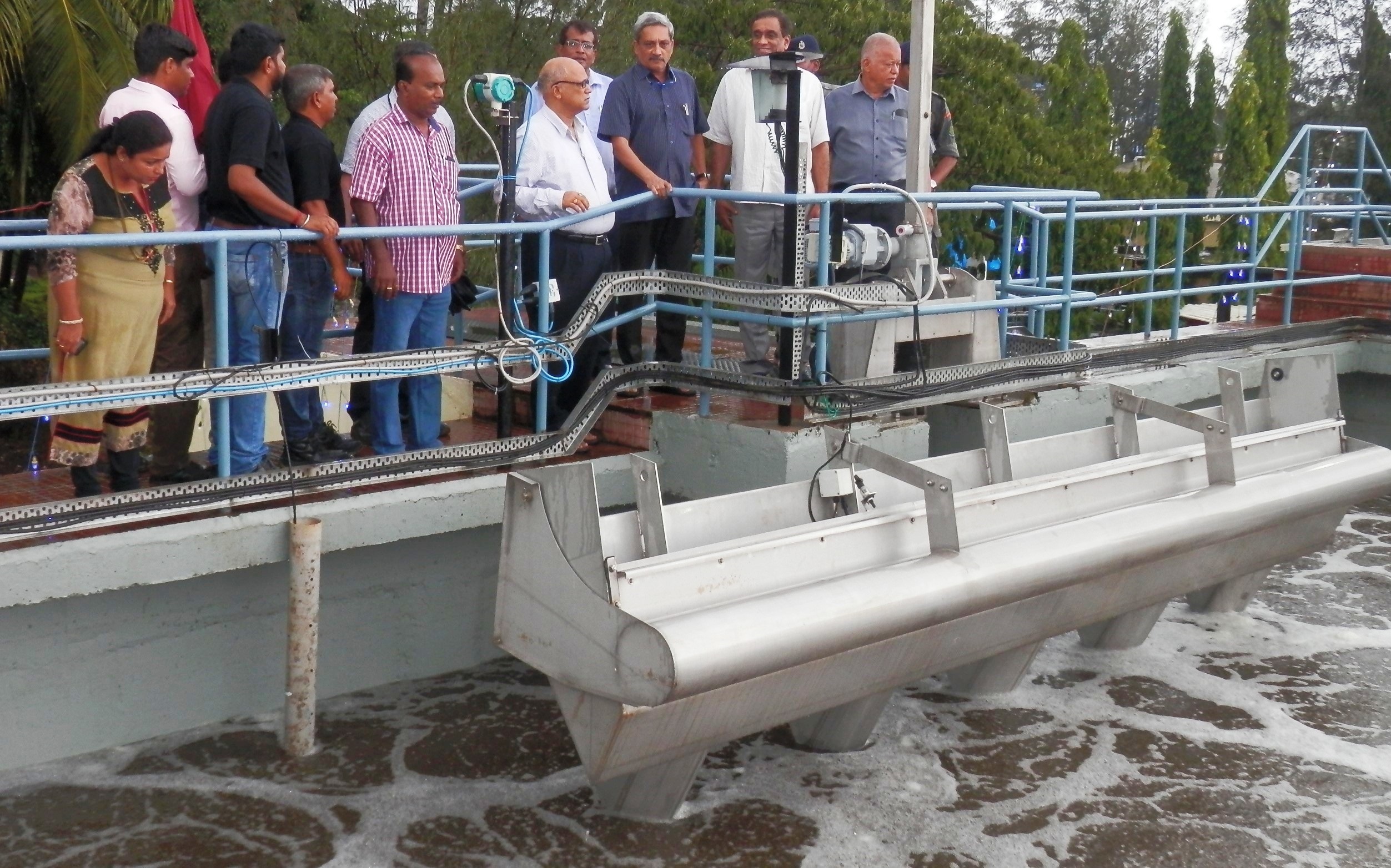
In Margao alone, the two existing STPs, with a combined treatment capacity of 26.7 million litres per day (MLD), discharge treated water into stormwater drains that eventually flows into the River Sal. The question increasingly being raised is whether this treated water can be harnessed for industrial and agricultural use, thereby conserving precious freshwater from the Selaulim reservoir exclusively for drinking purposes.
“Why not?” remarked a senior water supply official when asked about the possibility. The official pointed out that the government has already issued a circular permitting the use of treated STP water for construction and other non-potable purposes.
However, despite the policy framework, there have been virtually no takers for the treated water. “Perhaps the need for treated wastewater never arose because Goa has historically received adequate, and often excess, rainfall. But the present situation should certainly prompt the government to introspect and seriously explore the utilisation of treated STP water for non-potable purposes,” the official said.
Capacity set to double
The debate assumes greater significance with the ongoing installation of a state-of-the-art 20 MLD Sewage Treatment Plant based on Sequential Batch Reactor (SBR) technology at the Sirvodem sewage treatment complex. Another 7.5 MLD STP has already been commissioned at Colva.
Once the new facilities become fully operational, the cumulative treatment capacity in the Margao region alone is expected to exceed 50 MLD within the next year.
This raises a critical question: Can Goa afford to allow over 50 million litres of treated water to be discharged daily into rivers when it could potentially meet the needs of industries and agriculture?
Pipeline to industry
Sources acknowledge that a portion of the treated water may continue to be released into the River Sal to maintain ecological balance and support biodiversity. However, they argue that the remaining quantity could be effectively diverted for industrial, agricultural, landscaping and construction purposes.
Sources have suggested that the government appoint a consultant to prepare a Detailed Project Report (DPR) or feasibility study on the large-scale utilisation of treated wastewater.
With the existing policy of offering treated water free of cost having failed to attract users, officials believe the government may need to make a one-time infrastructure investment to create demand.
One proposal suggested in certain quarters is the laying of a dedicated pipeline from the Sirvodem sewage treatment complex to the Verna Industrial Estate, as industries cannot be expected to transport treated water from Margao in tankers on a regular basis. “The treated water can undergo further processing, if required, to meet specific industrial standards,” an official explained.
Future water strategy
At present, industries receive raw water from the Selaulim Irrigation Project. Tapping treated wastewater for industrial consumption could significantly reduce dependence on freshwater sources, ensuring that more potable water remains available for domestic use.
As Goa grapples with increasing pressure on its water resources, many believe that treated wastewater, long regarded as a discarded by-product, could emerge as a vital component of the State’s future water management strategy.