PANAJI
Christmas, the most awaited festival of the year, is not limited to the Catholic community in Goa. It is a time of celebration for people of all faiths and religions. The State is getting ready to welcome this joyful season that brings smiles, hugs, sweets and gifts. Charity organisations become active during this time, with visits to orphanages and old age homes reflecting the spirit of inclusivity, humanity and compassion.
Homes and families are also busy with preparations. People begin by painting their houses and compounds, and preparing the Christmas crib by sowing wheat or rice. Some assemble old plastic Christmas trees, while others clean the trees standing in their yards. Women in many homes are busy in the kitchen, arranging ingredients to prepare plum cakes, dodol, bebinca, kol kol, dos, coconut cookies, neureo and many other sweets.
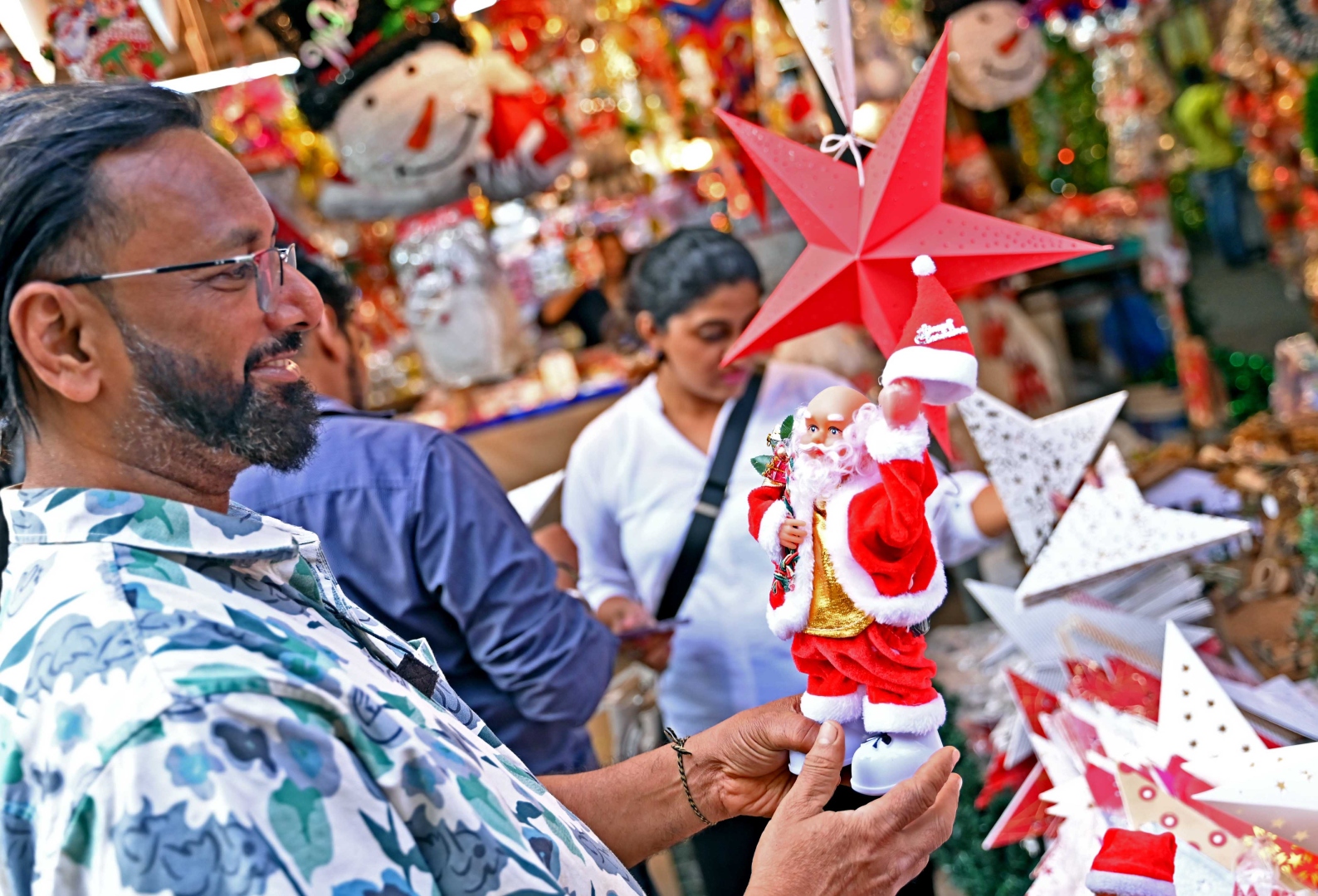
For businesses, this is a busy season. City markets are filled with Christmas decorations made of paper, plastic and thermocol, along with lights, colourful stars, artificial flowers and balloons. Cake and pastry shops are accepting advance orders, while self-help group members are busy making snacks such as chakli, shankarpali, neureo, laddoos, chivda and coconut kapa.
Star makers at Aquem-Alto in Margao have also begun their work. Every year, near Vishant Theatre, groups of young men sit selling colourful stars of different sizes. These youths from the local wado have been doing this for years on a no-profit, no-loss basis, mainly to keep the tradition alive. During Diwali they make akash kandils, and during Christmas they make stars using coloured paper.
Near the Ravindra Bhavan triangle, a father-daughter duo travels from Ponda every year to sell handmade stars and akash kandils, priced between Rs 200 and Rs 400 depending on the size. These local star makers continue their work year after year, offering handcrafted decorative items. Though the products may not be perfectly shaped or neatly finished, they have loyal customers who wait for their simple roadside stall, where stars are hung on strings tied to trees.
In Margao and Panaji, shops selling items for Rs 99 are popular with those who like to buy new decorations every year.
“I know these Chinese products are cheap and do not last long, but I like to try something new every year,” says Eddie Fernandes.
“This year I will invest in an imported Christmas tree so I can use it again. My wife and daughter want it instead of the small branch we usually buy locally,” he adds.
Christmas trees are available in many sizes and types at Margao New Market, with prices starting from Rs 800–1,000 and going up to Rs 5,000. Most are made of plastic and come pre-decorated, some with LED lights. They can be dismantled after use and stored for the next year. Smaller trees are placed on tables, while bigger ones are kept in living rooms or verandahs. Some even come with remote controls and colour-changing lights.
Unlike earlier times when cribs were handmade in every wado, many people now prefer ready-made crib models. Figurines are available in different styles, including moving and static ones, priced between Rs 2,000 and Rs 10,000 depending on the size. In Panaji, rotating Christmas villages and animated crib sets are priced between Rs 3,000 and Rs 8,000.
Some shops in Margao also sell small Christmas huts made of wooden planks and dry grass. These are about a foot in size and can be placed on tables. Decorative light strings are available from Rs 200 for small ones that change colours, while larger sets cost up to Rs 500. However, many buyers prefer Indian-made lights as they last longer.
“I have been using the same Indian lights for Diwali for the past five years,” says Santosh Desai, a customer at an electrical shop in Pajifond.
While homes prefer smaller trees, hotels and resorts decorate their lawns with tall LED trees in different styles, including pine, snow-covered or natural green designs. These can cost several thousand rupees. “But Christmas is not about money or decoration,” says elderly Eva Noronha. “It is about the spirit with which the festival is welcomed.”
“Christmas is a time to meet people, share meals, exchange gifts and celebrate the birth of Jesus, who taught us to love our neighbours as ourselves,” adds her husband Eugene. With this spirit, Christmas continues to be a festival of joy, sharing and care for all, especially the less fortunate.