Long before shawarma became commonplace, it found a home in Margao. The Goan delves into the 25-year journey of the State’s original shawarma, and the man who refused to let it become anything less than it should be
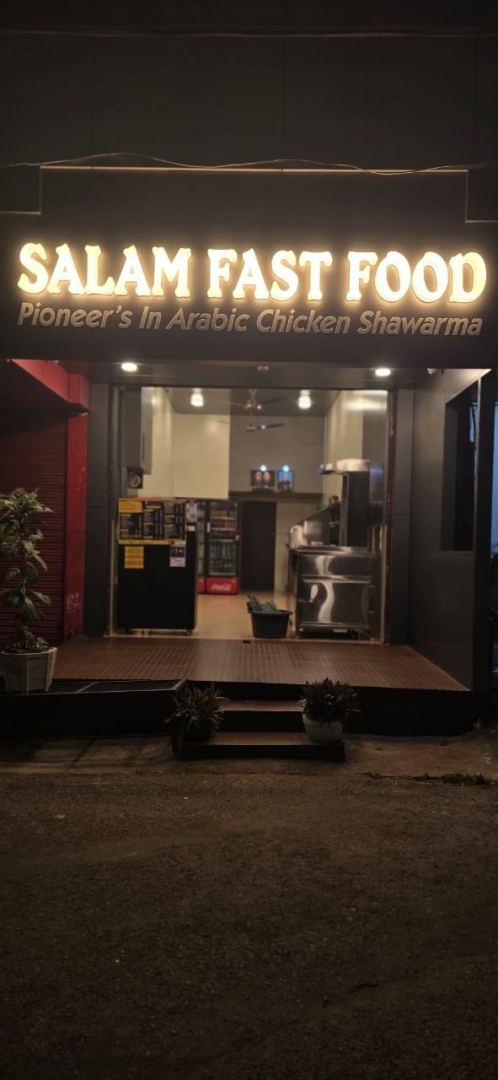
Twenty-five years ago, long before shawarma became a familiar word on menus across Goa, a single vertical spit began rotating in a small shop on Dr Miguel Miranda Road, Pajifond, Margao.
A new joint
There was no crowd waiting outside, no social media buzz, and no certainty that anyone would even understand what was being served. What there was, instead, was belief. Belief that Goa was ready for something new, and belief that quality, if protected fiercely enough, would eventually find its audience.
That moment, on January 6, 2001, marked the birth of Goa’s first Arabic chicken shawarma joint. The man behind it was Nelson Fernandes, owner of Salam Fast Food.
Respect for food
Fernandes’ journey to shawarma began far from home. After completing his studies, he went to the Gulf, where he worked as an accountant. In the evenings, he took up a part-time job at a five-star property known as the Gulf Hotel. “That place taught me discipline,” he says. “It taught me consistency, hygiene, and respect for food.”
A novel idea
He spent eight years there, got married, and built a life. But the dream of owning something of his own stayed with him. When he returned to Goa in 2000, Fernandes watched many Gulf returnees take the familiar route of opening bars and restaurants. He chose otherwise. “I didn’t want to copy anyone,” he says. “I wanted to bring something that didn’t exist here.”
Shawarma, a staple evening meal in the Gulf, seemed like the answer. “People there would have one or two shawarmas and a Coke, and that would be dinner,” Fernandes recalls. “It was simple food, but done properly.”
Equipment hunt
The idea was clear. The execution was not. Goa had no shawarma machines at the time. In December 2000, Fernandes travelled to Muscat to source the equipment himself. “I knew the masala. I knew how to stack the chicken. But without the machine, it was impossible,” he says.
Opening day
When Salam Fast Food opened its doors in Margao, it did so with almost nothing. One teapoy, four chairs, and a small freezer provided by Coca-Cola. On the first day, Fernandes sold around 50 to 60 shawarmas. On the second day, just two.
“People laughed,” he says. “They said, ‘What is this fellow selling?’ But I didn’t stop.”
The early weeks tested his resolve. Customers questioned the unfamiliar dish. Others compared it to what they had eaten abroad. “Everyone said, ‘In the Gulf it is different,’” Fernandes recalls. “I told them, this is my product. This is what I serve.”
Positive review
A turning point came when a retired colonel, who ran a widely circulated weekly supplement, visited the shop. He tasted the shawarma, liked it, and wrote about it. The publication reached homes across South Goa. “After that, people came just to see what shawarma was,” Fernandes says. “That article changed everything.”
Healthy competition
As the years passed and shawarma gained popularity, competition followed. New joints opened across the State. Shortcuts became common, but Fernandes refused to take any. “When a reporter asked me about competition, I said competition is healthy,” he recalls. “Now people will know the difference between a horse and a donkey.”
Keeping it traditional
The difference, for him, lay in the details. The masala never changed. The burners on his machine were imported from Lebanon, not sourced locally. “Indian burners don’t give the same final output,” he says. The sauce remained traditional tahina, never mayonnaise. “The moment you add mayo, you murder the dish. Shawarma is meant to be cholesterol-free.”
Maintaining that purity came at a cost. Olive oil prices soared over the years, rising from around Rs 300 a litre to nearly Rs 2,400. Fernandes absorbed the blow. “I told myself, money will come,” he says. “But the name must remain.”
Constant support
Behind that determination stood his wife, Melita Agnes Mascarenhas. With two young sons at home and a paralysed father to care for, she was his only constant support. “There is a saying, behind a successful man, there is always a woman,” Fernandes says. “In my case, that is absolutely true. My success is because of her.”
Daily prep
Daily operations at Salam Fast Food have always been labour-intensive. The day starts early with market visits. Chicken is deboned in-house, marinated for hours, and stacked only in the evening. The sauce is made fresh every single day and discarded if unused. “People think it’s simple,” Fernandes says. “But it starts in the morning. There are no shortcuts.”
Loyal customers
That consistency has created something rare: generational loyalty. “People who came as college students now come with their children,” he says. “And they tell me, ‘The taste is the same.’ That is my biggest reward.”
Carrying on the legacy
In 2018, Fernandes handed over the business to his elder son, Malcolm Fernandes, a hotel management graduate. His younger son, Nixon Savio Fernandes, trained under him before moving to Dubai to work in the hospitality industry. Fernandes now calls himself the brand ambassador, but his principles still define the kitchen.
Advice for youngsters
As Salam Fast Food completes 25 years on January 6, 2026, Fernandes has a message for young Goans dreaming of starting small. “Stay in Goa. Be determined. Be honest,” he says. “There is gold here, but you must know where to dig.”