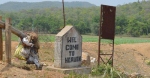
Death in the forests of Bijapur, is as frequent as a weatherchange. Stretches of scorching heat interspersed with bursts of rain. TheNaxalites too do the same. Stretches of brutal murder interspersed with brutalthreats just stopping at murder.
A month ago, at two am, Govind Talandi of Nuthanpal, feltthe cold edge of a gun on is his throat. A voice hidden behind a mask asked him “How do you wish to die?” Beforehe could react, another gun was shoved into this ear. Talandi has lived all hislife in Nuthanpal, off the land and the forests. People like Talandi areincreasingly finding themselves at the wrong end of the naxalite gun. Living onfear and kin borrowed time he tells The Goan, “They said they would kill mebecause I supposedly was blocking payment for road works meant for villagers. Ihave nothing to do with this.” After living on the edge he was allowed to livefor two weeks. “They said they will come again after making inquiries.” This ishardly a life assurance.
The image of theRobin Hood variety of the Naxal that lingers in the collective imagination getsengulfed by the darkness of Bastar’s forests. “I was almost dead last week,”said Tamal Singh of Shanora village, matter of fact manner. Yet again, in themiddle of the night, a group of Naxals entered the village and dragged him outand made him squat in front of his house and beat him brutally. “With a sharpsickle on my throat, they demanded 10 percent of money villagers receive forNREGA (construction and other work under the National Rural EmploymentGuarantee Act) work.
Death or near death is coming in hordes in South Bastar. TheMaoists led by Naxal leaders, Kosa, Ramanna and Ganesh Vike, working throughtheir area commanders and finally through sangam members in the villages haveclaimed territory and more importantly mind space. In a major shift fromattacking the class enemy “ the government and its institutions, there has beena paradigm shift to the mass enemy that includes those who either shiftedloyalties to the government or decided to stay neutral. This has led to the oneof the most serious bloodletting phases in the red movement in Chattisgarh andOrissa.
Former Director General of Police Chattisgarh, Vishwaranjan,who had a long stint in the IB studying the naxal movement says “In Jharkhand,there is a clear nexus between politicians and Naxalities. That’s why manyprojects are allowed. Here it’s a bitter battle. If you don’t go and get them,thy will enter your areas. That’s what’s going on. The state is too soft.”
But, there is onetime in the year when there is a meeting ground in the dense forests, duringthe tendu leaf plucking and transportation season. That is because the Maoistshave a ten percent kickback deal with tendu leaf contractors. That’s the onlyway it works
It’s obvious that the goal posts have shifted. The state ismoving back and the Maoists are moving in. To see this in motion, try going toMankelli village. It’s less the 15 kilometers from the Bijapur districtheadquarters. Atulesh Tiwari, the programme officer for the rural employmentguarantee scheme has not entered Mankelli. “We are afraid to go there. It’sdominated by Naxals. You’ll never get there and we need to live here. Whybother?”
We did. There’s a point when you cross over, and not justliterally. We left Bijapur behind and trudged towards the forbidden Mankelli. All around there were brokenpoles and destroyed houses. We crossed Bandhaguda and then just couldn’t gofurther. The jungle was too dense and there was not even a semblance of a road.We turned back without getting to Mankelli but revisiting a shocking truth. Invillages like Manikeli, India has been surrendered.