On March 11, Panaji heads to the polls to elect 30 councillors to the Corporation of the City of Panaji (CCP). What should have been a grassroots exercise in civic governance has instead become a high‑stakes attempt to frame it as a shadow battle between Revenue Minister Atanasio “Babush” Monserrate and Utpal Parrikar, son of the late Chief Minister Manohar Parrikar. Yet beneath the political theatrics lies a city and its residents grappling with congestion, heritage erosion, stalled projects, and a crisis of trust in its institutions
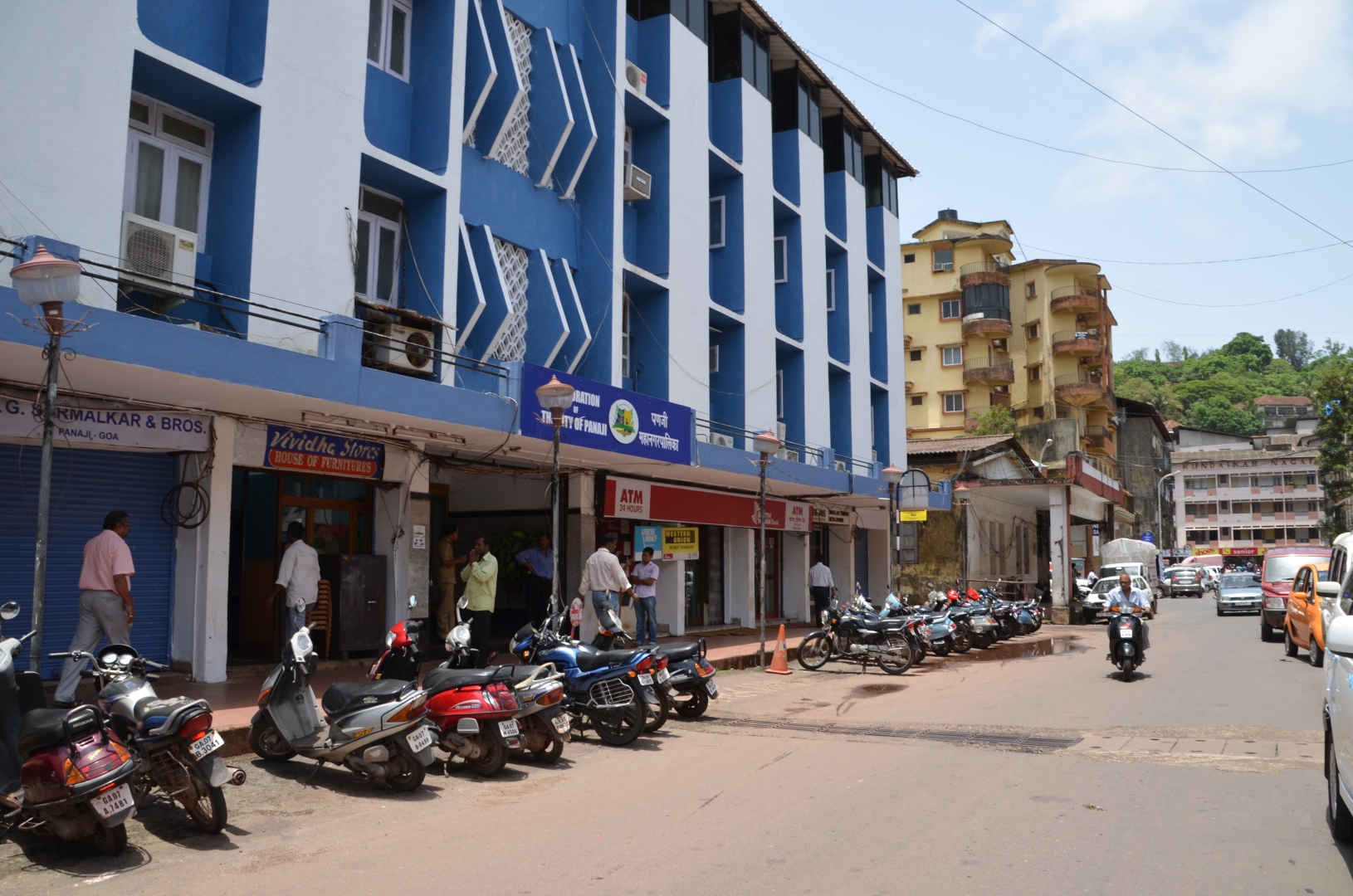
The Corporation of the City of Panaji (CCP) is set for crucial civic showdown.
PANAJI
The ruling Bharatiya Janata Party (BJP) backed panel of Revenue Minister Atanasio (Babush) Monserrate, led by his Mayor-son Rohit Monserrate, faces Ami Panjekar, a coalition of Congress, AAP, and some civic politics veterans projected to be mentored by Utpal Parrikar.
The contest is being painted by some quarters as a semi‑final for the 2027 assembly elections. But residents argue that this narrative overshadows the real purpose of the CCP polls: electing city fathers to manage the city's civic amenities and needs.
Neither camp has released a formal manifesto, leaving citizens sceptical of the promises and wary of rhetoric.
Delimitation confusion
Repeated delimitation exercises have split households across wards, with families and even flats in the same building assigned to different constituencies.
The reservation roster has compounded frustration, with voters in some wards shuffled between women‑reserved and OBC‑reserved wards.
Former councillor Menino Da Cruz has challenged a 2005 amendment transferring delimitation powers from the State Election Commission (SEC) to the Directorate of Municipal Administration, alleging manipulation. The matter is pending adjudication in the Supreme Court of India, which has refrained from interfering, but has the outcome of its proceedings will have a bearing.
For Panaji's voters, meanwhile, uncertainty persists over which booth they belong to and where they will have to go on polling day to cast their votes, eroding trust in the electoral process.
'Smart City' tussle: CCP vs IPSCDL
For nearly seven years, Panaji’s elected body has seen itself sidelined as Imagine Panaji Smart City Development Limited (IPSCDL) took charge of roadworks, drainage, and sewerage projects.
The overlap has led to duplication, delays, and chaos.
Mayor Rohit Monserrate has often in the past has lashed out at IPSCDL engineers, while his minister-father Atanasio (Babush) Monserrate has also criticised the sidelining of the CCP. The father-son duo, however, continue to sit on IPSCDL’s board.
Residents, on the other hand, have borne the brunt of dug‑up roads, dust pollution, and stalled drainage, prompting public interest litigations and even site visits by High Court judges. The tussle has often left the CCP unable to respond effectively to grievances from residents.
Casino congestion: Gridlock on Mandovi
Traffic chaos linked to casino operations has become the loudest issue on the CCP campaign trail.
Residents have for long been complaining of gridlocked streets, parking shortages, and pedestrian hazards. In heritage quarters like Fontainhas, Sao Tome and Campal, narrow lanes are overwhelmed by tourist inflows and vehicles.
Police have admitted that casino operations have added a heavy burden on them to manage the city's traffic flows, with hundreds of taxis and buses ferrying the patrons of the gambling industry, particularly in the post-sundown hours.
More recently, concerns grew after reports suggested that Delta Corp, a listed company which operates the 'Deltin' brand of onshore and offshore casinos, plans to introduce a larger vessel in the Mandovi capable of carrying 2,000 people.
Senior police officials agree that the political and civic authorities must work on plans to create parking infrastructure across the city, especially in the context of past multi‑level parking projects remaining stalled.
Tourism is vital to Goa’s economy and is increasingly being seen as a double‑edged sword, especially for residents of Panaji who face the brunt of its fallout every day.
Heritage activists are also warning of irreparable damage to Panaji’s fragile character, but there has been no mention or discussion on this pressing problem of the city in the ongoing campaign for the March 11 election.
Market scam neglect
The Panaji market redevelopment project was initiated way back in 2002 and, till date, remains mired in irregularities.
Tenant‑merchants were accommodated without lease agreements, leaving the CCP with zero rental income while bearing upkeep costs. Plans for a third phase lack credibility, undermined as it is by past failures.
In response, Opposition voices have only cited the market as proof of corruption in the CCP, but accountability has remained elusive all these 20-odd years.
In the current cycle of elections, the incumbent‑backed candidates are promising completion and results, but residents demand that the issue be addressed in real time, as it directly affects their daily lives.
The market, meanwhile, stands as a monument to wasted opportunity and broken promises.
Vertical redevelopment: Heritage at risk
Panaji’s skyline is set to change dramatically, with its iconic buildings facing imminent demolition only to be replaced with towers rising 10 to 14 storeys in the near future.
Amendments piloted in 2023 eased height restrictions and allowed higher Floor Area Ratios (FARs), incentivising redevelopment.
Panaji's housing societies, like for instance, 'Kundaikar Nagar' in the city close to the Mahalaxmi temple, and 'Palm Grove' on the outskirts at Miramar, are in advanced stages of negotiations with builders, while the iconic 'Junta House' and other government buildings await demolition.
Builders and construction industry leaders argue that redevelopment offers better returns than new projects on open plots, which are scarce in the city.
Yet, in the run‑up to the March 11 CCP polls, candidates and the two contesting panels are silent, leaving voters uninformed even as the city’s heritage essence hangs in the balance with the vertical redevelopment of the city being traced on plans by the real estate and construction lobby.
Citizens voice frustration, scepticism
Across Panaji, residents are expressing frustration at the disconnect between political theatrics and civic realities.
Several senior citizens have lamented that streets have remained unsafe and road accidents are spiralling. They and several other city residents complain that piecemeal work has reduced the 'Smart City' dream sold to them for years to just that: a dream.
Heritage activists, many of them residents of Panaji, have warned that damage done to the city due to the CCP's passive demeanour in matters of planning will be irreversible.
“The candidates seem clueless or unwilling to commit to practical solutions,” remarked one voter, adding that Panaji’s citizens want accountability, not political rhetoric.
The CCP polls, meant to be a test of grassroots governance, have instead become a stage for clashes between political personalities.
"The verdict on March 11 will not just decide who wins, but whether Panaji’s civic concerns take precedence over political theatrics," the resident of Fontainhas added.
Panaji at the crossroads
As Panaji prepares to vote, the city stands at a crossroads:
Will elected representatives regain authority over civic governance, or will parallel agencies and real estate interests continue to dictate its destiny?
Will heritage be preserved, or will towers redefine the skyline?
Will traffic chaos and casino congestion be addressed, or will promises remain unfulfilled?
For Panaji’s citizens, the stakes are urgent, and the CCP elections are not merely about Monserrate versus Parrikar. They are about whether residents can live peacefully in their own city, whether governance can rise above theatrics, and whether democracy can reclaim its grassroots essence.
On March 11, Panaji will vote. On March 13, the results will reveal not just winners and losers, but the city’s chosen path forward.