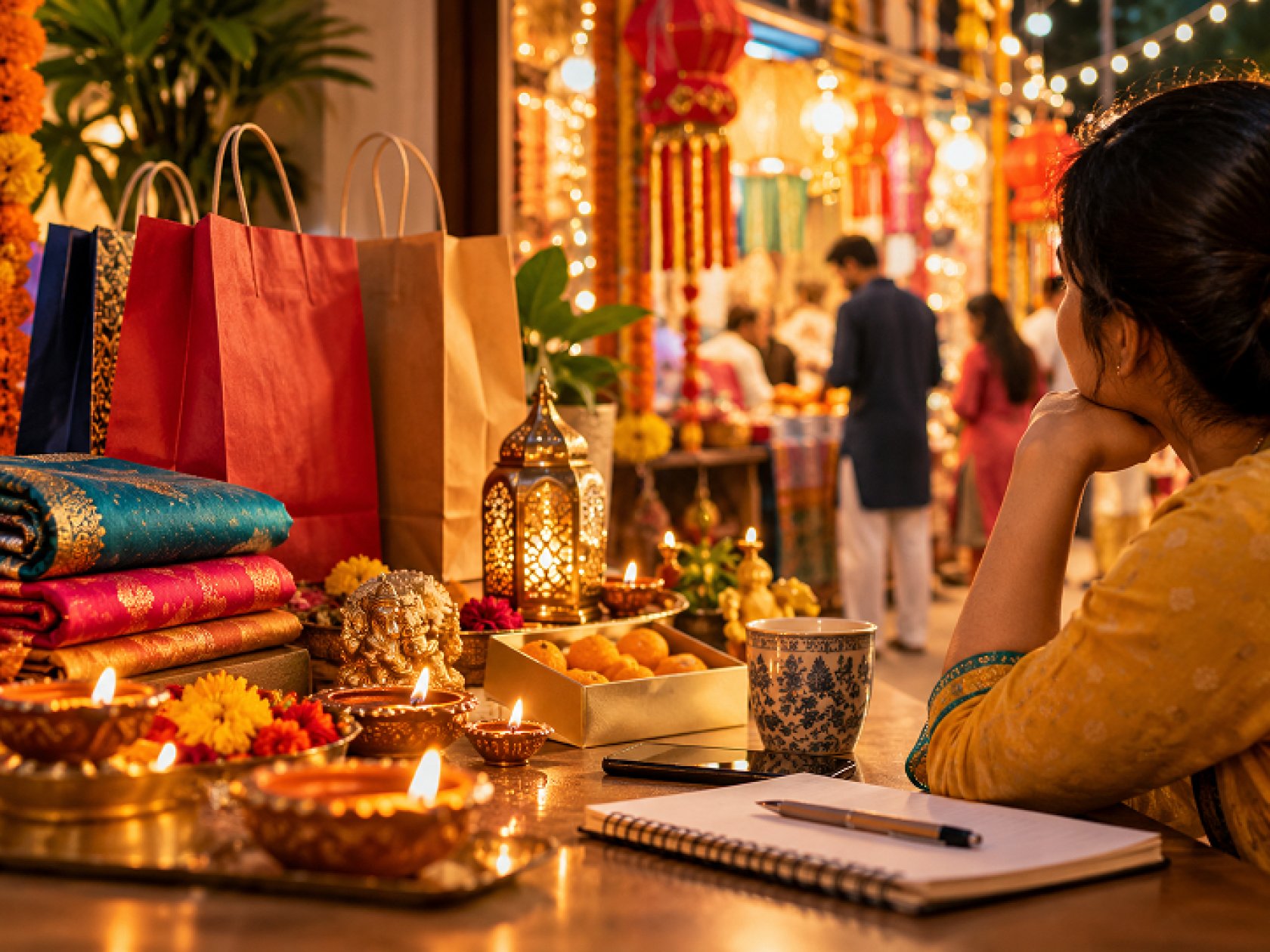
Diwali is a time for lights, sweets, new clothes, gifts and family gatherings. It is also a time when shopping lists grow, festive offers become difficult to resist and the desire to make every celebration special can lead to unplanned spending. Amid all the excitement, it is easy to forget that enjoying the festival does not necessarily mean spending more.
Mindful spending is not about being miserly or giving up the things that make Diwali enjoyable. It is about making conscious choices about where our money goes, understanding what matters to us and ensuring that festive expenses do not become a source of stress later.
Spend on what matters
One of the simplest ways to practise mindful spending is to decide what makes Diwali meaningful before beginning to shop. For some families, it may be buying new clothes. For others, it could be preparing traditional sweets, decorating the home or exchanging gifts with loved ones.
The challenge is recognising the difference between what we genuinely want and what we feel compelled to buy. Advertisements, social media posts and festive sales often create the impression that a proper celebration requires new purchases. However, not every attractive offer deserves our attention, and not every tradition needs to involve spending money.
Making a shopping list before visiting a market or browsing online can help keep purchases focused. It also reduces the likelihood of buying things simply because they appear attractive at the moment.
Understand the appeal of discounts
Festive sales encourage consumers to believe they are saving money. While discounts can be useful when purchasing something already planned, they can also persuade us to spend on things we do not need.
A discounted product is not necessarily a bargain if it was never on our shopping list. Before making a purchase, it helps to ask a simple question: Would I still buy this if it were not on sale?
Taking time to compare prices, check product quality and consider whether a purchase is necessary can prevent the excitement of a deal from overriding common sense. There is also no need to make a purchase simply because an offer is available for a limited period.
Make gifts more meaningful
Gift-giving is an important part of Diwali, but the value of a gift need not be measured by its price. Thoughtful presents, homemade treats and gifts that reflect the recipient's interests can be more meaningful than expensive items chosen out of obligation.
The same approach applies to decorations. Reusing lights, diyas and decorative items from previous years can preserve family traditions while avoiding unnecessary purchases. Supporting local businesses and artisans can also be a thoughtful way to celebrate, provided the purchases fit within one's spending priorities.
There is no need to compete with relatives, friends or colleagues over the value of gifts. Generosity should bring happiness to both the giver and the recipient, rather than create financial pressure.
Be mindful of how you pay
The convenience of credit cards, instant payment options and buy-now-pay-later schemes can make spending feel effortless. However, the financial consequences of a purchase do not disappear simply because payment is delayed.
Before using credit for festive shopping, consider whether the expense can comfortably be managed alongside existing financial commitments. Carrying outstanding balances or taking on unnecessary debt for celebrations can turn a joyful occasion into a burden in the months that follow.
It is equally important not to dip into money reserved for essential expenses, emergency needs or other important financial goals merely to maintain a particular standard of celebration.
Give yourself time to decide
Impulse purchases often happen when excitement, attractive displays or limited-period offers influence our decisions. Pausing before completing a purchase can help us distinguish between something we genuinely want and something we are tempted to buy in the moment.
For online shopping, leaving items in the basket and returning to them later can provide a useful cooling-off period. In physical markets, carrying a shopping list and comparing options can serve the same purpose.
Mindful spending does not mean questioning every small pleasure. It means being deliberate about larger decisions and recognising when a purchase adds genuine value to our lives.
Celebrate without comparison
Social media can make it seem as though everyone is buying new clothes, hosting elaborate gatherings and exchanging expensive gifts. Comparing our celebrations with these carefully presented images can create expectations that have little to do with our own circumstances.
Every household has different priorities, responsibilities and financial commitments. What works for one family may not work for another, and there is no single standard for celebrating Diwali.
The festival offers an opportunity to reconnect with family, share meals, visit friends, preserve traditions and create memories. Many of these experiences require time and thoughtfulness rather than substantial spending.
Ultimately, mindful spending is about making our money reflect our priorities instead of allowing advertisements, social expectations or momentary excitement to determine our choices. It allows us to enjoy the festival without constantly worrying about what we have spent.
Diwali should leave us with memories of warmth, togetherness and celebration, not regret over purchases we could have avoided. By spending consciously, we can enjoy the festival in a way that respects both its spirit and our financial well-being. After all, the brightest celebrations are not necessarily the most expensive ones.