Joint team of GSPCB, GCZMA and p'yat probes beachfront structures
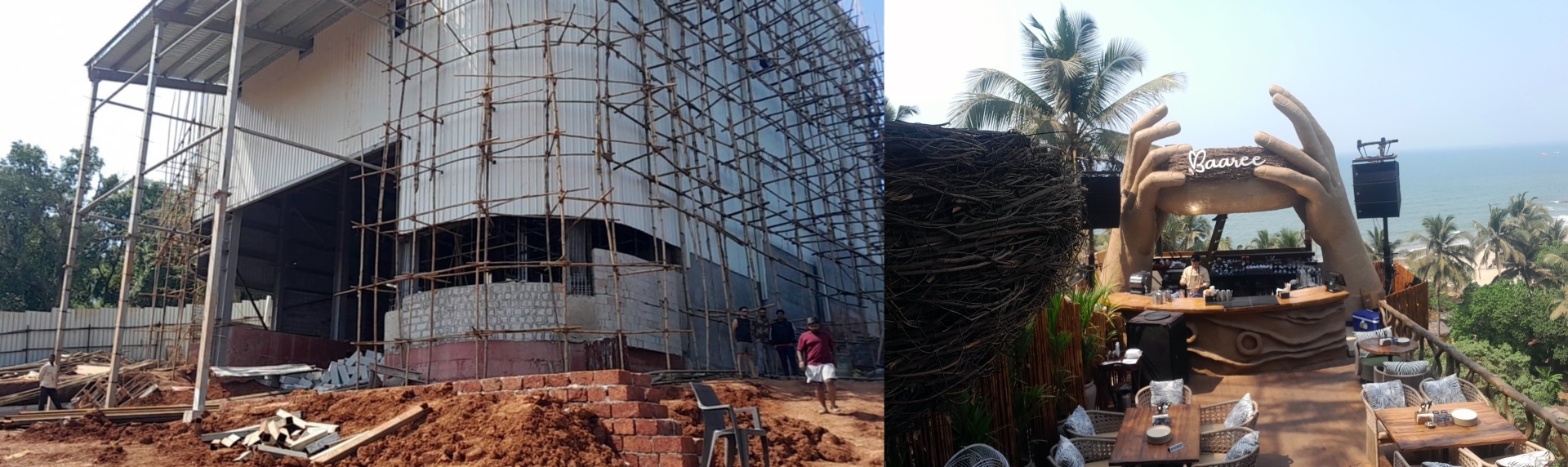
The five-storey structure in Anjuna operates as a nightclub despite being permitted only as a temporary facility. (Right photo) A structure operating as a club overlooking the Arabian Sea in Anjuna along the ecologically sensitive coastline.
MAPUSA
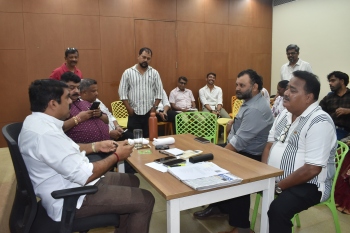
In a fresh crackdown on alleged coastal violations, a joint team of the Goa State Pollution Control Board (GSPCB), Goa Coastal Zone Management Authority (GCZMA) and the Anjuna Panchayat on Friday inspected a series of nightclubs accused of operating from structures in the CRZ-III belt of Ozrant, Anjuna.
The nearly three-hour inspection followed a formal complaint by local activist Desmond Alvares, who has been spearheading campaigns against noise pollution and alleged coastal violations in the Anjuna–Vagator nightlife hub.
Alvares has claimed that close to 80 structures dotting the Anjuna coastline are in blatant violation of Coastal Regulation Zone (CRZ) norms.
Among the establishments inspected on Friday were Dynamo, Leela, Barree and Red Threads – all functioning as nightclubs along the Vagator–Anjuna stretch. One of the prominent structures under scrutiny is a five-storey building located right along the beachfront in what falls under the ecologically sensitive CRZ-III category, where construction activities are heavily restricted.
Alvares alleged that several operators obtain permissions for temporary seasonal structures but subsequently convert them into permanent, multi-level constructions.
“The owners take permission for constructing temporary structures, but when they build, they make them permanent with concrete and steel. The coastal law goes for a toss, making a mockery of the system,” he said.
Under CRZ norms, only certain types of limited, non-permanent structures are permissible in designated areas, and that too subject to strict conditions. However, activists claim that the ground reality tells a different story, with reinforced concrete buildings, elevated decks and enclosed party spaces mushrooming along the shore.
Friday’s inspection saw officials documenting structural details, measuring distances from the high tide line and verifying permissions granted by local bodies.
Anjuna Sarpanch Surendra Govekar was also present during the inspection.
Officials said a detailed report will now be prepared based on the findings, after which further action – including possible notices or demolition proceedings – could follow if violations are established.
The inspection comes at a time when the coastal belt has already been under scrutiny for noise pollution violations, with multiple nightclubs facing action from regulatory authorities in recent months.
Activists argue that unchecked structural expansion and regulatory lapses have emboldened operators, turning what were once temporary beach shacks into full-fledged commercial nightlife complexes.
With pressure mounting from residents and environmental groups, Friday’s joint inspection may mark the beginning of a broader review of construction and compliance norms along the Anjuna coastline.