


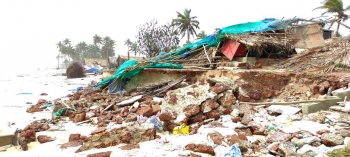
 The destruction caused by the cyclone a couple of weeks ago.
MARGAO
A fortnight ago Cyclone Tauktae left behind a trail of destruction along the Salcete coast, battering large stretches of beach belt with sea water gushing in almost 50-100 meters from the shores, razing to the grounds activities of local fishing communities.
After the cyclone wreaked havoc across the state, the moot questions remain unanswered “ will the government factor in destruction of the coastline caused by Cyclone Tauktae before the coastal zone management plans are put in place? Will the Tauktae effect come as an eye opener to the government and its authorities to come up with a plan that will protect the coast as well as the local communities?
These and other questions will certainly come to the fore as the government is bracing up once again to hold public hearings over the controversial Coastal Zone Management Plans.
A visit along the Salcete coast unravels a scary environment. Nature’s fury has been at its worst at some stretches, right from Colva to Sernabatim and beyond after huge waves and rising sea battered the coast during the cyclone.
That Colva fishermen suffered the brunt of the cyclone when their fishing huts and structures came down is only a small fraction of the destruction suffered. A number of structures that were standing along the beach front gave way. And, so were the unauthorized and illegal embankments raised along the beach front.
A local resident from Colva pointed out that sea water surged more than 50 meters landward, near the old mast beyond the high tide line (HTL).
Says Colva-based activist Judith Almeida: “The message from Cyclone Tauktae is loud and clear that the CZMPs should be a holistic and comprehensive plan that will protect the coast and the coastal communities. Goa faced the brunt when it was affected by the distant effect of the cyclone. If the distant effect was so severe, when the sea water came almost 50-100 meters inside at some places, just imagine the situation if the state had to experience direct impact of the cyclone”.
She said the authorities including officials from environment should have visited the coastal belt and taken note of the extent of destruction along the beach belt. “The NDZ and CRZ-I areas must remain a religiously protected zone. Tomorrow, even if tourism suffers due to the climate change, our people will still have the opportunity to continue with traditional occupations like fishing, farming etc if our coast is protected”, she added.
Benaulim-based architect, activist Royla Fernandes said any coastal plan should take into effect the impact of climate changes taking place worldwide. “We have to be holistic in our approach when the coastal zone plans are being put in place. Taking cognizance of climate change, and its impact on coastal communities, including rising sea water, will help us to put all things in the right perspective”, Royla added.
Ambelim-based engineer, Cruz Silva echoed similar sentiments. “When the Coastal Zone Management Plan is being put in place, we have to factor in the climate changes and its impact on the coastal communities, including the fishing community”.
Judith added: “We have to rope in the best of experts in the state and the country and not rely on an agency, which seemed to be toeing the government line in preparation for CZMP”.


