VALPOI
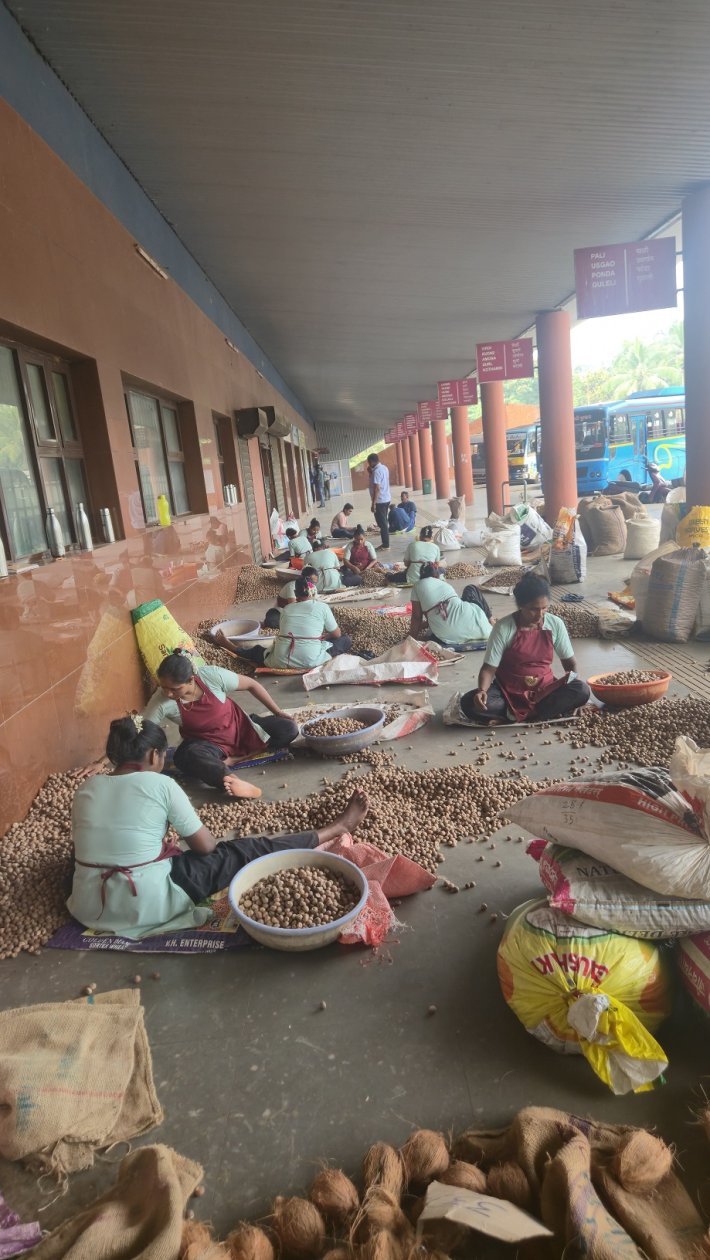
Areca nut growers in Goa are concerned over a sharp decline in market prices, which have fallen from Rs 425 to Rs 365 per kg, reducing their earnings amid rising cultivation and maintenance costs.
The price drop has raised concerns among plantation owners, particularly in Sattari, where areca nut cultivation is an important source of income. Growers incur expenses throughout the year on fertilisers, pesticides, labour, harvesting, drying, storage and transportation.
The falling prices could make it difficult for them to recover production costs and invest in plantation maintenance for the next season.
At the reduced rate, a grower selling 100 kg of areca nuts would earn Rs 36,500, compared with Rs 42,500 earlier, representing a difference of Rs 6,000. Growers have urged the Central and State governments to examine the reasons behind the decline and consider measures to protect local producers. They have particularly called for a review of areca nut imports, expressing concern that increased supplies could affect prices received by domestic growers. However, growers and authorities need to assess import volumes, domestic demand, available stocks and trading patterns to determine the factors responsible for the price decline. They have called on the State Agriculture Department and relevant agencies to study the market situation and provide clarity.
According to available Central Government data, Goa’s areca nut production stood at 4,140 tonnes in 2021-22, 3,960 tonnes in 2022-23 and 3,978 tonnes in 2023-24. Production was approximately 4,000 tonnes in 2024-25, while the Second Advance Estimate for 2025-26 puts it at 3,540 tonnes.
Growers have also sought updated taluka-wise production figures and regular publication of market prices to improve transparency.
They have urged the government to develop a long-term policy focusing on fair prices, better market access, storage facilities and regular monitoring of market fluctuations.
Growers warned that a prolonged decline in prices could force plantation owners to reduce maintenance expenditure, potentially affecting future production. They have called for coordination between the State and Central governments to ensure that areca nut cultivation remains financially sustainable.