MARGAO
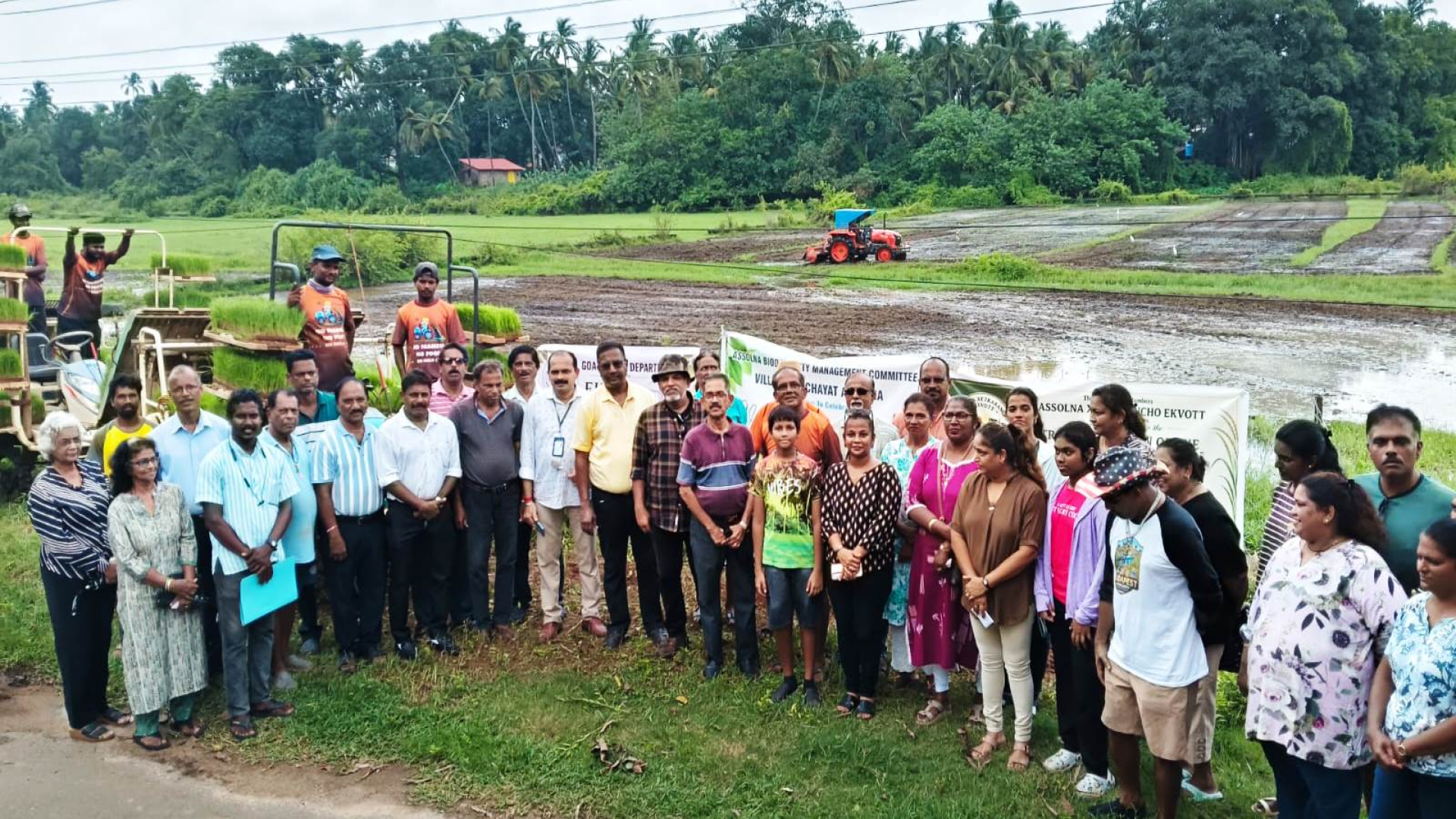
In a significant step towards restoring agriculture and preserving the village’s ecological heritage, farmers from Assolna, under the banner of Assolna Xetkarancho Ekvott, on Sunday launched an ambitious mission to revive paddy fields that have remained fallow for more than four decades.
The initiative began at Moddorachem Torem/Bainfoll, where tractors and paddy transplanters entered the fields on Sunday to mark the commencement of cultivation. The revival effort received technical guidance and support from Goa’s renowned “Paddy Man”, Fr George Quadros, whose expertise has helped rejuvenate abandoned agricultural lands across the State.
The farmers have set an ambitious target of bringing nearly one lakh square metres of long-abandoned paddy fields under cultivation during the ongoing kharif season. On the opening day of the drive alone, Fr Quadros and his team successfully transplanted paddy across approximately 45,000 square metres, marking a promising beginning to the project.
The initiative witnessed enthusiastic participation from farmers, villagers and members of the Assolna panchayat, who joined hands to support the collective effort. The strong community response reflected a shared commitment to restoring agriculture while safeguarding the village’s natural resources.
Explaining the background of the movement, Chairman of the Assolna Biodiversity Management Committee Fredrick Borges said the groundwork for the project had begun several months ago with the formation of a farmers’ collective under the banner of Assolna Xetkarancho Ekvott.
“We brought the farmers together with the objective of reviving these abandoned fields. The agricultural land is owned by around 50 farmers, and each of them has contributed wholeheartedly to make this revival possible. It is a collective effort by the farming community to bring life back to lands that have remained uncultivated for decades,” Borges said.
Borges said the revival of the fields at Moddorachem Torem is closely linked to the villagers’ long-standing campaign to protect the historic water body from degradation and eventual extinction.
With the first phase of transplantation now underway, members of Assolna Xetkarancho Ekvott are optimistic that the remaining fallow fields will gradually be brought back under cultivation.