MARGAO
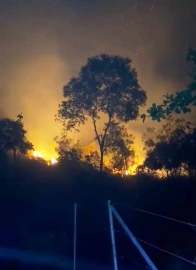
As fires continue to rage around the State’s countryside, from the plains to the hills, the rich biodiversity spread across the verdant hills and picturesque mountains around Salcete seemed the first major casualty of the fire incidents.
While the incidents have left behind charred plants and vegetation on the mountain ranges, leaving behind a trail of destruction of biodiversity, the incident has also left the natural habitat of animals disturbed. Forest and fire officials fear that with the natural habitat of animals devastated by fire and smoke, the possibility of wild animals straying into residential areas in search of food is not ruled out.
The Navelim-Dicarpale-Dramapur-Sarzora hill range is a case in point. This range, which extends right from Navelim to Sarzora, Paroda and Durga-Chinchinim, has been the home for wild animals.
Firefighters and volunteers partaking in the fighting operations at Navelim said they have come across monkeys deserting the areas under fire and moving to new areas on the fire-hit Navelim hill. Fire Officer Gill D’Sa said the firemen have even spotted leopards holed up in their natural habitat when they had descended on the hillock.
Besides animal life, a host of plant species have been charred.
Member of the Navelim Biodiversity Management Committee Eleutorio Carneiro said the rich biodiversity of the fire-hit hills has been the victim. “When we along with our volunteers descended on the Mandopa-Navelim hillock to fight the fire, we came across charred remains of seasonal fruit-bearing plants. The fire has left this rich biodiversity devastated. We will have to wait for the monsoons to find out the fate of these plants,” he said.
Carneiro made an impassioned plea to Forest Minister Vishwajit Rane to instruct the Forest department to survey the fire-affected hills to ascertain the extent of biodiversity loss.
Carneiro said: “We have come across eagles hovering over the sky in search of prey, lifting the carcass of animal species on the Navelim hillock. Monkeys have left their habitat for new areas. It is evident that the fires have displaced animals."
Chinchinim panch Gerson Gomes said Durga plays host to rich biodiversity, which has been destroyed by the Wednesday fire. “People have managed to put off the fire, but the damage was already done to the Durga hillock, which is part of the Chandreshwar range, playing host to wild cats,” Gerson added.
Member Secretary of Goa State Bio-diversity Board, Pradip Samarkadam said: “A host of plant species might have perished in certain areas. But, after the monsoons, we may find new species taking shape on these hills,” he added.
Firemen tread rocky, thorny hills with tree branches as weapon
MARGAO
Fighting dry grass fires is not something new to firemen across the State. The dry grass fire that has spread to the hills, however, seemed to have not only kept the firemen on their toes but also left them exhausted.
With no help coming from the Navy and coast guards to deploy helicopters, firemen have been left with no option but to tread rocky hills with thorny vegetation to reach the fire spots atop the hills.
A beleaguered fireman told The Goan that with the hills having no road access to reach the top, they have been left with no option but to tread through the dense forests, walking through the thorny vegetation to reach the site. The only weapon in the hands of the firemen to douse the mountain fires have been branches of trees since taking the fire tenders to the hilltops is next to impossible.
What has taken a heavy toll on the firemen is that there has been no respite from the fire incidents since Saturday. “Climbing the hills to douse the fire has taken a toll on the firemen. At the Navelim hillock, the firemen had made their presence felt late at night only to return in the wee hours of the next day. By evening, they were back on the hillock after receiving a fresh call after a fire was spotted again,” informed a fire official.
Margao Fire Officer Gill D’Sa admitted that the firemen could not take a break since the weekend, with calls of fire to dry grass and hills keeping them on their toes.