MAPUSA
For nearly a decade, octogenarian Joao Caetano Perpetuo Pinto struggled to get a simple land mutation completed at the Mamlatdar's office in Mapusa. The elderly man was repeatedly forced to climb the staircases of the office to pursue the mutation of a tiny 72-square-metre plot he had purchased at Pomburpa.
Pinto had submitted his mutation application in 2015, supported by a registered Deed of Release executed before the Bardez Sub-Registrar. There were no objections, competing claims or disputes over the property. Even the statutory procedure, including publication, had been completed. Yet, for reasons that remained unexplained, the application continued to languish.
It took the intervention of The Goan, which highlighted the octogenarian's ordeal, for the mutation to finally be completed, days after the report brought his plight to public attention. The case exposed how an elementary administrative process can become a prolonged battl e for an ordinary citizen, even when there is no legal impediment to completing it. In another case, however, the problem went far beyond administrative delay.
Local resident Maria Priscilla D'Souza was shocked to discover that the names of two individuals had appeared as occupants in the land records of property bearing survey number 201/6 at Gaunsawado, Sodiem-Siolim, which had stood in the name of her late father, Pascoal D'Souza, since 1966.
D'Souza maintains that her father had neither sold nor transferred any portion of the property during his lifetime, nor had she, as his legal heir, entered into any such transaction after his death. Alleging that the property records had been manipulated, she lodged a complaint at the Mapusa police station in 2024, accusing the two individuals of fraud and forgery and alleging their collusion with the talathi and mamlatdar.
"A fraud and forgery have been committed by the two individuals in collusion with the talathi and the mamlatdar," she alleged in her complaint.
While the allegations are yet to be established, the case raises serious questions about the safeguards governing changes to land records and the possibility of unauthorised names finding their way into official records.
The two cases, though vastly different in their nature and gravity, expose the contrasting problems confronting people seeking mutation of land records in North Goa – one of administrative indifference and the other of alleged manipulation of the revenue machinery.
A simple process, an uphill task
A number of applications are filed for mutation of properties at mamlatdar offices across North Goa's talukas. While some involve competing claims, inheritance disputes and complicated ownership histories, a considerable number are straightforward applications supported by registered deeds and other requisite documents. Yet, for many applicants, getting their names entered in the land records is anything but straightforward.
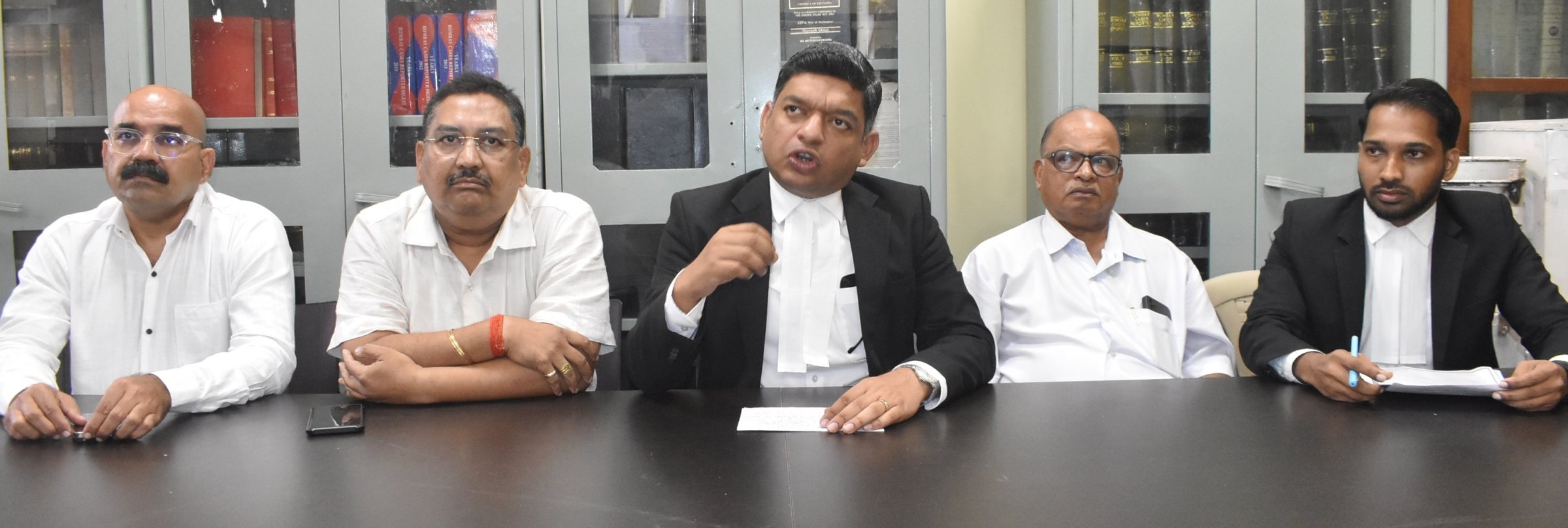
Repeated visits to government offices, unexplained delays, unnecessary queries and the difficulty of getting applications taken up for hearing have become familiar complaints. Mapusa-based advocate Naveen Bhivshet says that while some mamlatdars deserve credit for efficiently taking up and disposing of mutation applications, others have developed a tendency to delay even uncomplicated cases. According to him, the problem is particularly noticeable with some of the newer mamlatdars, who take an inordinately long time to process applications, forcing members of the public to make repeated rounds of the office.
"Many a time, the client has to literally beg before the mamlatdar to take up his mutation application and pass an order," Bhivshet said.
He pointed out that every mamlatdar has an individual style of functioning, but when a straightforward application supported by all the necessary documents is kept pending for an unreasonable period, it points to a systemic problem rather than a procedural difficulty.
The problem, he said, is not confined to Bardez but is experienced in other talukas including Pernem, Bicholim and Tiswadi as well.
When routine govt work takes precedence
Bhivshet also drew attention to the additional responsibilities shouldered by mamlatdars, particularly during Assembly sessions, when they are required to respond to Legislative Assembly Questions (LAQs), as well as during census and election-related assignments.
While these are important government responsibilities, he said, mutation cases often take a back seat when officials are occupied with such assignments.
The result is that ordinary citizens, whose applications are awaiting routine disposal, end up bearing the brunt of administrative priorities and staff constraints.
Another advocate, who requested anonymity, said that mutation is essentially a document-based process and that an application supported by a No Objection Certificate (NOC), wherever required, should ordinarily not become a prolonged exercise.
"Many times, the mamlatdar concerned drags the matter for months, making a fool of the advocate. It is embarrassing for us to face clients. When the case is clear, and all documents are in place, what stops the official concerned from mutating the property? How are we going to explain this to the client?" the advocate asked.
The advocate alleged that corruption had become entrenched in the system and claimed that there was an organised network facilitating the disposal of mutation applications for a price.
The alleged 'broker raj'
The advocate also alleged that a network of agents and intermediaries had emerged around mutation proceedings, with some people offering to get applications processed for a fee.
He claimed that certain advocates had also become part of this alleged network, undertaking mutation-related work through informal arrangements with intermediaries.
The allegation points to a disturbing possibility: that applicants who follow the prescribed procedure and wait their turn may find themselves at a disadvantage compared to those who approach middlemen to get their work expedited.
The advocate further questioned the manner in which notices were sometimes issued, claiming that notices were sent even to deceased persons, despite their death being a matter that could have been verified through the relevant records.
If established, such instances would point not merely to inefficiency but to serious shortcomings in the basic scrutiny and verification of mutation proceedings.
A senior advocate alleged that bureaucratic hurdles were sometimes deliberately created to delay approvals and that unofficial payments were sought to expedite matters, even when the applicants had submitted valid succession deeds and other supporting documents.
"While straightforward cases should take minimal time, administrative friction and systemic corruption frequently turn simple property mutations into prolonged ordeals," he said.
Who answers for the delay?
The contrasting experiences of Pinto and D'Souza underline the need for greater transparency and accountability in the mutation process.
In one instance, an elderly applicant with a registered document and no competing claim had to struggle for nearly ten years to secure an entry in the land records. In another, a legal heir alleged that individuals had found their way into the property records without any lawful transaction by the original owner or his successor.
Both cases raise questions about the functioning of the revenue administration — whether it is the failure to act when documents are clear or the failure to detect and prevent allegedly unauthorised changes in land records.
The larger concern is not merely how long it takes to mutate a property, but whether the system treats every applicant equally — regardless of whether the person has the means, influence or connections to get the work done.
For a citizen like Pinto, ten years of chasing a routine mutation was finally brought to an end only after public attention was drawn to his plight.
The question is how many others continue to wait, unheard, in the corridors of the mamlatdar's offices.
MUTATION MAZE: A SYSTEM GONE AWRY

PANAJIFor years, mutation cases in Goa were the kindof bureaucratic 'business' that rarely made headlines.A person inherited ancestral land, bought aplot, or received property through a gift deed. They filed an applicationbefore the Mamlatdar, submitted the necessary documents and waited for monthsand years for their name to be entered in official land records.But over the past few weeks, mutationproceedings suddenly became the centre of a heated public debate, with…