MARGAO
The continuing controversy over the Porvorim flyover, with commuters and motorists still grappling with congestion, has brought into sharp focus a larger question confronting Goa’s road infrastructure planners: Are flyovers, bypasses and highway expansion projects being planned and designed with adequate consideration for local traffic movement?
The issue also raises questions about the role of local agencies in the planning process. Are the Public Works Department (PWD) and the National Highways authorities adequately consulting the Goa Traffic Police, local municipal bodies, panchayats and other stakeholders before finalising the alignment, access points and design of major highway projects?
Or is Goa increasingly being viewed primarily as a corridor for the movement of through-traffic along the national highway network, with the needs of motorists travelling within the state taking a secondary position?
The questions assume significance in the wake of the Porvorim flyover controversy, where the competing demands of through-traffic and local vehicular movement have exposed the difficulties that can arise when major highway infrastructure intersects with densely populated urban and commercial areas.
11-km Margao
Western bypass
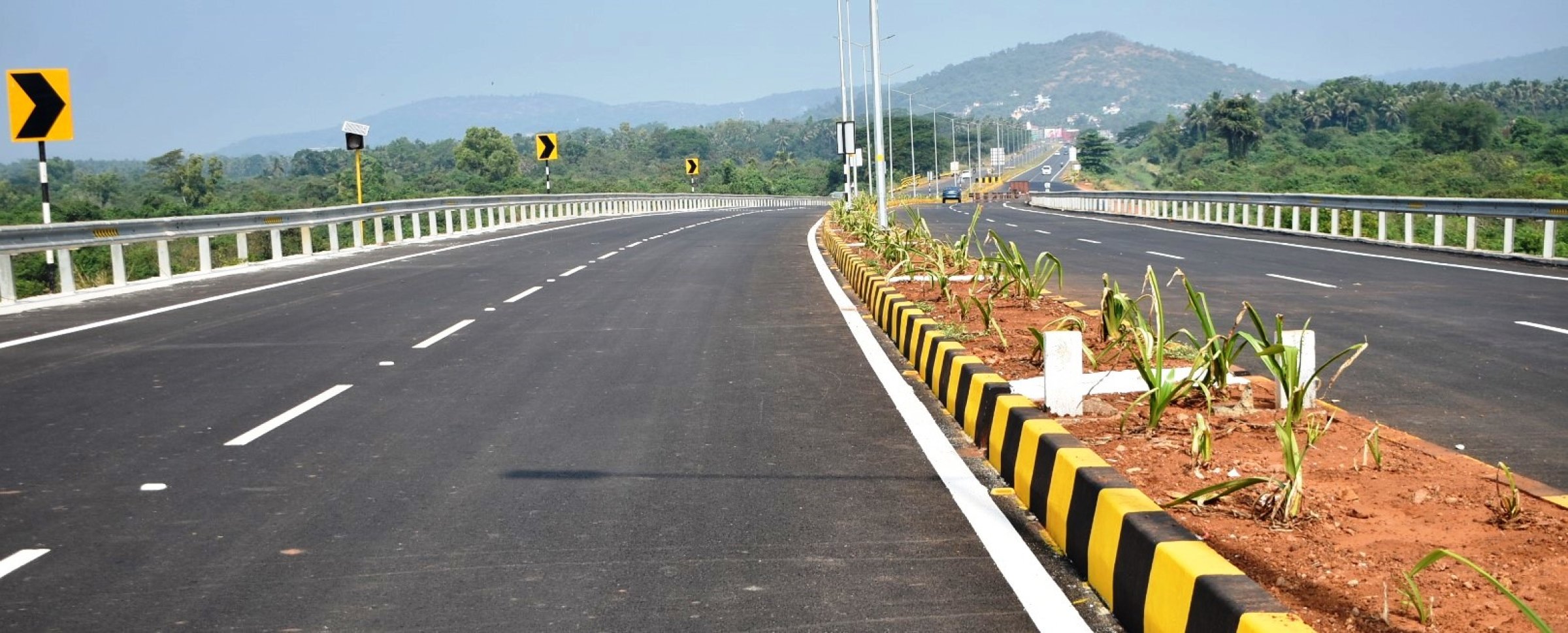
The problem is not confined to Porvorim. The 11-km Margao western bypass provides another example that merits closer scrutiny.
The bypass was conceived primarily to divert national highway traffic away from Margao, thereby easing congestion in the Commercial Capital. To an extent, the project has achieved its stated objective by providing through-traffic an alternative route instead of forcing vehicles to pass through the city.
But a more fundamental question remains: What provision was made for local traffic from Margao and its surrounding areas that needs to access the bypass?
For motorists travelling from Margao who wish to use the western bypass to proceed towards North or South Goa, there is no direct connection from the heart of the city to the bypass. Motorists have to reach access points at Benaulim or Nuvem before they can get onto the bypass.
This raises the question of whether the project was planned predominantly from the perspective of national highway traffic, rather than as an integrated road network serving both through-traffic and local commuters.
That’s not all. The PWD, NH had drawn up plans to build the western bypass along the flood plains of river Sal without making provision for building the bypass on stilts. It was only after a National Green Tribunal-constituted panel found that the construction of the bypass would necessitating shifting of the river Sal and filling up of water bodies, that the panel recommended construction of a 900-meter stretch of the bypass on stilts.
Traffic signals at Nuvem.
Nuvem residents question
need for traffic signals
The 11-km western bypass was envisaged as a key link to divert national highway traffic away from the commercial capital. People of Nuvem, however, have a question or two: Why did the bypass project not include provisions for grade separators at key junctions?
The question assumes significance as the Nuvem stretch of the bypass has as many as three traffic signals, hampering the smooth movement of both through and local traffic.
“When the western bypass is primarily meant for the movement of national highway traffic, why didn’t the Goa PWD propose grade separators while executing the project? The traffic signals have made life miserable for the local populace. To avoid congestion at the signals, many local motorists are taking the old Nuvem-Verna road,” said a motorist from Nuvem.
“This only goes to show that the bypass project did not factor in local issues at the planning stage,” he added.
Verna flyover alignment
draws questions
When the issue of the proposed Verna flyover came up for discussion at a recent meeting of the South Goa Road Safety Committee, a senior traffic police official appeared unaware of the proposal that the flyover would merge with the existing road before the petrol pump.
Committee members unanimously demanded that the flyover should not terminate near the petrol pump and instead be extended across the Pirnim traffic junction. The traffic official subsequently conceded that the PWD had not consulted the traffic department before finalising the alignment of the Verna flyover. “The Goa traffic police is never taken in the loop when the PWD comes out with road and highway proposals. And, then they want the traffic police and the local administration to work out solutions”, the official said.
It is pertinent to note that Nuvem MLA Alexio Sequeira, during his tenure as a minister in the Pramod Sawant government, had taken up the issue with the Chief Minister and sought an extension of the Verna flyover up to the Pirnim junction.